
Organiser in a bright room
You want to show photos to several members of your local community, but it’s difficult to darken the room. Brightness and image size matter more to you than extra streaming features.


If it’s difficult to darken your club room, start with a bright projector that runs on mains power. If you can darken the room and need to carry the projector often, a compact battery-powered model may be more practical. Before buying, measure the projection distance and desired image width, and check the native resolution and connection against the device holding your photos. A quoted brightness figure alone doesn’t guarantee a good picture in your room.
You want to show photos to several members of your local community, but it’s difficult to darken the room. Brightness and image size matter more to you than extra streaming features.
As well as landscapes, you show maps, place names or short captions, and want to check the native resolution and connection to your laptop.
You set up in a different room each time, weighing portability and quick setup against brightness and reliance on a battery.
Suitable when: you’re projecting for a group and it’s difficult to darken the room. ViewSonic quotes 5,000 ANSI lumens for the LS740HD; Epson lists 3,000 lumens of white and colour light output for the CO-FH02.
Trade-off: measure the room and screen beforehand. The quoted brightness doesn’t predict exactly how your photos will look in the space.
Suitable when: you carry the projector often, want to set up quickly and can limit the ambient light. XGIMI quotes 1080p, 450 ISO lumens and up to 2.5 hours of battery life for the MoGo 4.
Trade-off: battery life is a manufacturer’s estimate, and ISO and ANSI ratings aren’t directly comparable. Also check the version sold in the Netherlands and its connections.
Suitable when: you can darken the room and want to share photos from a phone or computer. Philips lists Full HD, wireless screen mirroring and autofocus for the NeoPix 250 Smart.
Trade-off: check the brightness and how well it works with your source device before choosing this model for a bright room.
| Consideration | What should you check? | Who is this important for? |
|---|---|---|
| Visibility in a lit room | Check whether the room can be darkened; look at the brightness figure and its stated measurement standard, and test it on your intended screen if possible. | If the room stays bright, I want the group to be able to see the photos. Around 25% of consumers prioritise visibility in a lit room above all else. |
| Sharpness of photos and captions | Check the native image resolution and try a representative slide with small text. | If I’m showing maps or place names, I want to see whether the details remain readable. Around 20% of consumers prioritise the display of photo details. |
| Projection distance and setup position | Measure the distance from the lens to the screen and the desired image width; compare these with the throw ratio of the exact version. | If the setup position is fixed or cramped, I want to know in advance whether the desired image size is achievable. Around 20% of consumers consider the fit between the projector, screen and room their main purchasing concern. |
| Connection to the photo source | Check where the slides are stored and test the intended HDMI or wireless connection using the same device. | If my photos are on my own phone or laptop, I want to make sure the connection I choose will work with it. Around 20% of consumers prioritise a reliable connection to the photo source. |
| Transport and setup time | Check the weight of the complete setup, the power supply and what you’ll need to start showing your photos. | If I often have to carry the projector to another room, I want a setup I can get up and running quickly. Around 15% of consumers prioritise transport and setup above all else. |
Portability won’t automatically make a large-screen image easy to see in a lit room. Manufacturers may also quote brightness using different standards.
First work out how much you can reduce the ambient light and how large the image needs to be. Then choose between portability and a mains-powered projector; don’t assume quoted brightness figures are directly comparable.
A projector may have good specifications but still be unable to produce the desired image size from the available position. Image correction is no substitute for measuring the room.
Measure the distance to the screen and the desired image width before choosing a model or mount. For example, BenQ specifies a throw ratio of 1.5–1.65:1 for the TH585P; this figure applies to that model.
You may need a different screen layout, setup position or mount.
A listed connection doesn’t automatically tell you which photo files the projector can open by itself. BenQ lists the TH585P’s USB-A port as a power supply connection, among other uses.
Check the manual for the exact model or test your intended photo source using a suitable connection. Keep a laptop or adapter handy if needed.
Copyright in someone else’s photos and the privacy of recognisable people are separate considerations. According to Auteursrecht.nl, a private club event doesn’t automatically count as use within the family circle.
Check who took the photos, who is recognisable in them and who you’ll be sharing them with. Ask permission beforehand if needed, or leave some images out. The Dutch Data Protection Authority treats recognisable images as personal data; the Dutch government explains that permission from the photographer may be needed for copyright-protected photos.
The CO-FH02 is a Full HD model for projecting from an external photo source. The EB-FH06 is a separate model with its own documentation.
The TH585P is a Full HD lamp-based model. Its quoted brightness and throw ratio are useful for comparing with your room setup.
The LS740HD is a Full HD laser installation projector aimed at commercial and educational spaces.
The MoGo 4 is a compact battery-powered option for situations where portability matters and ambient light can be limited.
The NeoPix 250 Smart is a home projector to consider for a room that can be darkened and a setup position that changes.
This selection focuses on portable projectors and models with connections or setup features suited to a club room that changes from one event to the next.
 No image available
A good fit if you want to take a projector with a built-in battery and an included projection screen with stand.
The title lists Full HD 1080p and 250 ISO lumens. The product specifications state up to 1.2 hours of video in Eco mode; battery life decreases at higher brightness settings.
 No image available
A good fit if you want to use a laptop as your photo source and set up the projector in different positions.
The title lists HDMI compatibility; the description mentions automatic image correction and 180° rotation. Check the connection with your own device.
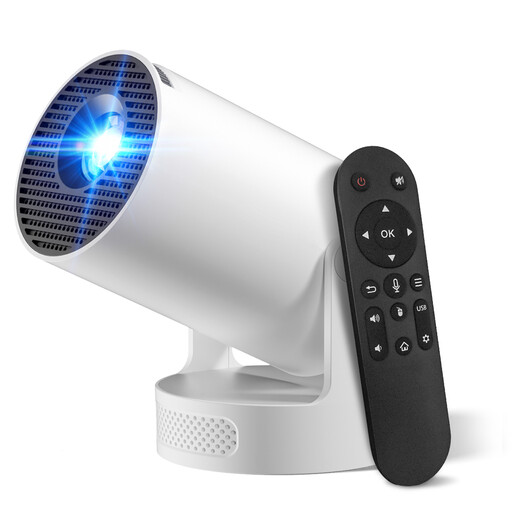 No image available
A good fit if you want to present from a computer or mobile device and need flexibility when positioning the projector.
The title lists HDMI compatibility, automatic image correction and 180° rotation. Check that the listed connection works with your device.
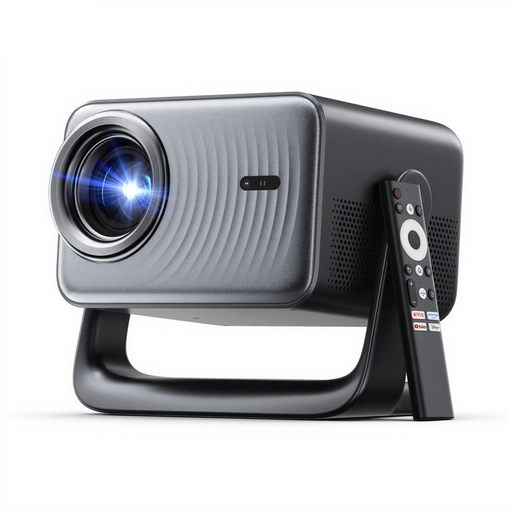 No image available
A good fit if you’re looking for a portable model with focusing and image correction features.
The title lists 1,000 ISO lumens, autofocus and keystone correction. It also mentions 4K support; this is not the same as a stated native 4K resolution.
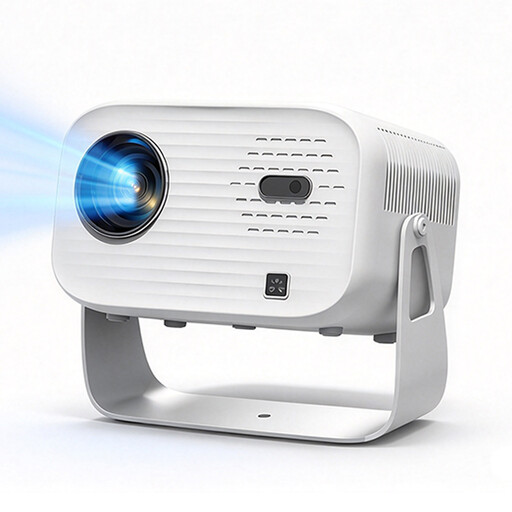 No image available
A good fit if you’re looking for a portable projector with a rotating mount for a flexible setup.
The title lists native 1080p, automatic keystone correction and a 360° rotating mount.
Yes. Measure the distance from the lens to the screen and the desired image width to check whether a model will fit in the available space. For example, BenQ specifies a throw ratio of 1.5–1.65:1 for the TH585P; this figure applies to that specific model.
That depends on the projector and your phone. Philips lists wireless screen mirroring for the NeoPix 250 Smart; test the feature with your device and photos beforehand. A model with HDMI offers another option if your laptop and connection are compatible.
For a consumer purchase, the seller is responsible for the statutory guarantee if the product doesn’t meet what you could reasonably expect. ACM ConsuWijzer distinguishes this legal right from any manufacturer’s warranty; in the Netherlands, there isn’t one fixed statutory warranty period for every projector.
Don’t assume that a private neighbourhood club event automatically counts as private use. According to Auteursrecht.nl, a club event doesn’t automatically fall within the family circle; you may need the photographer’s permission to show copyright-protected photos. People who can be recognised in images are also considered personal data by the Dutch Data Protection Authority. What’s required for a particular screening depends, among other things, on who shares the images and with whom.