Who watches adventure films in a narrow living room?

Viewer with space only by the wall

Wants a big-screen film experience with the projector on a unit close to the projection surface. A suitable ultra-short throw and a flat projection surface are important; Epson and XGIMI provide ultra-short-throw specifications for their models.

Viewer with a spot halfway across the room

Can place the projector a short distance from the screen and wants to know in advance whether that position will produce the desired image width. BenQ lists throw distances and ratios for specific models.

Film-night viewer with ambient light

Can’t always darken the living room, so needs to assess the lighting conditions, projector and projection surface together. Epson describes a screen designed for ultra-short-throw laser projectors.

What should you look for in a projector for a narrow living room?

Ultra-short throw by the wall

Choose this option: if you don’t have a suitable spot behind or between the seats. XGIMI specifies that the AURA 2 can project a 100-inch image from 17,8 cm away from the wall.

Bear in mind: the projector must also fit on the unit, and the projection surface needs to be flat. The stated distance from the wall doesn’t tell you how deep the unit needs to be.

Short throw between the seats and the screen

Choose this option: if you can position the projector at the calculated distance. BenQ states that the TK710ST projects a 100-inch image from 1,5 m; for the TK705STi, BenQ lists a throw ratio of 0,8:1.

Bear in mind: you’ll need space for the projector and possibly for power and audio cables. BenQ warns that digital keystone correction can reduce image quality.

Standard throw or a portable projector

Choose this option: only if the measured distance and desired image width match the specifications in the documentation for the specific model.

Bear in mind: a compact design or automatic image correction doesn’t change the required throw distance. Extensive digital correction can also affect image quality.

What to consider What to look for Who should pay particular attention?
Distance and image width Measure the available wall width and the distance from the lens to the projection surface. Check the throw specifications for the exact model at your desired image size. If I want to know whether the image will fit in my narrow living room, I’ll first check the distance and width. Around 36% of consumers put physical fit first.
Ambient light Check whether you can darken the room, and assess brightness using only the stated unit of measurement. A brightness figure alone can’t predict how the image will look in your room. If I don’t want to darken the room every time, I need to consider the natural light alongside the projection surface. Around 29% of consumers prioritise performance in ambient light.
Film picture quality Check the resolution and supported HDR formats for the exact version. Assess these only once the distance, screen and lighting conditions are right. Once my setup fits, I want to know which picture formats the projector supports for my films. Around 21% of consumers prioritise film specifications.
Sound and controls Check the apps you want, the HDMI and audio connections, and whether you’ll need external speakers. Don’t assume different model variants offer the same support. If I have little space for separate equipment, I want to know in advance how streaming and sound are handled. Around 14% of consumers put ease of use and sound first.

Common mistakes when projecting in a narrow living room

  • Assuming the maximum image size is guaranteed to fit

    The image size you can achieve also depends on the throw distance and positioning. A maximum size listed on a product page doesn’t automatically mean it will work in your room.

    Measure the distance from the lens to the projection surface and the available width. Compare both measurements with the throw table for the exact model.

  • Thinking ultra-short throw works on any wall

    Even when the projector is positioned close to the wall, a flat projection surface is important. If you’re using a screen, it must also be suitable for the projection technology you’ve chosen.

    Check how flat the wall is, and if you’re using a screen, confirm specifically that it’s suitable for ultra-short throw. Epson describes the ELPSC35 as a screen for its ultra-short-throw laser projectors.

    You may need a suitable projection screen or to adjust your setup.

  • Relying too much on digital keystone correction

    BenQ says digital correction can reduce image quality and create grey borders around the projection.

    First, plan to position the projector as straight as possible, then use correction to compensate for any remaining misalignment.

  • Using a retailer’s product name as your only model check

    A Joybuy description of the JMGO projector mentions both N1S Ultra and N1 Ultra. This means descriptive details can’t automatically be attributed to one specific version.

    Before buying, compare the full model name, version and key specifications with the manufacturer’s information.

Brands to consider for short- or ultra-short-throw projection

Epson

The EH-LS670B is an ultra-short-throw 3LCD laser projector designed to sit close to the projection wall.

  • Epson lists 4K PRO-UHD, 3.600 lumens, Google TV and built-in 20 W sound for this model.
  • Measure the space you’ll need for the unit and screen in your setup. Epson lists the older EH-LS650B as discontinued.

XGIMI

The AURA 2 is designed for ultra-short-throw projection when the projector is close to the wall.

  • XGIMI lists a throw ratio of 0,177:1, a 100-inch image from 17,8 cm away from the wall and 2.300 ISO lumens.
  • The distance from the wall doesn’t prove that the entire unit will fit on your furniture. Don’t compare ISO lumens with figures in other units without taking the difference into account.

Samsung

The Premiere 7, model SP-LPU7DSAXXXE, is an ultra-short-throw smart projector.

  • Samsung lists Tizen OS and built-in speakers for this version.
  • Check the full model designation of the version you’re considering.

BenQ

The TK710ST and TK705STi are short-throw options for positioning some distance from the projection surface.

  • BenQ lists 100 inches at 1,5 m for the TK710ST, and a throw ratio of 0,8:1 and Google TV for the TK705STi.
  • These are specifications for individual models, not an independent comparison of their film picture quality.

JMGO

The N1S Ultra is an option to consider only if the required throw distance works in your room.

  • The manufacturer lists automatic focus and keystone correction.
  • A Joybuy description switches between N1S Ultra and N1 Ultra. Check the version and specifications against the full model name.

Projectors on Joybuy for different positioning options

This selection of Joybuy products includes short-throw and portable projectors; it doesn’t include any ultra-short-throw models designed to sit directly by the wall. The Dutch government lists electronic devices among the products that must carry a CE mark when placed on the EU market. Check this for the exact version before you buy.

Magcubic HY350Max projector

Magcubic HY350Max projector

The stated throw ratio of 1:1 and image size from 1,35 m give you a starting point for planning a short-throw setup.

The product information lists native 1080p, 900 ANSI lumens, automatic focus and keystone correction, and a 15 W speaker.

View on Joybuy

Optoma H117ST short-throw projector

Optoma H117ST

The stated throw ratio of 0,52:1 and throw distance of 0,4–3,4 m are relevant if you want to position the projector close to the projection surface.

The product information lists WXGA 1280 × 800, 3.800 ANSI lumens and a built-in 10 W speaker. The native resolution is WXGA, not 1080p.

View on Joybuy

BenQ MW809STH short-throw projector

BenQ MW809STH

The product name describes this model as short throw, which is worth bearing in mind when planning a short-throw setup.

The product information lists 3.600 ANSI lumens and DLP. The native resolution is XGA 1024 × 768.

View on Joybuy
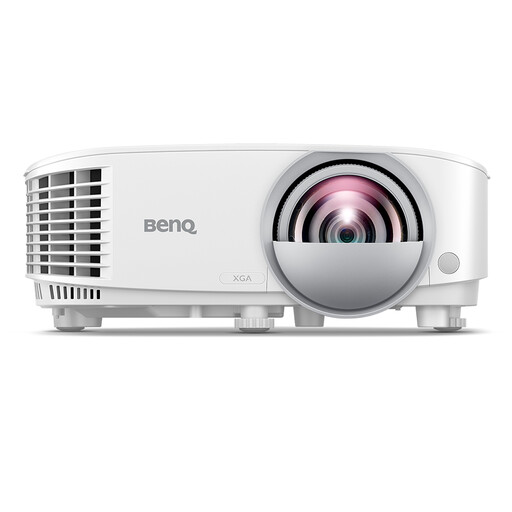
BenQ MX825STH short-throw projector

BenQ MX825STH

The product name describes this model as short throw. Measure the distance and image width, then compare them with the specifications for this version.

The product information lists 3.500 ANSI lumens, DLP and built-in 10 W speakers. The native resolution is XGA 1024 × 768.

View on Joybuy
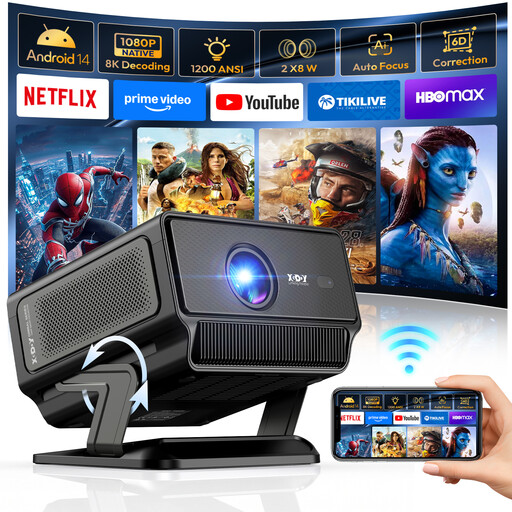
XGODY Gimbal A8 projector

XGODY Gimbal A8

The product information lists an adjustable 0–90° gimbal for projecting onto surfaces including walls and ceilings. Check that the required throw distance works in your room.

The product information lists native 1080p, a throw ratio of 1,08:1, an image size of 60–180 inches and 1.200 ANSI lumens.

View on Joybuy

Frequently asked questions about projectors in a narrow living room

How can I tell whether a projector will fit in my living room?

Measure the available width of the projection surface and the possible distance from the lens to the screen. Then look up the throw distance for the exact model and your desired image size. The label ‘short throw’ alone isn’t precise enough.

Can I use an ultra-short-throw projector on any wall?

No. First check whether the projection surface is flat enough. If you’re using a screen, also check that it’s suitable for ultra-short-throw projection; Epson describes the ELPSC35 specifically as a screen for its ultra-short-throw laser projectors.

Can automatic keystone correction fix awkward positioning?

Keystone correction can straighten a skewed image, but it doesn’t change the required throw distance. BenQ warns that digital correction can reduce image quality or create grey borders, so try to improve the physical positioning first.

What are my return and warranty rights when buying online in the Netherlands?

According to ACM ConsuWijzer, standard online product purchases generally come with a statutory cooling-off period of up to 14 days after delivery, subject to legal exceptions. You’re also entitled to a product that meets the required standards; if there’s a fault, the seller is responsible for resolving it under the terms of the statutory guarantee. Any manufacturer’s warranty is in addition to, and doesn’t replace, this right.

Does a projector sold in the Netherlands need a CE mark?

The Dutch government lists electronic devices among the products that must carry a CE mark when placed on the EU market. This general requirement doesn’t confirm by itself that the specific version you want to buy has the mark, so check the exact model.
