
Daytime viewers with tall windows
If you watch theatre recordings while daylight falls on the projection wall, it’s worth assessing the light from your windows and your preferred image size before comparing projector specifications.


Start by considering the light falling on the projection surface: block direct daylight where possible, then decide on your preferred image size and setup. A bright Full HD projector could be a good starting point for daytime viewing, but dark stage scenes, limited space and your preferred audio setup may make a suitable screen, ultra-short-throw projector or external speakers more important.
If you watch theatre recordings while daylight falls on the projection wall, it’s worth assessing the light from your windows and your preferred image size before comparing projector specifications.
If you want to make out details in dark stage scenes, consider light control, screen contrast and the amount of ambient light, as well as the projector itself.
If you can’t place the projector far from the wall, check the throw distance and desired image width alongside your screen setup.
First, reduce the light falling on the screen and decide on your preferred image size. Then compare projectors by brightness, throw distance and connections.
| Factor to consider | What to look for | Who is it important to? |
|---|---|---|
| Visibility in daylight | At your planned viewing time, check whether sunlight reaches the wall and decide on your image size. Then compare the stated brightness. | If I watch during the day, I want to know whether I can reduce the light on the wall and what image size will work. For consumers who prioritise daytime visibility, this is the main buying priority for around 36%. |
| Dark scenes | Consider the daylight falling on the screen, your viewing positions and whether any ambient-light-rejecting screen is suited to the direction of the projector light and ambient light. | If faces and details in dark stage scenes matter to you, you won’t want incoming light to wash out the contrast. Dark scenes are the top buying priority for around 29% of consumers. |
| Throw distance | Measure the available distance and desired image width, then check them against the throw ratio of the exact model. | If I need to place the projector close to the wall, I want to know in advance whether I can achieve the image width I want. For consumers who prioritise placement, this is a deciding factor for around 21%. |
| Sound and playback | Check the video output on your playback device, the available inputs and whether the projector has an audio output for external speakers. | If you want to use an existing theatre recording with a separate audio setup, check the connections you need first. Sound and playback are the top buying priorities for around 14% of consumers. |
A larger image spreads the light over a wider area, while light falling on the projection wall can make the picture look less vivid. So a high stated lumen figure doesn’t automatically mean direct daylight will no longer be a problem.
Assess the lighting conditions when you plan to watch and decide on your preferred image size first. Then compare the stated brightness figures.
Screen material for ultra-short-throw projection may be designed to receive light from below. How well it works also depends on the direction of the light from your windows.
Before you buy, check that the screen is suitable for UST projection and for the light entering your room.
A supplied streaming dongle won’t necessarily play every recording source, and connections for external audio vary between models.
Check the connection on your playback device and the projector’s audio output. You may need extra equipment to connect external speakers.
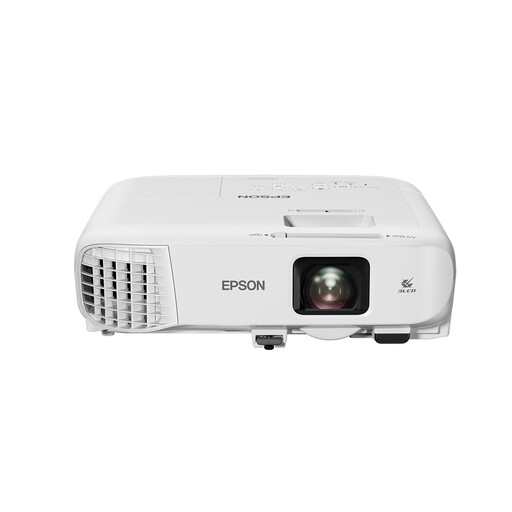
The EH-TW840 is a Full HD lamp projector for anyone who wants to take its stated white and colour light output into account when watching in ambient light.
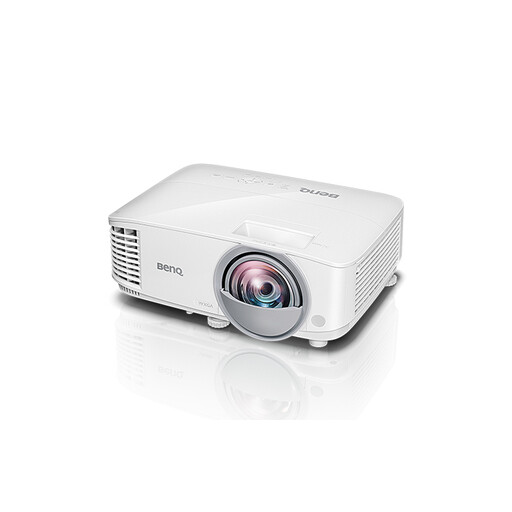
The TH575i is a Full HD lamp projector supplied with a Google TV dongle.
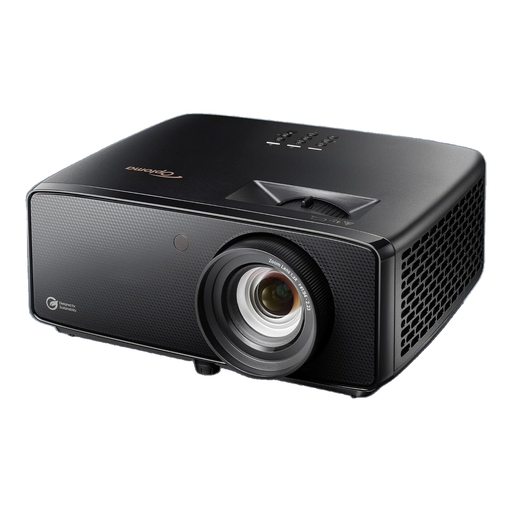
The HZ40HDR is a laser projector for a conventional throw distance, while the ZH430UST offers a separate ultra-short-throw option.
These Joybuy products are suited to viewing in a bright room and cover a range of throw distances. Check that each model’s resolution, distance and connections suit your setup.
 No image available
A good fit if you’re looking for a laser projector for home use and want to compare different throw distances.
The description lists 3,500 lumens, 4K UHD resolution and a throw ratio of 1,21:1–1,59:1.
It has two HDMI inputs and a 3,5 mm audio output.
 No image available
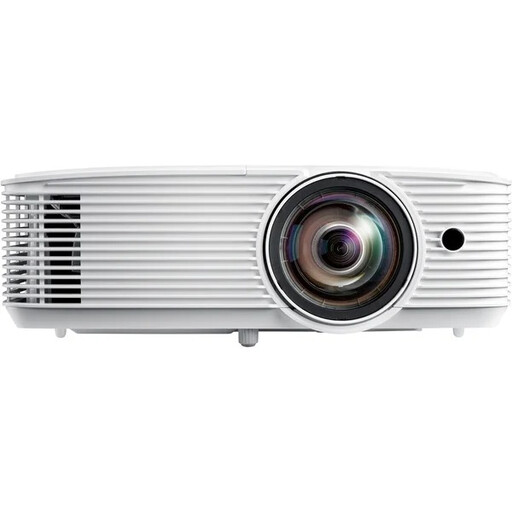
The short throw ratio may be useful if you have limited space between the projector and screen.
The description lists 3,800 ANSI lumens, WXGA resolution (1280 × 800) and a throw ratio of 0,52:1. This model is not Full HD.
The built-in speaker is rated at 10 W.
 No image available
The stated zoom and keystone correction features may be worth considering if you want to adapt the placement to your room.
The description lists 4,200 ANSI lumens, WXGA resolution (1280 × 800), 1,6× optical zoom and keystone correction. This model is not Full HD.
The built-in speaker is rated at 16 W.
 No image available
The short throw ratio is worth considering if the projector needs to sit close to the projection surface.
The description lists 3,600 ANSI lumens, XGA resolution (1024 × 768) and a throw ratio of 0,49:1. This model is not Full HD.
The stated lamp life is up to 15,000 hours.
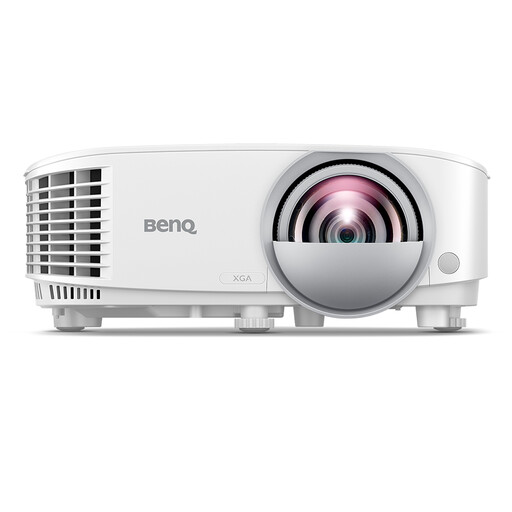 No image available
The short throw distance may be useful if the projector needs to be positioned close to the screen.
The description lists 3,500 ANSI lumens and XGA resolution (1024 × 768). This model is not Full HD.
It has two HDMI ports and a built-in 10 W speaker.
More brightness can help in ambient light, but it won’t overcome direct sunlight on the image. Where possible, first reduce the light falling on the projection surface, then assess the projector and image size together.
No, the screen needs to suit the direction of projection and the light entering the room. Screen Innovations’ UST screen material is designed to receive projector light from below, so also check where the light from your windows comes from.
Measure the distance from the lens to the screen and your desired image width, then compare these with the throw ratio of the exact model. This lets you check in advance whether the setup will work in your available space.
First, check that the video output on your playback device is compatible with an input on the projector. If you want to use external speakers, also check that your chosen model has a suitable audio output; a supplied streaming dongle alone doesn’t guarantee that it will play your recording.
Yes, the stated technology and connections vary by model. BenQ says the lamp in the TH575i has a lifespan that depends on the operating mode, while Optoma lists a laser light source for the HZ40HDR. Also compare the connections and decide whether you need a suitable screen or external audio.