Start by measuring the distance from the lens to the wall and the available image width. A short-throw or ultra-short-throw projector may be a good fit if a standard projection distance is too great, while a portable model is better suited to a setup you want to move around. If there’s ambient light, compare the stated brightness with how much you can darken the room. Also check separately whether you can stream your match through a compatible app or HDMI source. Specifications and manufacturers’ claims can’t guarantee the same picture in every room.
Which projector is right for you?
For viewers with limited projection distance
You have a narrow room and want to know whether the tennis picture you’re after will fit within the available distance and wall width. BenQ Netherlands explains how to match projection distance to image size; check the ratio for the exact model.
For watching tennis in daylight
You’re watching while daylight is still coming in and want to follow the ball and rallies. Compare the stated brightness with your intended image size and check whether you can darken the room. The result will depend on your room and setup.
For renters without a permanent setup
You want to be able to move or put away the projector after the match. Before choosing a model, consider where it can sit securely, which connections are available and how you’ll watch the broadcast.
What should you look for when choosing?
Start with the distance and image width you actually have available. Then decide which factor matters most: watching with ambient light, being able to move the projector or being able to stream the tennis broadcast.
Short-throw
A good fit if: you need a short projection distance but still have room for a table or cabinet in front of the wall.
Keep in mind: a fixed lens needs precise positioning. Check the ratio against your available image width.
Ultra-short-throw
A good fit if: the projector needs to sit almost against the projection wall and you have a stable spot for it.
Keep in mind: check the distance, your intended image size and whether the wall in your room is suitable.
Portable model
A good fit if: you don’t want a permanent setup and mainly watch in a room you can darken.
Keep in mind: portability alone tells you nothing about the projection distance you’ll need or how visible the picture will be in daylight.
| What to consider |
What to look for when buying |
Who is this most relevant to? |
| Will the picture fit in the room? |
Measure the distance from the lens to the wall and the available image width. Compare these with the projection ratio for the exact variant. |
In a narrow room, I first want to know whether the available distance and wall width will allow a usable picture. Around 33% of consumers say getting a suitable picture at a short distance is their main concern when buying. |
| Will the court and rallies remain visible in ambient light? |
Compare the stated brightness and unit of measurement with your image size, and check whether you can darken the room. |
If daylight comes in during the match, I want to know whether I’ll still be able to follow the ball and fast rallies. Around 27% of consumers give visibility in ambient light and during movement their top priority. |
| Can you put the setup away after use? |
Check whether you can position the projector securely and whether the chosen position works without extensive image correction. |
If I need my living space for other things after the match, I don’t want to have to leave a permanent setup in place. Around 20% of consumers say portability is their main concern when buying. |
| Will your match source work with both picture and sound? |
Check the specific service and playback method, as well as the app and HDMI and audio connections you’ll need. |
If I want to watch a particular match, I want to know in advance which app or external source I’ll need and how the sound will play. Around 20% of consumers prioritise access to the broadcast and audio. |
Common mistakes when choosing
-
Assuming a large stated image size will fit in your room
The projection distance you need depends on the actual image width and the projection ratio. So the maximum image size alone won’t tell you whether the projector will suit your setup.
Measure the available distance and wall width, then check the positioning details for the exact model variant.
-
Assuming automatic keystone correction can make up for poor positioning
A projector that isn’t square to the image surface may need correction. BenQ warns that keystone correction can affect sharpness and picture quality, among other things.
Position the projector as square to the image surface as possible, and use correction to fine-tune the alignment.
-
Assuming a built-in app gives you access to the match you want
Having streaming apps doesn’t confirm that a specific tennis match is available through them. BenQ says app availability can vary by region, subscription and device settings.
Check the match, service and playback method before buying. If needed, check whether the exact projector has a suitable HDMI input for an external playback source.
Brands and models to consider
BenQ
The TK705STi is a short-throw model for rooms where projection distance is limited.
- BenQ Netherlands lists a projection ratio of 0.8, 3,000 ANSI lumens, two HDMI inputs and Google TV for the TK705STi.
- BenQ describes MEMC as a feature that reduces motion blur; this isn’t an independent measurement of tennis picture quality. The fixed lens makes precise positioning important.
Philips
The Screeneo UL5 Smart SCN355/INT represents the ultra-short-throw option when the projector needs to sit close to the projection wall.
- Philips lists Full HD, built-in apps, HDMI and two 3 W speakers.
- The presence of entertainment apps doesn’t confirm that the specific match you want is available. Check your preferred streaming service and how the projector will be positioned in your room.
Epson
The Lifestudio Pop EF-61W is a portable Full HD model for a flexible setup in a room you can darken.
- Epson lists 700 lumens, Google TV and built-in audio.
- Weigh the stated brightness against the ambient light and your intended image size. Also check that the available projection distance is suitable.
Samsung
Samsung says the Freestyle+ SP-LFF3HLAXXXE is designed for portable projection with automatic picture adjustment.
- Samsung describes automatic keystone correction and adjustment for different surfaces.
- This product description doesn’t prove that every wall is suitable. Check the projection distance, ambient light and positioning separately.
Projectors for compact viewing setups
This selection of Joybuy products includes short-throw and ultra-short-throw projectors, as well as models whose stated projection ratio you’ll need to compare with the distance available in your room.
 Image unavailable
Optoma H117ST Short Throw DLP Projector, WXGA, 3800 ANSI Lumens, 3D, White
Its short-throw design may suit a compact room; check that the ratio works with your image width.
WXGA resolution; 0.52:1 projection ratio; 3,800 ANSI lumens; HDMI input; built-in 10 W speaker; sports mode.
Joybuy
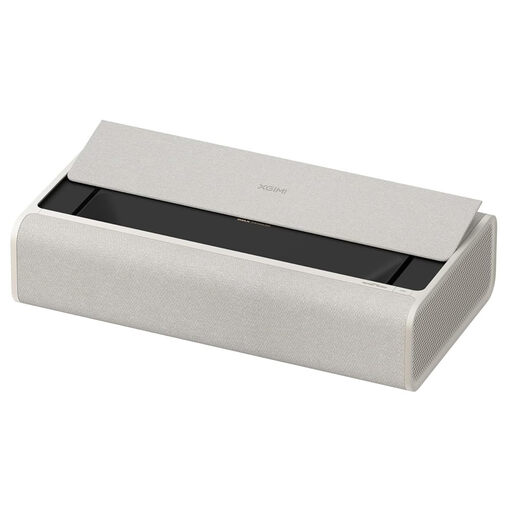 Image unavailable
XGIMI AURA 2 UHD 4K Ultra Short Throw Projector
The ultra-short-throw design is intended for positioning close to the wall; measure the available space first.
UHD 4K; 2,300 ISO lumens; Dolby Vision and IMAX Enhanced; 60 W Harman Kardon speaker.
Joybuy
 Image unavailable
Optoma Photon Beam PK52
Before choosing this model for your room, compare the stated projection ratio with the distance you have available.
4K UHD; 3,500 lumens; 1.21:1–1.59:1 projection ratio; manual zoom; two HDMI 2.0 inputs; 360° control.
Joybuy
 Image unavailable
BenQ MW809STH Short Throw Projector, 3600 ANSI Lumens, DLP XGA (1024x768), White
With the stated short-throw ratio, it’s important to check in advance that the setup will work with your intended image width.
DLP; XGA resolution (1024x768); 0.49 projection ratio; 3,600 ANSI lumens; one HDMI input.
Joybuy
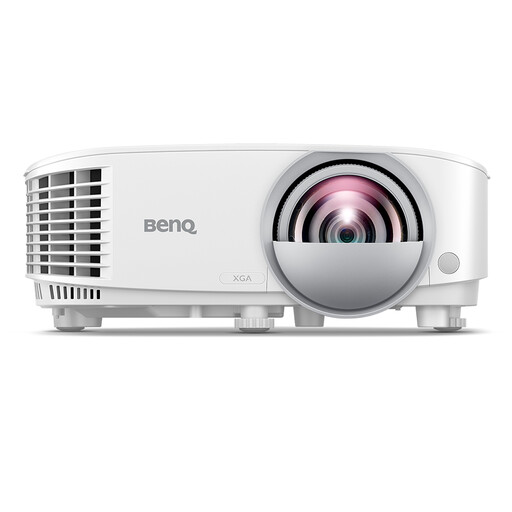 Image unavailable
BenQ MX825STH Short Throw Projector, 3500 ANSI Lumens, DLP XGA (1024x768), White
Compare the projection ratio with the distance and image width in your room to see whether the positioning will work.
DLP; XGA resolution (1024x768); 0.61 projection ratio; 3,500 ANSI lumens; two HDMI inputs; built-in 10 W speaker.
Joybuy
Frequently asked questions
How can you tell whether a projector will give you a usable picture in your room?
Measure the distance from the lens to the projection wall and the clear width of the wall. Compare both with the projection ratio and positioning information for the exact projector. The stated maximum screen diagonal alone isn’t enough.
Do you need permission to mount a projector in a rented home?
According to the Dutch government, you don’t need permission for minor changes that you can reverse without much expense, such as small holes you can fill. You do need permission for renovations. Consider the impact of any proposed fixing. Putting a projector on a freestanding table avoids the need to mount it.
How can you use a portable projector without extensive image correction?
Place the projector on a stable surface and point the lens as squarely as possible at the image surface before applying keystone correction. BenQ warns that this correction can affect sharpness and picture quality, among other things; also follow the instructions for your chosen model.
Does Google TV or a built-in app mean you can watch your tennis match?
No. Having Google TV or certain apps doesn’t confirm that your match is available. BenQ says availability can vary by region, subscription and device settings. Check the specific broadcast and playback method with your provider and on the device you’ve chosen.
What are your rights if you buy online or receive a faulty product?
According to ACM ConsuWijzer, when you buy a standard product online, you generally have 14 days from delivery to change your mind, subject to statutory exceptions. Sellers are also legally required to put right a product that, under normal use, doesn’t meet what you could reasonably expect. The appropriate remedy depends on the circumstances.


