What should you look for when buying?
Start by checking the image size you can achieve from your intended position. Then consider the light in the room, how rallies will look and how your viewing device connects.
Ultra-short-throw projection
Choose this when: a projector further back in your narrow room would get in the way, and the desired image size is within the specifications of the exact model.
Bear in mind: you’ll need a suitable spot for both the projector and the projected image. Window light and your choice of screen still matter.
Short-throw projection
Choose this when: there’s enough space between your seat and the wall for the desired image width, and the projector won’t get in the way.
Bear in mind: this set-up needs more distance from the wall than an ultra-short-throw model.
Standard-throw projection
Choose this when: the calculations for the exact model confirm that the available distance will achieve your desired image size.
Bear in mind: a maximum image size on its own doesn’t tell you whether the picture will fit your room from where you’re sitting.
| What to consider |
What to look for |
Who should consider this? |
| Projection distance and image size |
Measure the distance from the lens to the projection surface and the available image width. Check the distance specifications for the exact model before installing it. |
If I want a big picture without the projector blocking my narrow room, I’ll check the possible positions first. Around 36% of consumers are estimated to prioritise positioning. |
| Visibility in ambient light |
Compare brightness using the same stated measurement basis and take window light, image size and screen into account. A lumen rating doesn’t guarantee a picture that’s visible in daylight. |
If I watch during the day and can’t fully darken the living room, I want to know what the chosen set-up can deliver. Around 29% of consumers are estimated to prioritise daylight visibility. |
| Fast-moving tennis action |
Check whether the exact model has a relevant motion mode, and assess its performance with a similar match source. Gaming input lag isn’t the same as a tennis test. |
If I mainly follow fast rallies, I want to assess moving images rather than judge by still-image detail alone. Around 21% of consumers are estimated to prioritise motion handling. |
| Connections and sound |
Decide how you’ll receive the match and check which HDMI input or app you need. Also make sure the audio connection works with your sound set-up. |
If I want to use my own receiver or streaming device, I’ll check in advance that I can connect both picture and sound. Around 14% of consumers are estimated to prioritise their viewing source and sound. |
Projectors at Joybuy
Below are some projector options at Joybuy to consider for watching tennis in a narrow living room.
 No image available
Optoma H117ST short-throw projector
Worth comparing if you want to connect a tennis source via HDMI and need a short projection distance.
WXGA 1280 × 800, throw ratio 0,52:1 and 3.800 ANSI lumens.
The description lists a sports mode, an HDMI connection and a built-in 10 W speaker.
View at Joybuy
 No image available
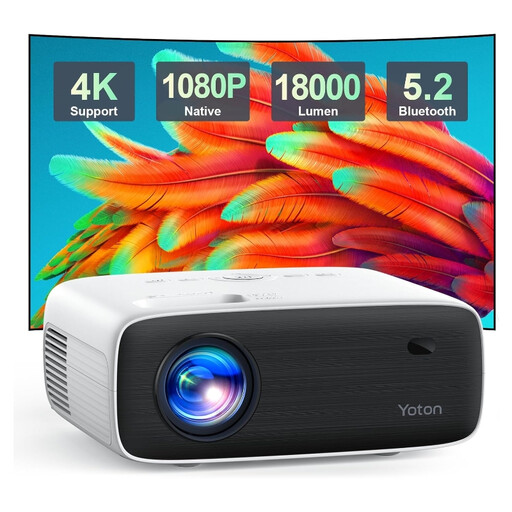
Yoton Y6 5.2 Bluetooth projector, native 1080p
An option to compare if you want to connect an external tennis source via HDMI, USB or AV.
The description lists a native resolution of 1920 × 1080 and Bluetooth 5.2.
The description says that brightness varies by model, so check the specifications of the version you’re viewing.
View at Joybuy
 No image available
BenQ MW809STH short-throw projector
Worth comparing if you need a short projection distance and want the resolution to suit the way you watch.
XGA 1024 × 768, DLP, throw ratio 0,49 and stated brightness of 3.600 ANSI lumens.
View at Joybuy
 No image available
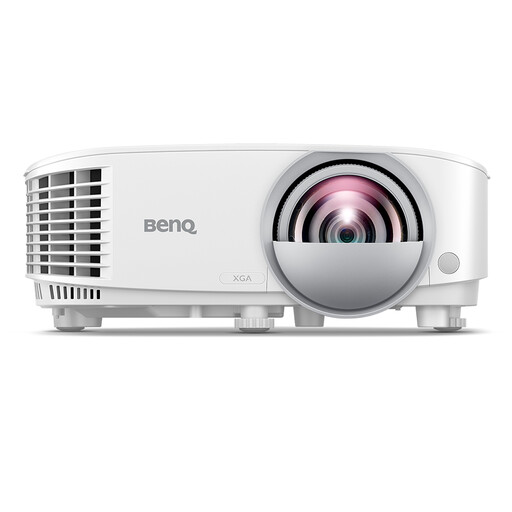
BenQ MX825STH short-throw projector
Worth comparing if you want a short projection distance and to connect an external viewing device via HDMI.
XGA 1024 × 768, throw ratio 0,61 and a stated image size of 60–120 inches.
The description lists 3.500 ANSI lumens, HDMI connections and a built-in 10 W speaker.
View at Joybuy
 No image available
Epson EB-1780W short-throw projector
Worth comparing if you’re looking for a short-throw model with WXGA resolution and an HDMI connection.
WXGA 1280 × 800, 3LCD and one HDMI port.
The description lists 3.000 lumens and automatic vertical and horizontal keystone correction.
View at Joybuy
Frequently asked questions
How do I work out whether the picture will fit in my narrow living room?
Measure the distance from the intended lens position to the projection surface, as well as the available image width. Then check the distance specifications for the exact model. Epson says that the calculated results from its simulator may vary by around 5%.
Does low input lag prove that tennis broadcasts will look smooth?
No, a gaming specification doesn’t prove that. Optoma links the stated input lag of the GT2000HDR to gaming; BenQ separately lists MEMC and a sports mode for the TK705STi. Assess the picture using the type of match source you use yourself.
What should I check before installing the projector?
Check the positioning against the distance specifications for the exact model, and keep cables out of walkways. BenQ lists positioning and lens shift as installation considerations, and advises taking steps to prevent trips caused by cables when using the projector on a table.
Should I buy an extended warranty for a projector?
You don’t need an extended warranty to have your statutory rights. According to ACM ConsuWijzer, these apply alongside any seller’s or manufacturer’s warranty. If a product develops a fault despite normal use, the seller must resolve the problem free of charge under the applicable terms. The Netherlands doesn’t have a fixed general warranty period.
What rules apply when buying a projector online in the Netherlands?
Electrical equipment is subject to the applicable EU safety rules. CE marking and an EU declaration of conformity are required where the rules prescribe them for the product. ACM ConsuWijzer says that online purchases generally come with a 14-day cooling-off period from delivery, subject to statutory exceptions.


