
Tennis fan watching in a bright room
You sometimes watch during the day or with the lights on, and want the court and score to remain easy to see at your chosen screen size.


Start by considering the light in the room and the distance to the screen. Then compare the motion settings, resolution and connections for your tennis source. A model with frame interpolation may suit a fixed viewing position and fast rallies, while a compact or portable model offers more flexibility when positioning it. Before buying, also check that the specific version has the required CE marking and product documentation.
You sometimes watch during the day or with the lights on, and want the court and score to remain easy to see at your chosen screen size.
You’re particularly interested in how movement looks during rallies and want to compare the picture settings on the exact model.
You need to place the projector close to the screen or move it regularly, so distance, picture width and adjustability all matter.
Start with the ambient light and available projection distance. Then consider motion, your tennis source, and the trade-off between detail and running costs.
| What to consider | What to look for | Who is this important for? |
|---|---|---|
| Visibility in a bright room | Compare the stated light output using the same measurement standard, and take screen size and room-darkening into account. | If I watch during the day or leave the lights on, I want the court and score to remain easy to see at my intended picture size. Around 27% of consumers put visibility in a bright room first. |
| Movement during rallies | Check whether the exact model has frame interpolation or a sports picture mode, and whether that setting works with your video source. | During fast rallies, I want to know how the ball is displayed; low gaming input lag alone doesn’t tell me how sports video will look. Around 27% of consumers put motion performance first. |
| Projection distance and set-up | Measure the available distance and desired screen width, then compare them with the throw ratio of the exact model. | If the projector needs to be close to the screen, I want to know in advance whether my preferred picture width will fit in the room. Around 20% of consumers make positioning their top priority. |
| Live picture and sound connections | Check how it connects to your app, set-top box or streaming device, and how it can connect to your existing sound system. | If I watch through my own provider, I want to be able to connect my source and play the sound the way I prefer. Around 13% of consumers choose mainly on the basis of source and audio connections. |
| Detail and running costs | Compare the actual projection resolution with your source, and check the stated lifespan for the specified usage mode. | With a large screen, I weigh the extra detail against the source quality and running costs. Around 13% of consumers put this trade-off first. |
Also check that the specific version has the required CE marking and product documentation. The Dutch government notes that electrical appliances sold in the EU must have the required CE marking.
Input lag describes the delay between a signal being received and the image being projected. It doesn’t directly tell you how a broadcast tennis ball will look.
Compare motion settings separately and check the conditions under which they work with your video source.
A stated light output alone doesn’t tell you what the picture will look like on your screen in your room’s lighting conditions.
Make a note of the measurement standard and assess your preferred screen size in the lighting you’ll actually be watching in.
The throw ratio partly determines the picture width you can achieve at the available distance.
Measure the distance and screen width, then check the specifications for the exact model. Depending on the room, you may also need different mounting equipment or a modified set-up.
A manufacturer’s warranty doesn’t automatically limit your rights against the seller if a product doesn’t meet requirements.
Keep your purchase and product information, and assess any fault under the rules on statutory guarantees. ACM ConsuWijzer explains that this guarantee depends on what you could reasonably expect from the product under normal use.
Its home cinema range includes Full HD models and models with 4K PRO-UHD, frame interpolation or extra positioning adjustments.
The GP520 and TK700STi offer different features to compare for sports viewing and positioning.
According to XGIMI, the HORIZON S Max has a built-in adjustable stand for flexible positioning.
The Photon Life PK31 is a compact 4K LED projector worth comparing for a room you can darken.
This Joybuy selection includes home projectors with features for close or flexible positioning and connecting an external video source. For each model, check whether the light output and resolution suit your room and tennis source, and review the CE marking and product documentation for the exact version.
 Image unavailable
An option to compare if you want to connect a 4K source and motion processing is important to you.
Native 4K; stated light output of 3.800 lumen; 1,3× optical zoom; PureMotion MEMC; two HDMI 2.0 inputs.
 Image unavailable
Its short throw ratio makes this model worth comparing if the projector needs to be close to the screen.
Native WXGA (1280 × 800); 3.800 ANSI lumen; throw ratio 0,52:1; HDMI 1.4a; sports mode.
 Image unavailable
A portable option to compare if you use a native 1080p source and want flexibility when positioning the projector.
Native 1080p; stated light output of 700 ANSI lumen; throw ratio 1:1; automatic focus and keystone correction.
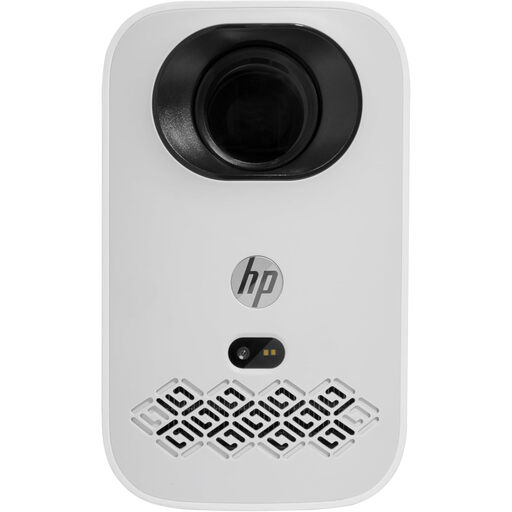 Image unavailable
A model to compare if you want a native 1080p picture and the option to connect an external source.
Native 1080p (1920 × 1080); stated light output of 220 ANSI lumen; HDMI and wireless projection.
 Image unavailable
A portable Full HD option to compare if you want to position the projector flexibly and connect an external tennis source.
Full HD 1080p; stated light output of 450 ISO lumen; built-in battery; HDMI connection; includes EA SPORTS FC 26 game code.
No. Input lag describes the delay between a signal being received and the image being projected. For tennis video, compare the motion settings separately; BenQ’s stated input lag for the TK700STi applies at specifically listed resolutions and frequencies.
Measure the distance from the projector to the screen and your preferred picture width, then compare them with the throw ratio of the exact model. Lens shift or an adjustable stand can help with alignment, but neither replaces checking the distance.
Check that your provider makes the match available through the app, streaming stick or set-top box you use, and that you can connect that source to the projector. An HDMI connection alone doesn’t confirm that a particular match or app is available.
Compare the stated light source life for the specified usage mode, and ask about parts or servicing for the exact version. For a consumer purchase in the Netherlands, statutory guarantees apply alongside any manufacturer’s warranty; according to ACM ConsuWijzer, this depends on what you could reasonably expect from the product under normal use.
The Dutch government notes that electrical appliances sold in the EU must have the required CE marking. Check the marking and product documentation for the exact version on offer.