Which factors determine your choice?
For consumers showing a student animation reel in a room, priorities depend mainly on the projector position, the room lighting and the level of detail in the work.
| Consideration |
What to look for |
Who it matters to |
| Image size and positioning |
Measure the screen width and the distance from the lens to the screen separately. Compare the calculated throw ratio with the model’s full zoom range. |
I want to know first whether the projector position will work with my desired image size; around 31% of consumers prioritise positioning and image size. |
| Visibility in room lighting |
Make a note of whether the windows and room lights will remain on. Compare the stated brightness on the same measurement basis, and factor in your chosen image size. |
If the room lights can’t be turned off, I want the reel to remain visible on the chosen screen; around 25% of consumers prioritise visibility in room lighting. |
| Colour and detail |
Check the reel’s export resolution, the projector’s native resolution and the available colour modes. If possible, test-project it in the room. |
I want fine lines and intended colours to remain clear; for around 25% of consumers, colour and detail come first. |
| Connections and use |
Check the video output on your laptop or player, the HDMI connection and the audio setup. Also compare the light source and the stated lifespan for the specified operating mode. |
If I want to connect picture and sound without any surprises, I also consider ease of use and costs; around 19% of consumers prioritise this combination. |
Projectors at Joybuy
Joybuy projectors relevant to this topic. Compare their stated features with your projector position, desired image size, room lighting and playback device.
 No image available
XGIMI Vibe One Full HD projector with screen, Match Night EU Edition
The bundle listed includes a projection screen with a stand; check whether this setup suits the room and your desired screen size.
The product title lists Full HD 1080p, 250 ISO lumens, Google TV, JBL audio and a built-in battery. Compare the stated brightness measurement basis with that of other models.
View at Joybuy
 No image available
XGODY N7 Cine Smart projector
This version lists native 1080P and a stated brightness of 1,000 ANSI lumens; compare these features with your file and the lighting conditions in the room.
The product title also mentions 4K support, autofocus, keystone correction, obstacle detection, 90° rotation and 2GB+16GB. 4K support is not the same as native 4K resolution.
View at Joybuy
 No image available
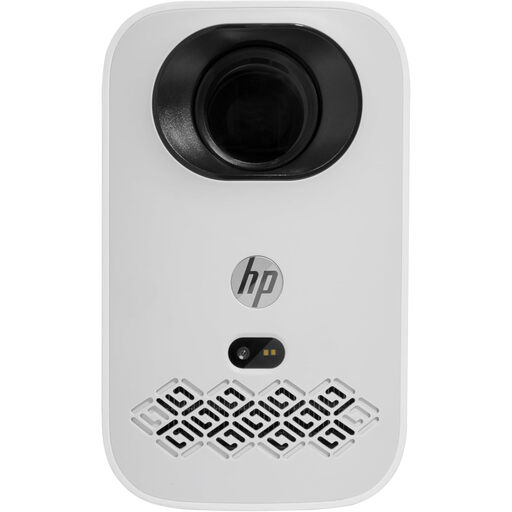
HP CC360 FHD Smart projector
The product title lists FHD, Wi-Fi, Bluetooth and wireless projection; check in advance which connections your playback device and sound system use.
The title also mentions autofocus and keystone correction, as well as 4K support for Netflix and Disney+. This support doesn’t mean the projector has native 4K resolution.
View at Joybuy
 No image available
2026 projector with built-in apps and Play Store
The title lists a screen size of 50–200 inches; this range alone doesn’t indicate what image size you can achieve from your projector position.
Listed features include Wi-Fi 6, Bluetooth, automatic screen correction, 50%–100% digital zoom, 180° rotation and HDMI compatibility. Check that it connects to your own device.
View at Joybuy
 No image available
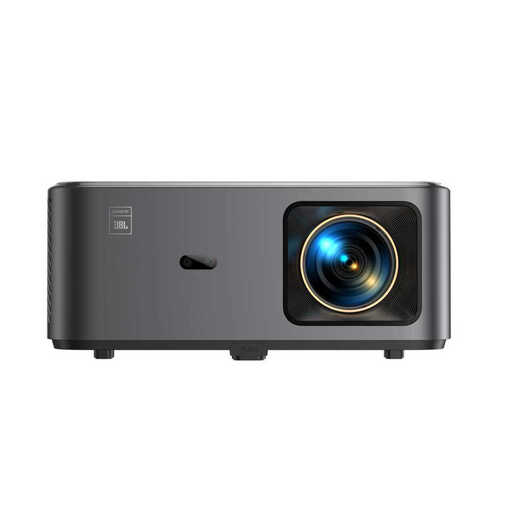
Yaber K2s projector, native 1080P, 4K support
The title lists native 1080P; compare this resolution with the details and titles in your animation reel.
The product title also mentions 4K support, Google TV, Wi-Fi 6, Bluetooth, JBL audio, Dolby Audio and autofocus with keystone correction. 4K support is separate from the stated native resolution.
View at Joybuy
Frequently asked questions
Does a long viewing distance mean you need a long-throw projector?
No. The distance between viewers and the screen is different from the projection distance between the lens and the screen. First decide on a suitable screen size, then check the measured projector position against the model’s throw ratio.
How do you prepare the projector for the screening?
Measure the setup in advance and test your own video file, playback device, HDMI connection and audio setup at the planned venue. Keep the ventilation openings clear; ViewSonic’s LS740HD manual advises this.
Are you always limited to a two-year warranty on a projector in the Netherlands?
No. According to the Dutch government, the Netherlands has no fixed statutory warranty period; what you can reasonably expect from a product depends on the product itself. If there’s a problem, the seller is your point of contact for the statutory guarantee; a manufacturer’s warranty may be offered in addition.
Can you show other people’s music or images publicly in your reel?
Don’t assume you have permission just because you made the reel yourself. According to the Dutch government, you generally need the creator’s permission to use copyright-protected films, photographs and music. Different conditions may apply to use that genuinely falls under educational schemes; a school screening and a public event aren’t necessarily the same thing.


