
Screening a film in a small room
You want everyone to be able to see the picture, but have limited space to position the projector. The distance between the lens and the wall can help you decide which type of setup will work.


First, measure the clear distance to the wall and work out how much ambient light you can block out. Then choose a projector with a throw distance, HDMI connection and audio setup to suit your room and film source. A mains-powered model, a short-throw model and a compact battery-powered projector each suit a different setup. Manufacturer specifications can’t predict exactly how the picture or sound will perform in your room.
You want everyone to be able to see the picture, but have limited space to position the projector. The distance between the lens and the wall can help you decide which type of setup will work.
You can’t make the room completely dark, so you’ll want to weigh the stated brightness against your preferred picture size and the amount of light in the room.
You take the projector with you and want to know in advance how long the battery lasts, how to connect your film and whether the sound will be clear from the seats.
First, measure the lens-to-wall distance and decide on your preferred picture width. Then consider ambient light, speech clarity and how the projector connects to your film source.
| What to consider | What should you check? | Who should consider this? |
|---|---|---|
| Picture visibility | Compare the stated brightness of the exact model with the light in the room and your preferred picture size. | If I can’t make the room properly dark, I want to check in advance whether the picture will be easy to see in my setup. Around 29% of consumers would put visibility first. |
| Throw distance | Measure the distance from the lens to the wall and compare it with your preferred picture width and the specifications for the exact model. | In a small room, I want to avoid the projector or viewers taking up the space people need to move around. Around 24% of consumers would prioritise the available throw distance. |
| Clear dialogue | Check the audio features and any audio output; test a quiet scene from the furthest seat. | If everyone needs to follow the film, I want to know whether dialogue is clear at the back of the seating area. Around 18% of consumers would put speech clarity first. |
| Connecting your film | Check the projector’s input and whether it connects to your own player; test the picture and sound with the same equipment. | If my film is on a laptop or another player, I want to make sure that combination plays the whole file. Around 18% of consumers would prioritise connecting their film. |
| Portability and power | Compare the stated battery life in the relevant mode with the full screening time, and check what power sources are available. | If I’m screening films in different locations, I want to be able to set up the projector without relying on a fixed spot. Around 11% of consumers would put portability first. |
Resolution alone tells you nothing about the stated brightness. Brightness can be a factor when you can’t make the room completely dark.
Consider resolution alongside your preferred picture size and the light in the room. Only compare lumen figures when you know which measurement standard they use.
The stated distance for a short-throw model applies to a particular picture size and setup. A different picture size may require a different distance.
Measure the distance from the lens to the wall and check the exact model’s specifications for your preferred picture width.
The stated speaker power doesn’t tell you how clearly you’ll hear dialogue from the furthest seat.
Test a quiet dialogue scene from that seat and check whether the model has a suitable output for external audio.
These are separate models. Nebula lists 200 ANSI lumens for the Capsule 3 and 300 ANSI lumens for the Capsule 3 Laser.
Check the full model name and the specifications of the version on offer before comparing models.
The CO-FH02 is an example of a mains-powered projector with stated Full HD resolution, HDMI and higher brightness.
The TH671ST is an example of a short-throw model for setups where the projector needs to sit relatively close to the wall.
The Capsule 3 is an example of a compact model for screenings in different locations.
These Joybuy products are suited to watching films in different setups. For each model, check the required throw distance, connections and compliance information for the exact version.
 No image available
An option to consider if you need a short-throw setup and an HDMI film source. Check that the throw distance suits your preferred picture size.
The product name lists 1000 ANSI lumens and native 1080P.
 No image available
Could be a good fit if you want to position the projector flexibly. Check that the available connections work with the player your film is on.
The product name lists HDMI compatibility, automatic picture correction and digital zoom.
 No image available
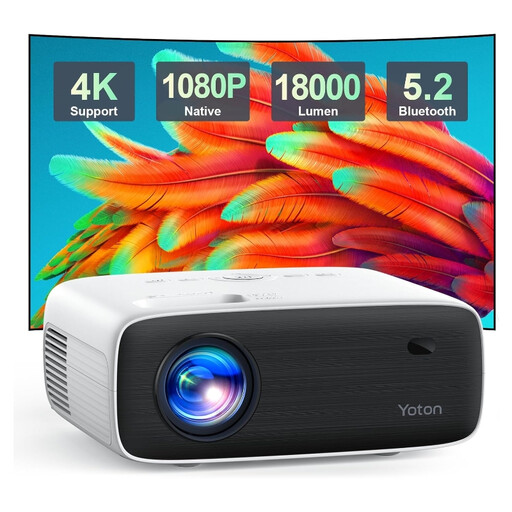
An option to consider if you want to play the film from a wired source. Check the connections on the exact version and on your own player.
The product name lists native 1080P and Bluetooth.
 No image available
Worth considering if a short-throw setup is important. Check the throw distance against the picture size you want for your seating area.
Before the screening, check which connections and audio features are included with the version on offer.
 No image available
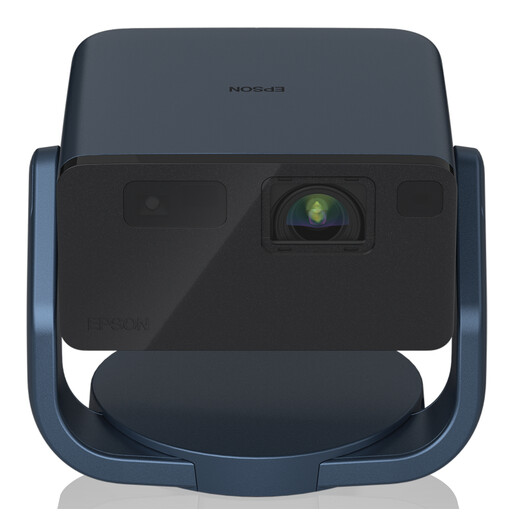
Suited to a standard-throw setup. Measure the space between the lens and the wall before deciding on your preferred picture size.
The product name lists 3LCD and 1080p (1920x1080).
No, not if a standard projector can produce your preferred picture size within the available distance. Measure the room and compare it with the distance specifications for the exact model.
According to Epson Netherlands, BenQ Netherlands and Nebula EU respectively, the Epson CO-FH02, BenQ TH671ST and Nebula Capsule 3 have an HDMI input. Test your own player, any adapter and the film file in advance to make sure both picture and sound come through properly.
Nebula states that the Capsule 3 lasts up to 2.5 hours in Eco mode. Compare this stated maximum with the length of the film and any presentation or discussion afterwards, and test your chosen settings.
Electrical appliances placed on the market in the Netherlands are subject to the applicable European product safety rules. According to Ondernemersplein, after assessing conformity, the manufacturer applies the required CE marking and draws up an EU declaration of conformity. Check the information for the version on offer.
This isn’t automatically allowed just because it’s a student project. The Dutch Government says you need the creator’s permission to use copyright-protected music. BumaStemra describes a specific licensing route for certain non-commercial educational productions. Whether it applies to your film and screening depends, among other things, on the work used and where and how it is screened.