
Organisers in a lit room
You want a large picture and clearly visible intertitles, even if you can't fully darken the room. Epson specifies 4,100 lumens for the EB-FH54; BenQ points out that a larger image needs more light to stay bright.


Start by considering your desired image width, the ambient light in the room and the distance available for the projector. Then compare the stated brightness and throw ratio of models suited to your setup. Make sure the aspect ratio matches the film copy, and check that intertitles are legible from the back row. A higher stated lumen count alone does not guarantee a good picture in every room.
You want a large picture and clearly visible intertitles, even if you can't fully darken the room. Epson specifies 4,100 lumens for the EB-FH54; BenQ points out that a larger image needs more light to stay bright.
You need to achieve the required image width from a fixed distance between the projector and screen. The throw ratio and zoom of the exact model will help you work out whether it will fit your setup.
You prioritise the original film frame and easily readable intertitles, rather than simply stretching the picture to fill a widescreen. The British Film Institute describes 1.33:1 as a traditional aspect ratio for films.
First, work out the image width, room lighting and available projection distance. Then choose a suitable model and check that its image settings match the film copy.
| What to consider | What should you check? | Who does this matter to? |
|---|---|---|
| Brightness at your desired image size | Note the screen width and room lighting. Compare the stated brightness on a like-for-like basis and, if possible, see how the picture looks in the room. | If the room can't be fully darkened, a clearly visible picture is the priority; around 29% of consumers prioritise brightness at their desired image size. |
| Projection distance and setup | Measure the distance from the lens to the screen and the desired image width, then check these against the throw ratio and zoom of the exact model. | If you have a fixed position for the projector and screen, you'll want to know in advance whether you can achieve the desired image width; around 24% of consumers prioritise placement. |
| Film frame and intertitles | Check the aspect ratio of the film copy and test whether the intertitles are legible from the back row. | If you want to preserve the original frame and title cards, you may prefer empty space around the image to stretching or cropping; around 23% of consumers prioritise how films are displayed. |
| Sound for musical accompaniment | Decide whether you'll be playing music. If so, check the audio connection and what external sound setup you'll need. If there is no music, fan noise may be more important. | If music is part of the screening, it needs to be audible in the room; at a silent screening, fan noise could be distracting. Around 12% of consumers prioritise accompaniment or room audio. |
| Maintenance for regular use | Compare the stated lifespan for each operating mode, and check the warranty terms and availability of replacement parts. | If you organise screenings regularly, factor maintenance and servicing into your operating plans; around 12% of consumers prioritise maintenance. |
A larger image spreads the projector's available light over a bigger area. Ambient light can also make the picture harder to see.
Work out your desired image size and lighting conditions, then compare them with the model's stated brightness.
A lumen figure alone doesn't tell you how bright the picture will look in your room. The measurement method, settings, image size and ambient light all play a part.
Check which brightness rating and operating mode are specified. Where possible, compare models at the same image size and in the same lighting.
Stretching changes the composition, while cropping can remove picture details or intertitles.
Check the aspect ratio of the specific film copy and test the picture from the back row.
Outside a strictly domestic setting, you may need permission or licences for protected films and any accompanying music. The rights required depend on the film copy and the event.
Before announcing the screening, check which rights apply to the film and any musical accompaniment. The Dutch government (Rijksoverheid) explains the permission requirements for copyright-protected works; Ondernemersplein outlines licences for screenings held by a business or organisation.
Screening and music rights may involve costs; check what applies to your specific screening.
The models listed suit a range of setups, from a bright Full HD projector for a presentation room to home cinema models with lens shift or a laser light source.
The TH685P is a Full HD DLP projector to consider if its stated throw ratio suits the available distance and desired image width.
The HD146X is a Full HD lamp projector worth considering if its throw ratio suits your available setup.
These Joybuy projectors have features relevant to group screenings, such as image size, setup distance and optional audio accompaniment. Check the specifications of the exact model and make sure they suit your room and film copy.
 No image available
The stated throw ratio may be useful if the available distance limits your setup; check it against your desired image width.
The product title lists 1080p, HDR10 and 700 ANSI lumens. The product description specifies a throw ratio of 1.4:1, autofocus and keystone correction.
 No image available
The stated throw ratio is worth checking if your setup has limited space; compare it with your desired image width.
The title lists native 1080p and 1,000 ANSI lumens. The product description specifies a throw ratio of 1.1:1, autofocus and keystone correction. Keep the ventilation openings clear, and don't look directly into the lens during use.
 No image available
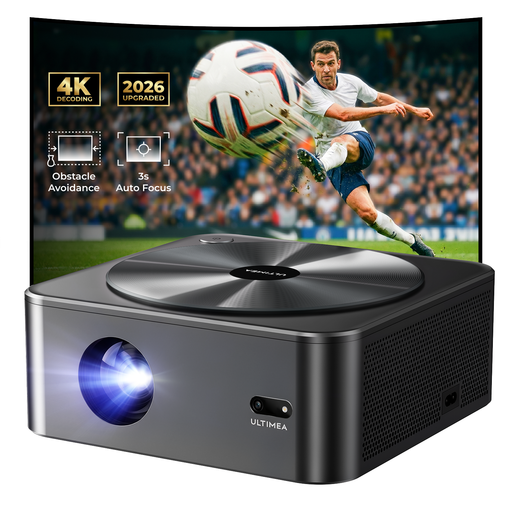
The product description mentions an adjustable gimbal for projecting onto walls, ceilings or floors. Check that the intended direction works with your room setup.
The description lists 3,000 ANSI lumens and 4K UHD. Keep the ventilation openings clear, and don't look directly into the laser light source during use.
 No image available
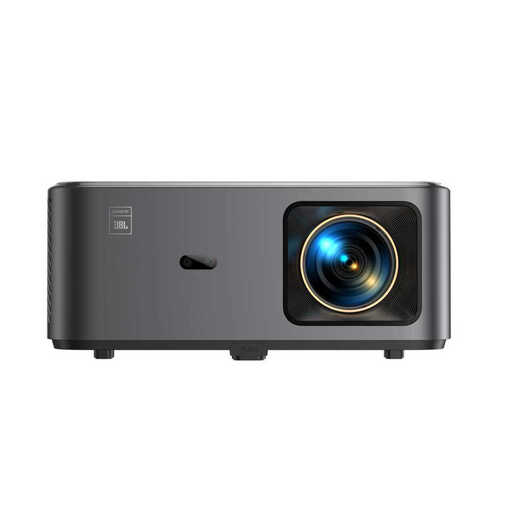
The stated Bluetooth audio feature may be useful if you want to play musical accompaniment through a separate sound system; check that the setup suits your room.
The title lists native 1080p. The product description mentions two 10 W JBL speakers; the title also lists Bluetooth. Leave at least 30 cm of space around the air intake and outlet, and don't look directly into the lens during use.
 No image available
The product description lists projection from 1.35 metres; check whether this distance will give you the desired image width in your room.
The title lists native 1080p and 900 ANSI lumens. The product description specifies a throw ratio of 1:1. Keep the ventilation openings clear, and don't look directly into the lens during use.
Yes, as long as the playback settings preserve the frame of the specific film copy. The British Film Institute gives approximately 1.33:1 as a traditional aspect ratio for films. Don't automatically stretch or crop the image to fill a widescreen. Check the copy and test whether the intertitles are legible.
Measure your desired image width and the available distance from the lens to the screen, then compare them with the throw ratio and zoom range of the exact model. A stated maximum image size isn't, by itself, enough to work out where to place the projector.
Not if you deliberately choose to screen it without sound. If you want to add music, check the audio connection and what sound setup the room needs. A built-in speaker alone doesn't guarantee that a large audience will hear the music clearly.
For a lamp-based model, check the stated lifespan for each operating mode, the availability of replacement parts and the warranty terms. Epson specifies 12,000 hours in Eco mode for the EB-FH54; this figure applies to that mode. For a group screening, also check which rights apply to the film and any music.
The age of the film alone doesn't give you a definitive answer. According to the Dutch government (Rijksoverheid), you can't make copyright-protected films and music available to the public without permission; different rules apply to strictly domestic settings. Ondernemersplein lists a screening licence for films shown to employees or guests within a business or organisation. Check which rights and permissions apply to your chosen film copy, event and any music.