
Watching with the kitchen lights on
You want to watch a film during a meal with the lights on. BenQ Netherlands explains that brightness is relevant when there is ambient light.


First, choose a projector to suit the light you’ll have on while watching and the distance to the projection wall. If the kitchen lights will be on, the stated brightness matters. A portable model may be suitable if you can darken the room and want to put the projector away after use. Then check that your version of the film fits fully on screen, that intertitles are easy to read from the dining table and that your film source works with your chosen playback method.
You want to watch a film during a meal with the lights on. BenQ Netherlands explains that brightness is relevant when there is ambient light.
You want to set up the projector temporarily and put it away afterwards. The distance to a clear wall and the space around the device determine which set-ups are possible.
You want to read the intertitles and preserve the film’s frame. Eye Filmmuseum explains how intertitles convey information about things such as the passage of time and the characters.
Start by considering the amount of light and the distance available in your kitchen-diner. Then assess the film’s frame, how easy the text is to read and how you’ll play your film source.
| What to consider | What should you check? | Who is this most relevant to? |
|---|---|---|
| Picture quality with the kitchen lights on | Make a note of which lights will stay on, and compare brightness only when the unit of measurement is clear. ANSI lumens, LED lumens and light-source lumens are not directly interchangeable. | If the kitchen lights will be on during the film, I want the picture to remain visible without assuming that brightness also guarantees good contrast. Around 36% of consumers say visibility with the kitchen lights on is their main buying concern. |
| Distance and picture size | Measure the available wall width and possible distance from a stable, dry surface. Compare these with the projection specifications for the exact model. | If the projector, wall and desired picture size all need to fit in a small room, I want to know in advance whether the set-up will work. Around 29% of consumers prioritise placement. |
| Intertitles and film frame | View a representative intertitle from the dining table and check the aspect ratio of your version of the film. Avoid stretching or cropping if this would remove parts of the frame. | If the text and edges of the film matter, I want to be able to read the intertitles without losing the original frame. Around 21% of consumers prioritise readability and framing. |
| Film source and playback | Check that your player or service works through a suitable connection or playback method. Also consider the power supply and a spot away from cooking moisture and heat. | If I mainly want a practical film night, I want to know in advance how my chosen version of the film and any music will play. Around 14% of consumers make playback and everyday use their main concern. |
ANSI lumens, LED lumens and light-source lumens can refer to different measurements. Ambient light also affects how clearly you can see the projected image.
Check the unit of measurement for the exact model and consider whether its stated brightness suits the light you’ll have on while watching.
Stretching or cropping the image can change the original frame and affect text or picture at the edges.
Use the setting that shows the complete frame of your version of the film. Blank areas at the sides can be normal.
The picture width you want depends on the model’s projection distance. Heat and moisture can also limit where you can place the device.
Measure the available wall space and distance beforehand, and check the manual for the exact model’s placement requirements.
A product listing for the Philips NeoPix 230 Smart NPX230/INT gives conflicting information about its native resolution. Don’t rely on it to confirm the model’s specification.
Check the manufacturer’s specifications and make sure the product variant and current details match before ordering.
BenQ offers models here with different stated brightness levels and throw ratios; the features mentioned apply to the individual models.
The Lifestudio Pop EF-61W is a portable model with stated set-up and playback features.
The NeoPix 230 Smart NPX230/INT is worth considering if a rotating set-up is important to you.
This selection includes projectors for home use where stated brightness, a short throw distance or a portable set-up may be relevant. Check that each model’s specifications suit your lighting, space and film source.
 No image available
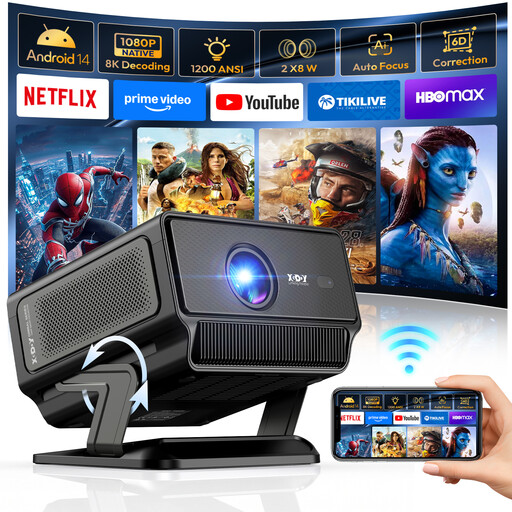
The stated throw ratio may be useful if the distance to the wall is limited.
The product information lists native 1080P, 1200 ANSI, a throw ratio of 1,08:1, autofocus and keystone correction.
 No image available
The stated short throw distance may suit you if the projector needs to sit close to the projection surface.
The product information lists native 1080p, a ratio of 0,18:1, a projection distance of 0,26–0,4 m and fixed zoom. The stated picture size is 60–100 inches.
 No image available
The stated short throw ratio may be relevant if there’s little space between the projector and the wall.
The product information lists 3600 ANSI lumens, XGA 1024×768, a ratio of 0,49 and a 4:3 aspect ratio. HDMI and USB connections are also listed.
 No image available
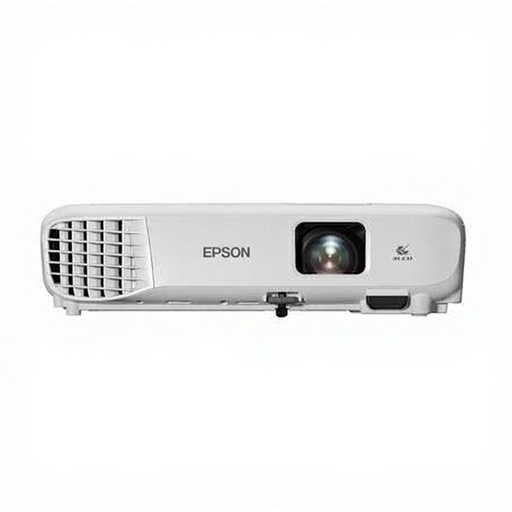
The stated brightness is worth considering if you want to leave the kitchen lights on while watching; assess the picture in your own room too.
The product name lists 4000 ANSI lumens and WXGA. The product information also mentions 3LCD technology and two HDMI connections.
 No image available
The rotating set-up may be worth considering if you’re looking for flexible placement; check the picture size and distance in your room beforehand.
The product name lists native 1080P and 900 ANSI. The product information mentions a ratio of 1:1, autofocus and keystone correction.
No. Match the setting to the version of the film you’re playing. Older films often used an aspect ratio close to 4:3; keep the full frame rather than cropping the image to fill a widescreen.
First, measure the distance to a clear wall and compare it with the projection specifications for the exact model. Place the device on a stable surface, away from cooking moisture and heat; the Philips NeoPix 230 manual specifically warns against heat and moisture.
It depends on the version of the film and how you want to play it. Eye Filmmuseum also offers silent films with music, so check that your player, connection or supported playback method works with that version, and decide how you want to listen to the music.
Compare stated brightness figures carefully, paying attention to the unit of measurement. ANSI lumens, LED lumens and light-source lumens are not directly equivalent. Also check whether the manufacturer gives the figure for the exact model, and assess the picture with your kitchen lights on.
For online consumer purchases, you generally have up to 14 days after delivery to change your mind, subject to legal exceptions. In the Netherlands, statutory guarantees also apply if a product used normally fails to meet what you could reasonably expect; the retailer is your point of contact. ACM ConsuWijzer explains these consumer rights.