
Late-night viewer with housemates
You watch when others need peace and quiet, so you mainly want to know whether the fan will be distracting in a usable picture mode. BenQ Netherlands publishes noise levels for the GV50 in each mode.


Start by checking where you can position the lens, how much light you can block out and how audible the fan is in the picture mode you want to use. A compact projector is more suited to a dark room and a set-up you can put away after use. If there’s more ambient light, a model with a higher quoted light output may be worth considering, but check the positioning and fan noise too. For films with an almost square picture, keep the original aspect ratio: the British Film Institute explains that much early 35mm cinema used a ratio of around 4:3.
You watch when others need peace and quiet, so you mainly want to know whether the fan will be distracting in a usable picture mode. BenQ Netherlands publishes noise levels for the GV50 in each mode.
You share the room, set up the projector each time and put it away afterwards. That makes the projection distance and the options for positioning the picture especially important.
You can’t always block out the ambient light, so you need to weigh brightness against the set-up required and the fan noise.
First, measure the available distance and think about how much you can darken the room. Then compare the noise and quoted light output in the modes you actually plan to use.
| What to consider | What to look for | Who is it important for? |
|---|---|---|
| Fan noise | Compare noise levels for each mode and consider whether the picture remains usable in that mode in your room. | If I’m watching while my housemates need peace and quiet, I want to know whether the fan is audible in a mode I can use. Around 33% of consumers put fan noise at the top of their list when buying. |
| Distance and positioning | Measure the distance from the lens to the wall and the available picture width, then compare them with the throw ratio of the exact model. | If I have to set up and put away the projector each time, I want to know whether the picture will fit from the space available. Around 25% of consumers say positioning and picture size are their main concerns when buying. |
| Ambient light | Check how much light you can block out and what light output is needed for your preferred picture size and mode. | If the shared room can’t always be dark, I want the picture to be easy to watch in those conditions. Around 25% of consumers make brightness their top priority. |
| Film playback and running costs | Check the aspect ratio of your film source, the connection you’ll need, and information about the light source and maintenance. | If you want to watch films in their original framing and factor in maintenance, you can compare these points in advance. Around 17% of consumers put film playback and running costs first. |
A higher quoted light output won’t automatically solve positioning problems or noticeable fan noise. The mode you need and the ambient light also affect your choice.
First, work out how much light you can block out, then compare both brightness and noise in the modes you can use.
BenQ warns that keystone correction can affect things such as sharpness and picture size.
First, choose and measure a suitable lens position. Then use digital correction for any adjustments still needed.
Maintenance and warranty claims are separate considerations. For example, lamps, filters or other required parts may become relevant over time.
Check which parts may need maintenance or replacement for the exact model, and what your rights are when dealing with the seller.
The GV50 is a portable model for a set-up you can move around.
The EH-TW6250 is a home cinema model for which Epson quotes a light output and optical zoom.
Philips describes the NeoPix 550 as a compact home projector for a dark room.
XGIMI presents the MoGo 4 as a portable model with a battery and adjustable stand.
This selection includes portable projectors and models for short-distance projection. For a quiet film night, compare the fan noise in the picture mode you plan to use too.
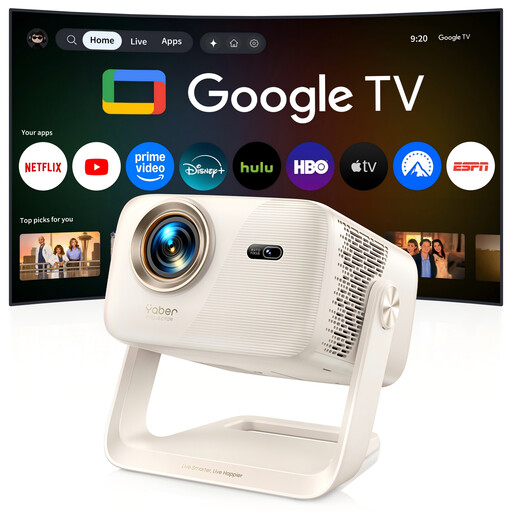 No image available
A portable option to compare if you want to put the projector away after use. Check the fan noise in your preferred picture mode beforehand.
The product name lists native 1080p, 520 ISO lumens, built-in Google TV and a flexible stand.
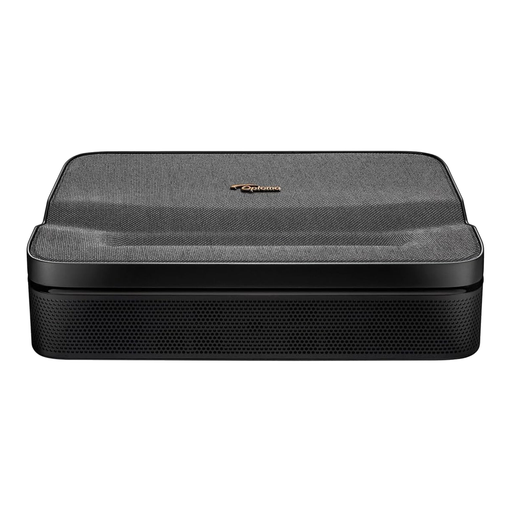 No image available
A model to compare if the projector needs to sit close to the wall. Check the required projection distance and whether the connections suit your film source.
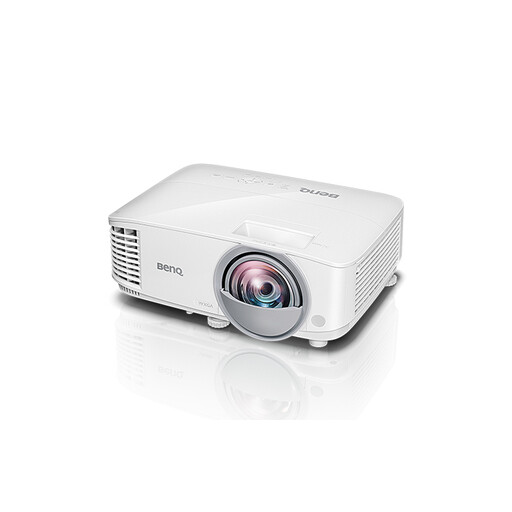 No image available
Consider this model if you’re looking at a short projection distance and films in 4:3 format. Check the exact positioning and picture settings.
The product name lists 3,600 ANSI lumens and XGA resolution (1024 × 768).
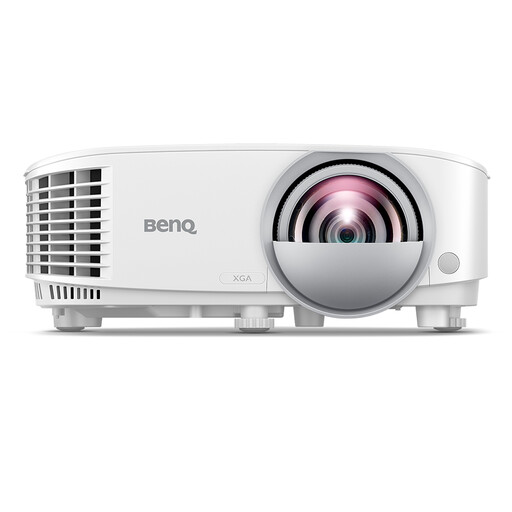 No image available
An option to compare if you want to watch films in 4:3 and have limited space for positioning the projector. Check the required distance and fan noise.
The product name lists 3,500 ANSI lumens and XGA resolution (1024 × 768).
 No image available
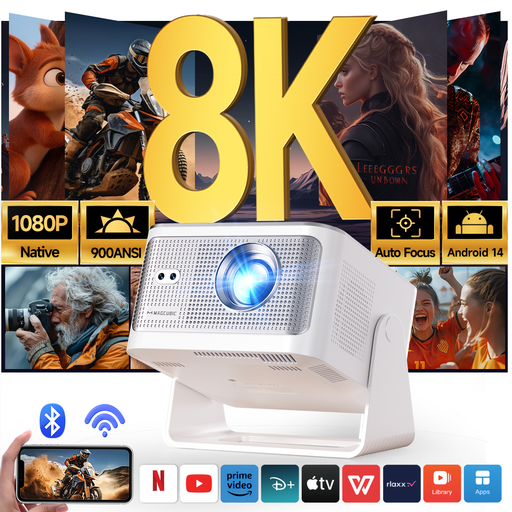
A portable option to compare for a small room. Consider the positioning and check the fan noise in the mode you plan to use for films.
The product name lists native 1080p, 900 ANSI lumens, Android 14 and 180° rotation.
No. First check the aspect ratio of the version of the film you’re playing and choose a display mode that preserves its framing. The British Film Institute explains that much early 35mm cinema used a ratio of around 4:3; that doesn’t mean every available version of a film has the same ratio.
Measure the distance from the intended lens position to the wall and the available picture width. Compare these with the throw ratio of the exact model; BenQ describes this ratio as the distance divided by the picture width. Try to find a suitable position before relying heavily on digital keystone correction.
No. According to the Dutch government, statutory warranty in the Netherlands has no fixed time limit. What you can expect from a product depends on factors including the product and normal use. If a product is faulty, the seller is your point of contact, even if an additional manufacturer’s warranty has expired.
Auteursrecht.nl explains that screenings within a strictly private domestic circle are exempt from requiring permission from the creators. This circle is limited; a screening outside it doesn’t automatically fall under the same exception. Don’t assume that an old film is automatically out of copyright either.
According to RVO, CE is a mark by which the manufacturer declares that the product meets the applicable EU requirements; it is not an independent safety certification. The requirements apply to the specific product version.