
Viewers sitting to the side
You often sit away from the centre line and want to know whether the screen is easy to view from your seat.


Start by checking the screen’s viewing angle from where you sit: lens shift moves the projected image, but it doesn’t change how the screen looks from a side seat. Then choose a projector whose throw distance and placement range suit the room. For fine lines and façade details, source quality and the amount of digital image correction also matter.
You often sit away from the centre line and want to know whether the screen is easy to view from your seat.
A cabinet, ceiling mount or walkway determines where the projector can go. You want to check the distance and sideways position before you buy.
You want to follow floor plans, lines and façade details, and weigh image detail against ease of placement and digital correction.
Choose this if: the projector can be positioned centrally, but viewers often sit away from the centre line.
Bear in mind: the viewing angle varies by screen material, so assess the exact screen from the seats you plan to use.
Choose this if: the projector also needs to sit away from the centre line and its shift range suits the measured offset.
Bear in mind: the range varies by model. Also check the throw distance and the screen’s viewing angle.
Choose this if: you move the projector regularly and want to realign it each time.
Bear in mind: digital alignment can only correct the image within its original edges and is no substitute for a suitable optical range.
| What to consider | What to look for when buying | Who is this important for? |
|---|---|---|
| Viewing from a side seat | Compare the stated viewing angle for the exact screen material and assess the screen from where you’ll be sitting. | If I often sit away from the centre line, I want to know whether the screen I choose will give me a usable picture from there. Around 33% of consumers prioritise the viewing position. |
| Projector placement | Measure the distance and sideways offset; check the throw ratio, zoom and horizontal lens shift of the exact model. | If a cabinet or walkway limits where I can put the projector, I want to know whether the model can project from that position. Around 25% of consumers prioritise placement. |
| Fine lines and details | Compare the stated resolution with your playback source and consider how much digital image correction your setup requires. | For programmes featuring floor plans and façade details, I want to follow the lines without relying on the resolution figure alone. Around 25% of consumers prioritise image detail. |
| Ambient light | Take windows and lighting into account; check that the screen material suits the projector type and seating positions. | If I watch during the day or with the lights on, I want to choose a screen that suits both the room and where I sit. Around 17% of consumers prioritise ambient light. |
Lens shift moves the projected image, but it doesn’t change the viewing angle from a side seat.
First assess the screen from where you’ll be sitting, then work out where the projector needs to go.
These features work differently. Digital alignment can’t extend the image beyond its original projection edges.
Check the exact model’s horizontal optical range and avoid unnecessary digital correction.
Screen materials can vary in viewing angle, and they’re not all designed for the same type of projector.
Compare the specifications for the exact material and check that it suits your projector and seating positions.
According to soundcore, these versions have different light source and brightness specifications.
Before buying, check the full model name and the specifications for the version you’ve chosen.
The EH-TW7100 and EH-TW7000 are home cinema models worth comparing if the projector can’t be positioned centrally.
The W2720i is a model worth considering for its resolution and connections if the projector can be positioned roughly in the centre.
Models with automatic screen alignment are worth considering if you regularly reposition your projector.
The Capsule 3 (New) is a portable option if easy repositioning matters more to you than a fixed setup with verified horizontal lens shift.
These product picks are home projectors with automatic alignment or placement features where specified. Always check the throw distance and the horizontal lens shift required for your setup.
 No image available
The listed autofocus and keystone correction are worth considering if you reposition the projector. Assess the viewing angle from your seat separately, using the screen.
 No image available
The listed autofocus and automatic keystone correction are useful if you reposition the projector. The screen’s viewing angle remains a separate consideration.
 No image available
The listed autofocus and automatic keystone correction may be useful when repositioning the projector. Also check that its throw range suits your room.
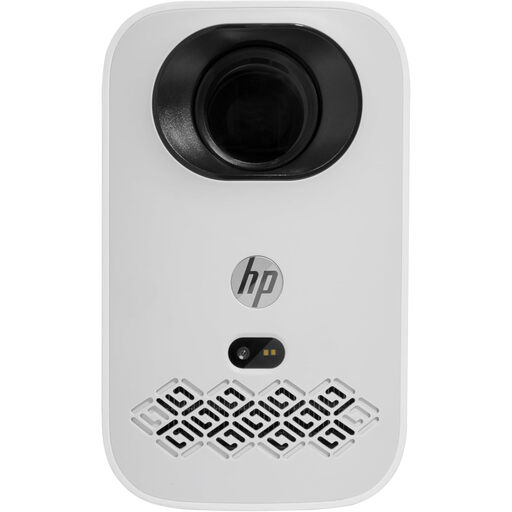 No image available
The listed autofocus and keystone correction are worth considering if you change the projector’s position. If you sit to the side, check the screen’s viewing angle separately.
 No image available
Automatic image correction and rotation may be useful if you regularly change the projector’s position, but they don’t affect the viewing angle from your seat.
Not directly. Horizontal lens shift moves the projected image when the projector is positioned away from the screen axis. If you sit off-centre, also consider the screen material’s viewing angle from your seat.
Measure the screen width, the possible distance between the projector and screen, and the projector’s sideways offset. Compare these measurements with the exact model’s throw ratio and lens shift range, and check that the screen suits the projector type.
No, it depends on the feature and the setup. According to XGIMI, the original digital projection must be able to cover the entire screen; black borders around the screen can help, while some optical coatings may interfere with the sensors. This applies to the feature described by XGIMI, not automatically to all projectors.
According to ACM ConsuWijzer, online consumer purchases generally come with a cooling-off period of up to 14 days after delivery, subject to legal exceptions. You also have statutory rights if a product is faulty; these are separate from the cooling-off period.
The Dutch government states that electrical appliances placed on the market in the EU must have a CE marking. Check the product information and origin; a CE marking doesn’t tell you whether the projector suits your room or seating positions.