
Workshop host with lit worktables
You want to show a film while participants have enough light to work with their clay. How visible the picture will be is therefore an important consideration.


First, choose a safe position and measure the distance to the projection surface. Then decide how much task or kitchen lighting will remain on during the film. A standard projector may be suitable if you have enough distance, while a short-throw or ultra-short-throw model offers more placement options when space is limited. Also check the sound, the connection for your film source and any screening rights: a brightness rating alone doesn’t guarantee a good picture.
You want to show a film while participants have enough light to work with their clay. How visible the picture will be is therefore an important consideration.
You want a suitable picture size without the projector or beam getting in the way of worktables and walkways. The available projection distance is a key factor.
You use the film to explain each step and want to check that you can connect the film source and that participants can hear the spoken instructions.
Measure the room and decide how much light and sound you’ll need during the screening. Only then compare projector types and specifications for your intended picture size.
| What to consider | What to look for | Who should consider this? |
|---|---|---|
| Picture visibility with task and kitchen lighting | Compare the stated brightness measurements on a like-for-like basis and view the picture at your intended size. Epson emphasises that the viewing environment helps determine the brightness you need. Where possible, reduce the light falling on the screen. | If participants need light to keep working during the film, you’ll want to know whether the picture will remain visible in that setup. Around 36% of consumers put visibility with the lights on first. |
| Projection distance and clear workspace | Measure from the intended lens position to the projection surface and compare the distance with the documentation for your desired picture size. A short-throw or ultra-short-throw model still needs a suitable position and screen size. | If tables or walkways restrict your setup, you’ll want to position the projector so the beam doesn’t cross the workspace. Around 29% of consumers give top priority to having clear setup space. |
| Clear speech and connectivity | Check that the inputs are compatible with your laptop or player, and that there’s an audio output if you want to connect separate speakers. A manufacturer’s stated speaker power doesn’t, by itself, tell you how clearly speech can be heard over workshop or kitchen noise. | If spoken instructions in the film are important, you’ll want to hear the voice from the furthest listening position and make sure your source can be connected. Around 21% of consumers put audible explanations and connectivity first. |
| Maintenance and use | Check the light source, maintenance instructions, usage restrictions and warranty terms for the exact model. Also make sure there’s enough space around the projector for ventilation. | If you’ll be using it regularly for workshops, you’ll want to know what maintenance your chosen projector requires and whether the planned location is suitable. Around 14% of consumers make maintenance and running costs their main concern. |
A higher stated light output doesn’t automatically guarantee a good picture. Ambient light and the projection surface both affect visible contrast.
Consider the brightness measurement, your desired picture size and the light falling on the screen together. BenQ cautions that more lumens don’t automatically mean excellent picture quality.
A speaker’s stated power doesn’t tell you whether spoken explanations will be audible over workshop or kitchen noise.
Test speech from the furthest listening position and check in advance which audio output is available. Epson and BenQ list speaker specifications for individual models, but these don’t determine how clearly speech can be heard in your room.
If the built-in speaker isn’t sufficient, you may need a separate speaker and a suitable audio cable.
Screening a protected work outside a strictly domestic setting may require permission from the rights holders.
Before the workshop, check who owns the rights and whether the permission covers the specific film screening at that event. Auteursrecht.nl and the Dutch government explain the limits on using protected material.
These brands offer examples of different projection types. Assess each model based on distance, light, sound and your planned setup. The stated specifications don’t guarantee the results you’ll get in your workshop.
Epson offers Full HD lamp projectors such as the CO-FH01 and EH-TW840, as well as the EB-775F ultra-short-throw model. These are different models and setup options, not a general recommendation for the brand as a whole.
The TH671ST is a Full HD short-throw model, while the GP520 is designed for portable setups in different locations. Compare the models based on the space available and how you’ll use them at each venue.
Optoma presents the ZH420 as a Full HD laser projector for settings including meeting rooms. This standard model won’t automatically be a solution if projection depth is limited.
These projector options from Joybuy cover short-throw, standard, portable and ultra-short-throw setups for showing a workshop film. Before choosing, check that the distance, connections and sound setup suit your room and film source.
 Image unavailable
The short-throw designation may be useful if projection depth is limited. Measure the position and desired picture size in advance.
WXGA 1280 × 800; 3.800 ANSI lumens; throw ratio 0,52:1; HDMI; built-in 10 W speaker.
Place the projector on a stable surface with good ventilation, away from water and moisture. The stated speaker power doesn’t guarantee clear speech in your workshop.
 Image unavailable
The portable gimbal setup may suit you if you want to use the projector in different places. Check the projection distance and ambient light at each location.
4K UHD; 3.000 ANSI lumens; throw ratio 1,2:1; two HDMI inputs; speaker power 20 W.
The product information warns against use in a damp environment. Keep the ventilation openings clear and position the device away from flammable or explosive materials.
 Image unavailable
The short-throw designation makes this model worth comparing if projection depth is limited. Check the picture size in the position where you plan to place the projector.
3.600 ANSI lumens; DLP; XGA 1024 × 768; throw ratio 0,49; two HDMI ports; built-in 10 W speaker.
Keep the device away from water, ensure good air circulation and don’t look directly into the lens while it’s in use.
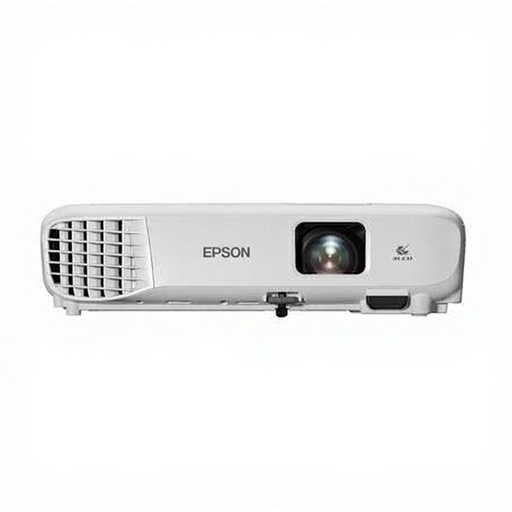 Image unavailable
A standard projector may be suitable if you have enough distance and can keep the beam away from workstations and walkways. Measure the room before deciding on the picture size.
4.000 ANSI lumens; WXGA; two HDMI ports; stated lamp life of up to 12.000 hours in Eco mode.
Place the projector on a stable surface, keep the ventilation openings clear and position cables so they don’t create a trip hazard.
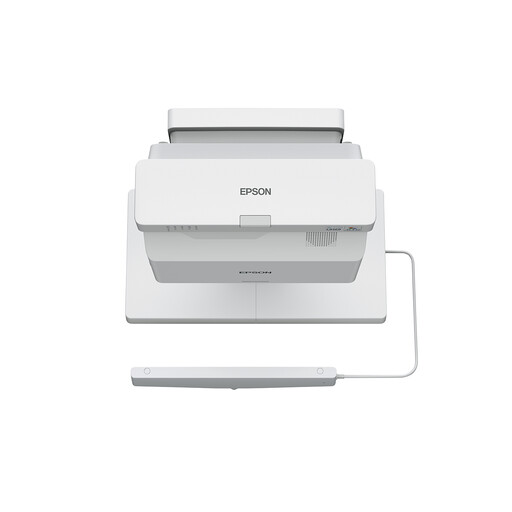 Image unavailable
An ultra-short-throw setup may be useful if you have almost no projection depth. Check the desired picture size and where the projector can be mounted or placed in advance.
4.100 ANSI lumens; WXGA 1280 × 800; throw ratio 0,27–0,37:1; HDMI connections.
Keep the ventilation openings clear and disconnect the device from the power supply before moving or cleaning it.
Not just for this workshop. First check your desired picture size, ambient light, viewing distance and the quality of the film source. Epson describes Full HD as an option for films and emphasises that the viewing environment affects your choice of brightness.
Choose a stable position out of reach of potential splashes and keep the ventilation openings clear. Also check the usage restrictions for the exact model. The Dutch Fire Service advises that heat from electrical equipment needs to be able to escape; this doesn’t give a fixed minimum distance from a kitchen.
It depends on the model. Epson lists direct playback of content including videos from USB for the EB-775F. Don’t assume another projector has the same feature or supports every file format.
When you buy as a consumer, the product must meet what you could reasonably expect. According to the Dutch government, there’s no fixed statutory warranty period in the Netherlands; a manufacturer’s warranty is an additional benefit. Check the purchase terms and whether you’re buying as a consumer or a business.
Not necessarily if it’s copyright-protected material being shown outside a strictly domestic setting: you’ll need permission from the rights holders. Auteursrecht.nl and the Dutch government point out that buying or renting a film, or having a personal streaming subscription, doesn’t in itself give you permission to screen it outside that setting. Check the rights for the specific film and event.
Follow the usage restrictions for the exact model, make sure heat can escape, and keep the projector away from water and moisture. The Netherlands Food and Consumer Product Safety Authority states that CE marking is compulsory for electrical products. A CE mark doesn’t prove that a projector can withstand splashes or kitchen moisture.