
Watching during the day with high windows
If you watch period dramas while daylight is coming in, first consider how visible the picture is on screen, the brightness and the image size you can achieve.


If you can reduce the light coming through your high windows, also compare how each projector displays dark scenes, colours and details, and check whether the throw distance works in your living room. If the room stays bright, pay extra attention to the stated brightness and a suitable image size; a lumen rating alone doesn’t guarantee a clear picture on a screen exposed to daylight.
If you watch period dramas while daylight is coming in, first consider how visible the picture is on screen, the brightness and the image size you can achieve.
If you can reduce the light coming through the windows, you’ll also want to assess shadow detail, colour and costume details, rather than looking only at the highest lumen rating.
If you need to fit the projector, screen and furniture into a small space, compare standard throw distance with ultra-short throw.
Suitable if: you watch during the day, have space between the projector and screen, and want to reduce washed-out images.
Trade-off: Epson states that the EH-TW840 delivers 4,000 lumens for both white and colour light output; BenQ lists 3,800 ANSI lumens for the Full HD TH575i. These specifications use different measurement terms and don’t, on their own, predict how dark scenes will look in daylight from a window.
Suitable if: you can use curtains or blinds and want to take the way costumes and interiors are rendered into account.
Trade-off: BenQ specifies the W2720i as 4K UHD with 2,500 ANSI lumens; in unrestricted daylight, visibility also depends on the room and the screen size you choose.
Suitable if: you have little space between the projector and screen and are considering a fixed set-up with a screen designed for it.
Trade-off: BenQ states that the V5000i has a throw ratio of 0.25 and 2,500 ANSI lumens, and recommends an ALR screen as an accessory. Don’t assume accessories are included or that a screen will block incoming sunlight.
| What to consider | What should you look for? | Who should pay extra attention? |
|---|---|---|
| Visibility in daylight | Check how much light reaches the screen area at your usual viewing time; compare brightness ratings and their units, and consider a smaller image size or blinds. | If I watch during the day, I first want to know whether the picture will remain visible on my screen. Around 36% of consumers prioritise visibility in daylight. |
| Dark scenes, colour and detail | Assess your preferred film mode at your planned screen size, both with the room darkened and in your usual window-light conditions. | For period dramas, I also want to assess dark scenes and costume details. Around 29% of consumers prioritise film picture quality and colour. |
| Throw distance and screen position | Measure the distance from the lens position to the screen and the usable screen width; check the throw ratio for the exact model. | With limited space, I want to know in advance whether the projector and screen will fit in the available positions. Around 21% of consumers prioritise the set-up. |
| Streaming, sound and light source | For the exact version, check streaming features, connections, the built-in speaker and the type of light source; also check which accessories are included. | I want to be able to stream series and know what sound equipment and accessories my set-up will need. Around 14% of consumers prioritise ease of use and what’s required. |
Daylight on the screen and your chosen image size affect how visible the projection is; a stated light output doesn’t tell you how much light from the window will fall on your screen.
Check the intended screen position during the day and compare projectors at the same achievable image size.
You may still need blinds or a different screen position for your set-up.
An ultra-short throw projector requires careful consideration of screen compatibility and positioning. BenQ recommends an ALR screen for the V5000i as an accessory; this isn’t a feature of every screen.
Check that the screen is suitable for your chosen projection direction and whether it’s included in the offer.
A screen that suits your set-up may need to be bought separately.
The models reviewed differ in their light source, connections, streaming features and built-in speaker.
Compare the exact version and check what comes with the projector.
Depending on the version, your set-up may need additional items, such as an external source, sound equipment or a screen.
Epson is worth comparing if you’re considering a bright, standard Full HD projector.
BenQ offers models that involve different trade-offs between brightness, film picture quality and throw distance.
The UHD38x is a technical example for comparison: a bright 4K lamp projector.
These projectors are options to compare for streaming series and home use. Always assess brightness in relation to the light coming through your windows and your preferred image size.
 No image available
Built-in Google TV is worth considering if you want to stream series; assess how visible the picture is in your room’s window light and at your chosen image size.
The product name lists native 1080P, 520 ISO lumens and two 5 W speakers. It also mentions a flexible stand and compatibility with ceiling mounting.
 No image available
The product name lists Whale TV OS and a Netflix licence for streaming; in daylight, also consider the screen position and your preferred image size.
The name lists 1,000 ANSI lumens and native 1080P. It also mentions autofocus and keystone correction.
 No image available
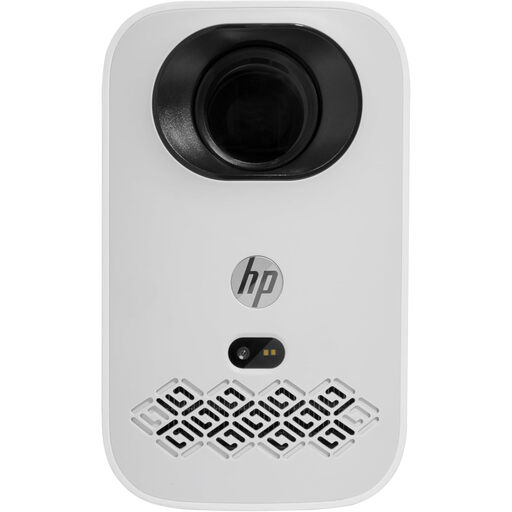
The product information mentions streaming apps; check whether the apps available suit the way you want to watch series.
The product name lists FHD, Wi-Fi, Bluetooth, autofocus and wireless projection. Assess visibility separately in the room where you plan to use it.
 No image available
The product name lists built-in apps and access to the Play Store; check that the services you want are available for your needs.
The name lists an image size of 50–200 inches, 50%–100% digital zoom, automatic image correction and 180° rotation. HDMI, USB, iOS, Android and laptops are listed as compatible connections or devices.
 No image available
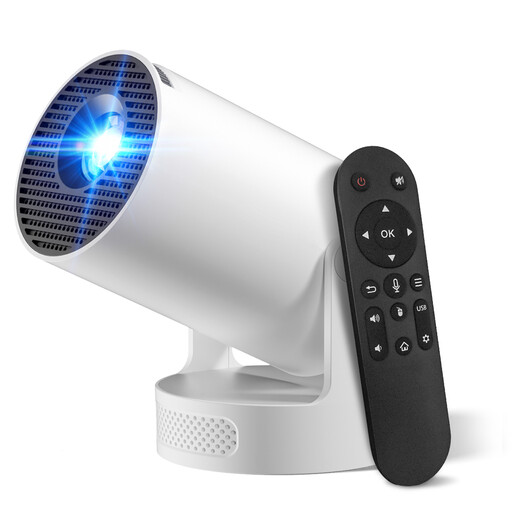
The product name lists built-in apps and access to the Play Store; check that they suit the streaming services you want to use.
The name lists an image size of 50–200 inches, 50%–100% zoom, Wi-Fi 6, Bluetooth, automatic image correction and 180° rotation. HDMI, USB, phones and PCs are listed as compatible.
No. A high stated light output alone isn’t enough to guarantee visibility. Daylight can wash out the projection, and a larger image needs more light. So also consider the screen position, image size and light coming through the windows.
Measure the distance between the planned lens position and the screen, and decide on your preferred image width. Compare these measurements with the throw ratio or installation calculator for the exact model; standard and ultra-short throw projectors need different positioning.
According to the Dutch government, the seller—not the manufacturer—is responsible for providing a solution if a product is faulty. The Netherlands doesn’t have a fixed statutory guarantee period for all products; what you can expect depends on factors including the product and how it’s used.
An electrical projector must comply with the applicable European product safety rules. Business.gov.nl states that a compliant device must have the required CE marking and an EU declaration of conformity; the applicable rules may also depend on the version, for example if it has wireless functions.
For consumers buying a new, similar device, the Dutch government describes a free take-back scheme. This also applies to online purchases; the old device can be taken back on delivery, collected or returned free of charge.