For off-axis seating, start by checking the viewing angle of the exact screen material: lens shift moves the projector’s image, but doesn’t change the screen’s viewing angle. Elite Screens lists a viewing angle of 180° for CineWhite and 90° for CineGrey 3D. If the projector will also sit off-centre from the screen, check the throw ratio and horizontal lens shift of your chosen model. Ambient light and stated brightness also matter in daylight, but lumen figures measured using different standards can’t be compared directly.
Who is this setup for?
Viewers spread around the room
If you’re watching a cycling race together, you’ll want people sitting at the sides of the room to be able to follow the action too. So check the viewing angle of your chosen screen material; Elite Screens describes how light is distributed by its CineWhite material.
Daytime viewers
If daylight comes in and it’s not always possible to darken the room, assess the light falling on the screen alongside the projector. BenQ Netherlands points out that you need to take ambient light into account when watching in daylight.
Viewers with a tricky projector position
If the projector can’t sit directly in front of the screen, or you move it regularly, check the throw ratio and the available horizontal lens shift or keystone correction. These are different ways of accommodating your setup.
What should you look for?
Start with the seats furthest from the screen’s centre line and the screen material. Then check the projector’s distance and position; assess ambient light and your preferred live source separately.
| What to consider |
What should you check? |
Which consumers is this important for? |
| Viewing from off-axis seats |
Compare the seats furthest from the centre line with the viewing angle of the exact screen variant. Elite Screens lists 180° for CineWhite and 90° for CineGrey 3D. |
If people are watching from beside the screen’s centre line, I want the seats at the sides to fall within the viewing angle too. Around 33% of consumers prioritise the viewing angle from their seats. |
| Daylight picture quality |
Assess where light falls on the screen, whether you can darken the room and which measurement standard is used for the stated light output. |
If daylight falls on the screen and it’s not always possible to darken the room, I want to know in advance which screen and projector combination will suit the space. Around 27% of consumers give the highest priority to a usable picture in daylight. |
| Projector off-centre from the screen |
Measure the screen width, lens-to-screen distance and horizontal offset. Then check the throw ratio and horizontal lens shift of the exact model. |
If the projector can’t sit directly in front of the screen, I want to be able to use that position without ending up with an unsuitable picture size. Around 20% of consumers prioritise projector position and image geometry. |
| Live picture, motion and sound |
Check your intended live source, the connection or app it requires, and the available audio output for your viewing setup. |
If I want to watch the race live with commentary, I want to be sure my source and sound setup will work with the projector. Around 20% of consumers give the live source, moving images and sound the highest priority. |
Common pitfalls
-
Buying lens shift to solve a limited screen viewing angle
Lens shift is about the projector’s position; different screen materials can have different stated viewing angles. Shifting the projected image won’t widen a limited viewing angle.
First, check the seats furthest from the centre line and the exact screen variant. Then assess separately whether the projector can sit directly in front of the screen.
-
Assuming an ambient-light-rejecting screen suits every seat at the side
The stated viewing angle can vary between material variants. Elite Screens’ CineGrey 3D has a stated viewing angle of 90° and a minimum throw ratio of 1.5:1; CineWhite has a stated viewing angle of 180°, but isn’t specified as ambient-light rejecting.
Compare the viewing angle and any ambient-light-rejection properties of the same screen variant with the seating positions and projector distance in your room.
-
Reading ‘4K supported’ as native 4K
For the ULTIMEA Poseidon E40 and E100, the manufacturer lists native Full HD as well as 4K support. These terms don’t mean the same thing.
Check the native resolution separately from the resolutions the device can receive.
-
Choosing a projector without checking the live source and distance
The throw ratio helps determine the picture size you can get from a given distance. An HDMI connection or smart feature alone doesn’t confirm that your preferred race source is available.
Measure the room and check the specific live source, connection and audio setup before you buy.
Brands to consider
Epson
The EH-TW7000 is an example of a model for a fixed sports-viewing setup, with optical zoom, lens shift and HDMI sources.
- Epson lists 3000 lumens of both white and colour light output and frame interpolation for the EH-TW7000.
- Before installation, check that this model’s lens shift can accommodate the horizontal adjustment you need.
BenQ
The W4100i is an example of a model with specified horizontal lens shift and throw ratio.
- BenQ lists 3200 ANSI lumens and a throw ratio of 1,15–1,50:1 for the W4100i.
- BenQ specifies a maximum of ±15% horizontal lens shift at 20,9% vertical shift; check whether that range suits your setup.
ULTIMEA
The Poseidon E40 and E100 are examples of models with autofocus and automatic keystone correction for a setup that you move around.
- ULTIMEA lists 1000 ANSI lumens for the E40 and 1800 ANSI lumens for the E100; according to the manufacturer, both have native Full HD.
- The manufacturer lists MEMC for the E100. Automatic keystone correction doesn’t confirm that the projector has horizontal optical lens shift.
XGIMI
The HORIZON S Max illustrates an approach that can make repositioning easier, with an adjustable stand and automatic keystone correction.
- XGIMI lists 3100 ISO lumens and a built-in adjustable stand for this model.
- ISO lumens use a different measurement standard from ANSI lumens. Also check current availability, and don’t assume the model has horizontal optical lens shift.
Projectors at Joybuy
Consider these projectors as possible options for a movable or flexible viewing setup. Assess the screen material separately for seats off-centre from the screen.
 No image available
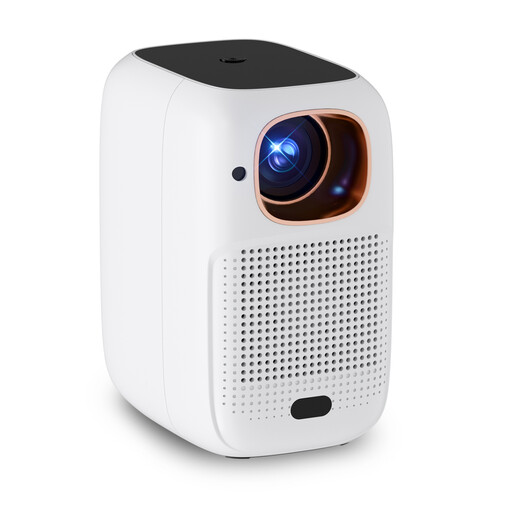
V1 Outdoor Mini Projector
Could suit a movable viewing setup if a battery and autofocus are useful to you.
The product name lists 720P, a 10.400 mAh battery, 4K support, Dual WiFi and Bluetooth 5.0. 4K support isn’t the same as native 4K.
View at Joybuy
 No image available
XGODY N7 Cine Smart Projector
Could suit a flexible setup if autofocus and automatic adjustments are important to you.
The product specifications list 1000 ANSI lumens, native 1080P, a throw ratio of 1,1:1, autofocus, keystone correction and HDMI. The projector doesn’t change the viewing angle of the screen material.
View at Joybuy
 No image available
XGIMI MoGo 4 Portable Projector
Could suit a movable viewing setup if built-in audio and a battery are useful to you.
The product name lists Full HD 1080p, 450 ISO lumens, a 2,5-hour battery and Harman Kardon audio. ISO lumens can’t be compared directly with ANSI lumens.
View at Joybuy
 No image available
Video projector with built-in apps
Could suit a flexible projector position if rotation and HDMI compatibility are important to you.
The product name lists WiFi 6, Bluetooth, automatic picture correction, 180° rotation and HDMI compatibility.
View at Joybuy
 No image available
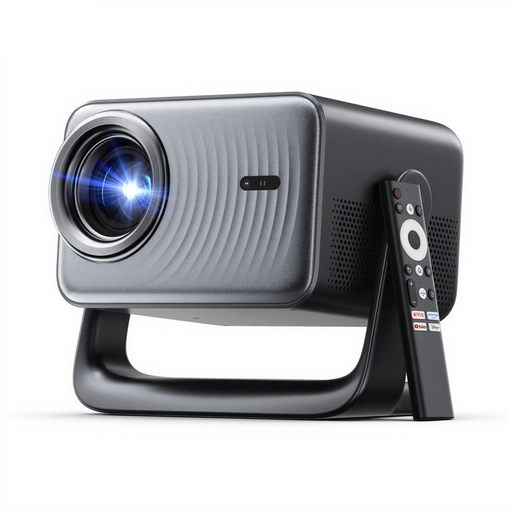
N3 Max Smart Projector
Could suit a movable setup if you want autofocus and keystone correction.
The product name lists 1000 ISO lumens, Dolby Audio, native Netflix, VIDAA OS, autofocus and keystone correction. ISO lumens can’t be compared directly with ANSI lumens.
View at Joybuy
Frequently asked questions
Will horizontal lens shift help if only the seats are off-centre?
No. Lens shift moves the projected image if the projector’s position requires it; for off-axis seating, check the viewing angle of the screen material.
How can I check before installation whether the projector can sit far enough from the screen?
Measure the picture width you want and the available lens-to-screen distance. Compare that distance with the full throw-ratio range of your chosen model, then check whether any horizontal offset falls within its horizontal lens-shift range.
Should I choose an ambient-light-rejecting screen for watching a cycling race in daylight?
Not without considering the seating positions and projector distance. Elite Screens lists a viewing angle of 90° and a minimum throw ratio of 1.5:1 for CineGrey 3D; check whether those requirements suit the furthest seat and your chosen model. Reduce incoming light wherever you can.
How do I know whether my live source will work with the projector?
Check the specific live source and the connection or app it requires. An HDMI connection alone won’t provide a broadcast; also check that the audio output suits the sound setup you want to use.
How can I keep the setup working well throughout a long race?
Keep the chosen model’s ventilation clear and follow the instructions for installation and cleaning. After moving it, check the picture position, focus, live source and sound again; automatic alignment doesn’t replace these checks.


