
Watching from the back of the room
You want to follow animals, landscapes and any on-screen text clearly from a seat at the back. Start with a usable screen size, not the projector’s position.


First, work out what screen width will be comfortable to view from your seat. Then check whether the projector’s throw ratio can produce that width from your intended position. Also consider light falling on the screen, your video source and the connections you need. A large maximum image size or a high lumen rating alone won’t tell you how the picture will look in your room.
You want to follow animals, landscapes and any on-screen text clearly from a seat at the back. Start with a usable screen size, not the projector’s position.
You can’t always control the light falling on the wall or screen, and want to know what a stated brightness can and can’t tell you in those conditions.
Perhaps you have a fixed shelf or ceiling position, or can only place the projector near the wall. The image width and throw distance need to work with your setup.
Measure the viewing distance and the distance from the projector lens to the screen separately. BenQ Netherlands and Epson Netherlands highlight viewing distance, room size and screen size as factors when choosing a screen. Use their guidance as a starting point, then check your setup against the specifications for the exact model.
| What to consider | What should you check? | Who is this important for? |
|---|---|---|
| Screen size and visibility | Measure the distance from your seat to the screen and the available screen width. Use viewing-distance guidance as a starting point, not a fixed answer. | If I want to see animals, landscapes and text clearly from the back of the room, I start with the screen width rather than the largest possible image. Around 36% of consumers prioritise visibility from the back of the room. |
| Light on the screen | Think about when you watch and where ambient light falls. Only compare brightness figures when they use the same unit of measurement. | If I don’t want to darken the room every time, I want to know how light falls on my screen and what the brightness rating measures. Around 29% of consumers prioritise visibility in ambient light. |
| Throw distance and position | Measure from the lens to the screen, then divide that distance by the desired image width. Compare the result with the throw ratio for the exact model. | With a fixed projector position, I want to know in advance whether I can achieve the screen width I want. Around 21% of consumers give suitable positioning top priority. |
| Source, sound and maintenance | Check the connections for your media player and audio equipment, and read the model’s maintenance instructions. | If I want to play a documentary easily and know in advance what maintenance is involved, I check the source, audio connections and light source. Around 14% of consumers prioritise playback, connections or maintenance. |
The viewing distance and the distance from the projector to the screen are two different measurements. Confusing them can mean the image width you want won’t work with your setup.
Measure the distance from your seat to the screen and from the lens to the screen separately before comparing throw ratios.
ANSI brightness, light source brightness and other lumen ratings don’t necessarily describe the same measurement. Light falling on the screen also makes a difference.
Check the unit of measurement, then consider separately how much ambient light you can control.
The image width you can achieve depends on the throw ratio, the available distance and the projection surface.
Check your desired width against the specifications for the exact model and the available wall space. Your chosen setup may call for a different screen or another positioning solution.
Supported input resolution and native resolution are different specifications.
Check both the native resolution and the supported input resolution of the version you’re considering.
Epson highlights the EH-TW7100 for a position further from the screen and the EH-LS800B for projection close to the wall.
BenQ offers home cinema models with different stated throw ratios and positioning options.
The HORIZON Ultra is a home projector with automatic setup features.
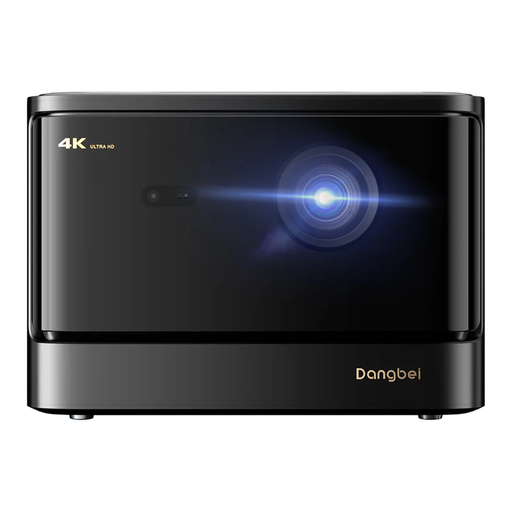
The DBOX02 is a laser home projector with Google TV.
This selection includes projectors designed to be positioned further from the screen, as well as models for placing closer to it. Compare the stated throw distance and image width with the space you have at home.
 No image available
The stated throw ratio and zoom give you useful figures for comparing a fixed projector position with your desired screen width.
Native 4K UHD; stated light output: 3,800 lumens; throw ratio: 1.21:1–1.59:1; 1.3× manual zoom; 15 W speaker.
 No image available
Its stated short-throw setup could be useful if the projector needs to sit relatively close to the screen.
Native 1080p; 1,000 ANSI lumens; automatic focus and keystone correction. 4K support is not the same as native 4K projection.
 No image available
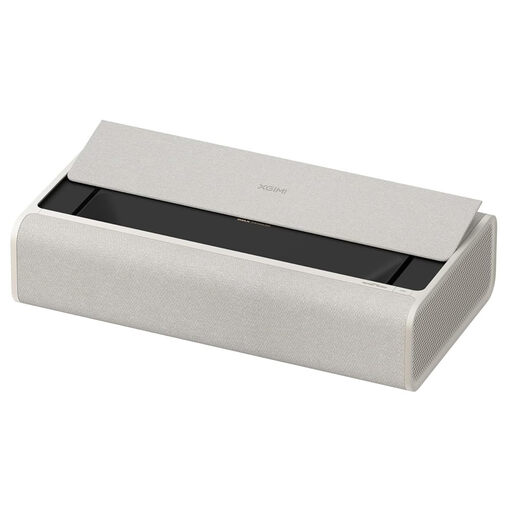
The ultra-short-throw design is worth considering if you want to position the projector close to the screen.
UHD 4K; stated light output: 2,300 ISO lumens; 60 W Harman Kardon speaker.
 No image available
The stated throw ratio and zoom give you useful figures for comparing a fixed position with your desired image width.
UHD 4K; stated light output: 3,500 lumens; throw ratio: 1.21:1–1.59:1; 1.3× manual zoom.
 No image available
Built-in Google TV is useful if you want to stream documentaries directly through the projector.
4K; stated light output: 2,450 ISO lumens; two 12 W speakers.
No. Measure from your seat to the screen to assess the viewing experience, and from the projector lens to the screen to check positioning. First decide on your desired image width, then check the throw ratio for the exact model.
No. The maximum image size doesn’t tell you where you’ll get the image width you want. Measure the available distance, check the model’s range and follow the setup instructions for that projector.
Not necessarily. You can connect a suitable external source via HDMI if the projector has that input. Also think about how you want to play the sound. For example, Epson lists two HDMI ports for the EH-TW7100.
According to the Dutch government, when you buy as a consumer you’re entitled to a product that works properly, and you can contact the seller if it’s faulty. The Netherlands has no fixed statutory two-year warranty period. For an eligible online purchase from a business, you generally have a 14-day cooling-off period. Check the terms and statutory exceptions that apply to your purchase.
CE marking is required for products covered by applicable harmonised EU rules that prescribe it. The European Low Voltage Directive applies to electrical equipment with a rated AC voltage of 50–1,000 V. Check which rules and documentation apply to your chosen model and power adapter. A product listing alone doesn’t prove compliance.