First, measure the distance between the lens and the wall and decide how wide you want the image to be. Then choose a projector with a throw ratio suited to that setup. Next, consider the light in the room, how you want colours and details to appear, and how you’ll connect your playback device. A portable model is handy if you need to move it around, but it won’t necessarily be suitable for projecting from a short distance.
Who is this guide for?
Student with limited projection distance
Wants to show the reel at a large enough size without placing the projector at the back of a narrow living room. So they’ll first compare the setup position, desired image width and throw ratio, as specified for their models by BenQ Netherlands and Epson Netherlands.
Creator who wants to assess the image
Wants to look at colours and fine details during the screening, so pays attention to the light in the room, native resolution and what colour specifications do and don’t tell you. BenQ Netherlands, for example, explains that colour gamut is not the same as colour accuracy.
Student who screens in different locations
Wants to set up the projector quickly and use it in other places too. The required projection distance and image size must work in each location; automatic correction doesn’t remove the need to check.
What should you look for?
Start with the lens distance and the image width you want. This will help you work out whether the setup will fit in your living room. Then consider the viewing conditions, connectivity and running costs.
| What to consider |
What should you check? |
Who is this important for? |
| Will the image fit in the room? |
Measure the distance from the lens to the wall and the maximum image width. Use the throw ratio as an initial guide to the distance, and also check the model’s positioning information. |
If I have little space behind the viewers, I want to know whether the projector can create the image I want from a position in front of them. Around 31% of consumers prioritise the required projection distance. |
| Colour and detail |
Compare the exact model’s native resolution and stated colour coverage with your reel’s export format. Colour coverage alone does not prove colour accuracy. |
If I want to discuss animation colours and fine details, I look beyond a high input resolution. Around 25% of consumers give colour and detail top priority. |
| Light in the living room |
Decide whether you can darken the room. Compare brightness figures carefully, taking account of the model and stated measurement basis; ideally, test it at your intended image size and light level. |
If I can’t make the living room completely dark during the screening, I want to assess in advance what that means for my reel. Around 19% of consumers say ambient light is their main consideration. |
| Connecting and setting up |
Check your laptop’s video output, the projector’s input and whether you’ll need an adapter. Also consider how you’ll manage power and sound in practice. |
If I screen in different places, I want to connect the reel and set the projector up again quickly. Around 13% of consumers prioritise connecting and setting up. |
| Running costs |
Check the light source and any stated operating life for each mode. Also factor in what you’ll need for the setup, such as cables or a suitable projection surface. |
If I want to understand the cost of the complete setup in advance, I look beyond the purchase price to the light source and accessories too. Around 12% of consumers give total running costs top priority. |
Common mistakes
-
Assuming a portable projector is a short-throw projector
A model that’s easy to move won’t automatically create the image you want within the available lens distance.
Use the specifications for the exact model to work out the distance required for your desired image width.
-
Assuming a 4K label means native output resolution
A supported video signal and the resolution the projector uses to create the image are different specifications. For the discontinued EH-LS650W, Epson described 4K PRO-UHD as image enhancement alongside a separately stated panel resolution.
Compare the native resolution and projection technology of the model you’re considering with your reel’s export format.
-
Trying to fix an angled position afterwards with extensive keystone correction
BenQ warns that applying more keystone correction can cause issues such as jagged image edges and reduced sharpness. This can be noticeable in fine animation details.
Choose a suitable physical position first, and use correction only to fix any remaining distortion.
Brands to consider
BenQ
The TH671ST is a specific example of a short-throw model that can be set up in front of the audience.
- BenQ specifies a throw ratio of 0,69–0,83:1, native 1080p and two HDMI inputs for the TH671ST.
- It’s a lamp-based model. The stated 92% Rec.709 coverage is not an independent measurement of colour accuracy, as BenQ itself explains in its colour guidance.
Epson
The EH-LS670W is an example of an ultra-short-throw model designed for a fixed position close to the wall.
- Epson lists a laser light source, 3.600 lumens and a 5-year manufacturer’s warranty for this model.
- Check the wall space and positioning measurements required for your image size. Epson lists the older EH-LS650W as discontinued.
Optoma
The ZH450ST is an example of a short-throw projector with a laser light source.
- Optoma lists Full HD and 4.200 lumens for the ZH450ST.
- These are manufacturer specifications, not an independent comparison of image quality or colour reproduction for animation in this living room.
Dangbei
The N2 mini is a portable option for occasional screenings, but shouldn’t be assumed to work like an ultra-short-throw model without first calculating the distance.
- Dangbei lists native 1080p, autofocus and automatic image correction.
- The manufacturer suggests dark rooms or small flats as suitable settings. Check that your desired image size works at the available distance and with the light levels in your room.
Samsung
The Freestyle+ SP-LFF3HLAXXXE is a portable option for anyone who regularly changes the projection surface or setup position.
- Samsung describes automatic keystone correction, obstacle avoidance and adjustment to the projection wall.
- These setup features alone don’t tell you what image width is achievable at your distance or how accurate the colours will be.
Projectors on Joybuy
This selection of Joybuy projectors includes options for showing an animation reel, with connectivity, resolution and available setup distance in mind. For your room, check the throw ratio and image size of the exact model.
 No image available
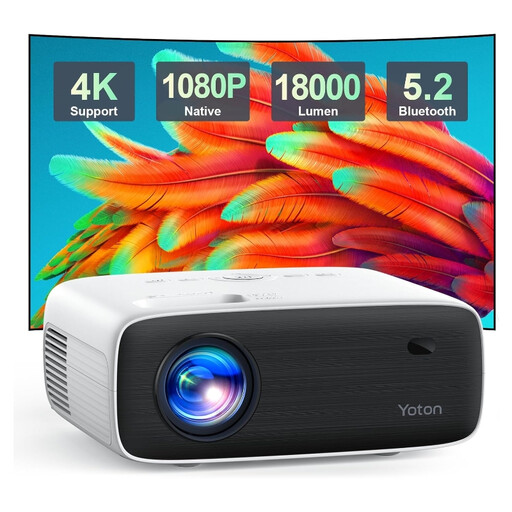
Yoton Y6 5.2 Bluetooth 4K LCD, Native 1080P
The stated native 1080P resolution gives you a specific figure to compare with your reel’s export format.
- Native 1080P
- Bluetooth 5.2
- HDMI, USB and AV connections, according to the product description
Check that your laptop’s video output is compatible with the input you choose.
Joybuy
 No image available
Optoma Photon Go
The stated throw ratio gives you a starting point for checking whether the lens distance will work in your narrow living room.
- Throw ratio: 0,18:1
- Full HD 1080p
- RGB triple-laser light source and 650 lumens
- HDMI 2.0
Check the desired image width and physical positioning for your setup.
Joybuy
 No image available
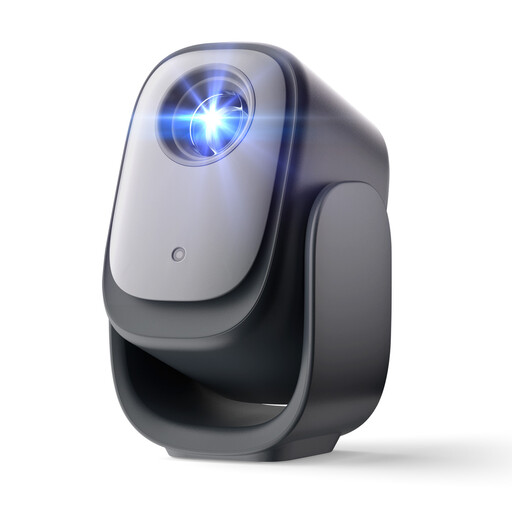
Dangbei N2 Mini
Its portable design and automatic setup features make it a good fit for screenings in different locations.
- 1080P
- Autofocus and automatic keystone correction
- Obstacle avoidance
Automatic image correction doesn’t replace correct physical positioning. Check the distance and image size for each setup.
Joybuy
 No image available
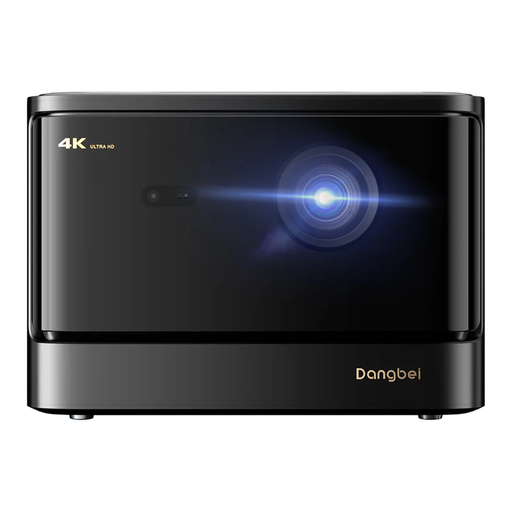
Dangbei DBOX02 Laser Projector 4K GTV
The product title states 4K. Compare the exact resolution with your animation reel’s format before making your choice.
- 2.450 ISO lumens
- Two 12 W speakers
- Wi-Fi and Bluetooth
Joybuy
 No image available
XGIMI Vibe One Match Night EU Edition, Full HD 1080p with screen and stand
The portable design and built-in battery suit anyone looking for a setup they can move around. Just make sure the distance works for your desired image width.
- Full HD 1080p
- Throw ratio: 1,3:1
- 250 ISO lumens
- Built-in battery; screen and stand listed in the product title
Joybuy
Frequently asked questions
How do I work out whether the image will fit on the wall?
Measure the image width you want and the distance from the lens position to the wall. With the BenQ TH671ST, the distance required depends on the image width and zoom setting, within the stated throw ratio of 0,69–0,83:1. Check the vertical image position too.
Can I play my animation reel straight from a laptop?
It depends on your laptop’s video output and the inputs on the projector you choose. BenQ lists two HDMI inputs for the TH671ST. Check whether your laptop has an HDMI output or needs a suitable adapter, and test the picture and sound in advance.
Will automatic keystone correction fix an angled position?
Keystone correction can adjust the shape of the image, but position the projector as straight as possible. BenQ warns that greater correction can cause issues such as jagged image edges and reduced sharpness. This matters if you want to show fine details.
What are my rights if a projector I bought online isn’t suitable?
When a consumer buys online, they generally have a statutory 14-day cooling-off period after delivery, subject to applicable exceptions. This is separate from the statutory guarantee: ACM ConsuWijzer states that the seller must provide an appropriate solution if a product is faulty. Any manufacturer’s warranty is provided separately.


