
Viewers sitting far from the screen
You want to follow plants, actions and any on-screen text from your usual seat. Start by checking the available image width, then make sure the projector can produce that image size from the planned position.


First, work out what image width you’ll be comfortable watching from your usual seat. Then measure the distance from the projector lens to the screen separately. Compare that lens-to-screen distance and image width with the throw ratio of the specific model. An ultra-short-throw projector is mainly an option if you need to position it close to the wall, not simply because you’ll be sitting far from the screen.
You want to follow plants, actions and any on-screen text from your usual seat. Start by checking the available image width, then make sure the projector can produce that image size from the planned position.
If light falls on the wall, compare the stated brightness and your options for blocking out light. BenQ Netherlands highlights that the room and distance from the screen both matter; a lumen rating doesn’t guarantee a particular picture in daylight.
If you can’t simply place the projector somewhere between your seat and the wall, compare standard and ultra-short-throw projection based on your available space and desired image size.
| What to consider | What should you check? | Who is this important for? |
|---|---|---|
| Image size when sitting far from the screen | Measure the available screen width and decide what image size you want from your seat. Check that it’s compatible with the planned lens position. | I want to see details clearly from my usual seat without the image extending beyond the wall; around 36% of consumers say image size is their top priority. |
| Visibility in ambient light | Check where daylight or lamplight falls on the screen, whether you can darken the room and what brightness the manufacturer states for the exact model. | If I also watch when there’s light in the room, I want to know whether I can block it out and what brightness is stated; around 29% of consumers prioritise visibility in ambient light. |
| Projector positioning and distance from the screen | Measure from the intended lens position to the projection surface. Compare that distance and your desired image width with the model’s throw ratio and any zoom range. | If the projector has to go in a fixed or cramped position, I want to know in advance whether the lens can produce the image I want from there; an estimated 21% of consumers make positioning their main concern. |
| Connections and ongoing use | Check that the required set-top box or streaming device is compatible with the connections. Also check the light source and the stated operating mode. | Once the basic set-up works, I want to connect my programmes and audio, and know what maintenance the light source needs; around 14% of consumers give connections and maintenance top priority. |
The optics determine the image size from the lens position, not from your seat. This means a projector could produce an image that’s too wide or too narrow for the spot where you want to place it.
Measure the distance from your seat to the screen and from the lens to the screen separately. Then check that your desired image width is compatible with the model’s throw ratio.
Light falling on the screen is a separate factor. A stated brightness isn’t an independent test of how the picture will look in your living room.
Check where windows and lamps fall on the screen, whether you can darken the room and which unit of measurement the manufacturer uses for the exact model.
The stated lamp life may depend on the operating mode, so it won’t necessarily apply to every way of watching.
Compare the mode you plan to use and check what maintenance may be needed, such as replacing the correct projector lamp.
Compare the EH-TW7100 for a flexible set-up at a distance with the EH-LS800B if you need to position the projector close to the wall.
The W2710 is an option to compare if you want to weigh up positioning flexibility, connections and stated 4K UHD playback together.
The HD146X is a Full HD lamp model to check against the distance between the lens and the screen.
The PX701HDH is a Full HD lamp model to compare if two HDMI inputs would be useful.
This selection includes projectors with different lens-to-screen distances, including models designed to sit closer to the screen. For each projector, compare the stated throw ratio with your lens position and desired image width.
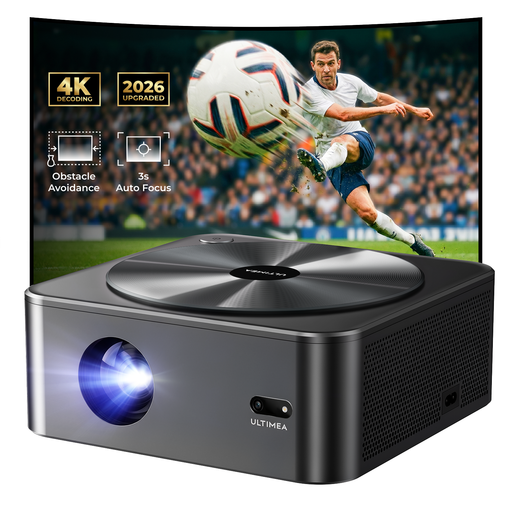 No image available
The stated throw ratio and image size give you details to check when deciding whether the planned lens position will work with your wall.
1080p; 700 ANSI lumens; throw ratio 1.4:1; recommended image size 35–150 inches. The description mentions auto focus and keystone correction.
 No image available
The short throw ratio is a specification to compare if the projector needs to sit closer to the screen.
WXGA; 3,800 ANSI lumens; throw ratio 0.52:1; stated projection distance 0.4–3.4 m; one HDMI input.
 No image available
The stated combination of lens distance and image size helps you compare the projection set-up with the space you have available.
Native 1080p; 1,000 ANSI lumens; throw ratio 1.1:1. The description mentions a 60-inch image at a lens distance of 1.33 m, plus HDMI and USB connections.
 No image available
Check that the stated image size suits your space and consider how you want to connect your programmes and other devices.
Built-in apps; stated image size range 50–200 inches; digital zoom 50%–100%; HDMI compatibility.
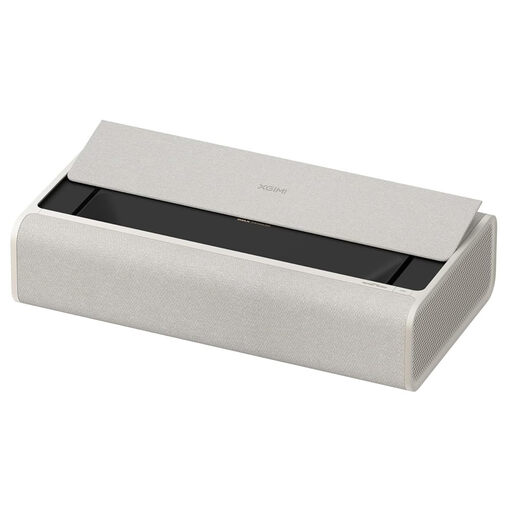 No image available
This model is worth comparing if the projector needs to sit close to the wall; check that your desired image size works with this positioning.
UHD 4K; 2,300 ISO lumens; throw ratio 0.18:1; stated image size 60–100 inches. ISO lumens are a different unit of measurement from ANSI lumens.
No. Viewing distance is measured from your seat to the image; projection distance is measured from the projector lens to the image. To check whether the optics are suitable, compare the lens distance with your desired image width.
Measure the distance from the planned lens position to the wall and decide on your desired image width. Compare these with the stated range for the exact model, and also check the zoom and image positioning options.
Not necessarily: you can connect a compatible external set-top box or streaming device via HDMI. Also check how you want to play the audio and which connections the model has.
Check which operating mode the stated hours apply to. Optoma lists different lamp lives for Bright, Eco and Dynamic modes on the HD146X, so the maximum doesn’t automatically apply to every mode.
According to ACM ConsuWijzer, a standard online purchase of goods generally comes with a statutory cooling-off period of up to 14 days after delivery, although exceptions apply. Your statutory guarantee is separate from any manufacturer’s guarantee: if a product doesn’t do what you could reasonably expect under normal use, the seller is responsible for putting things right.