
Presenter in a bright room
You can’t fully block out the light from the large windows and want everyone to be able to see the slides. So pay attention to the screen position and ambient light.


First, choose a screen position that avoids direct light from windows, then decide on your preferred image size and projection distance. A projector with a higher stated brightness can help in a well-lit room, but it won’t restore contrast lost when light falls on the screen. Also check that the native resolution keeps small place names and captions legible.
You can’t fully block out the light from the large windows and want everyone to be able to see the slides. So pay attention to the screen position and ambient light.
Your slides contain details, place names or captions. Check the native resolution and whether text remains legible from the back row.
You’re looking for a set-up that works in the room and remains practical for repeated use. Throw ratio, connections and light source may all be factors.
Suitable if: you want to show photos and small captions, and have a position where the projection is reasonably shielded from ambient light. Epson Netherlands and BenQ specify native Full HD and 4,000 lumens for the EB-FH52 and MH733.
Trade-off: bear in mind that the lamp is a maintenance item. The stated brightness doesn’t guarantee good contrast if sunlight falls on the screen.
Suitable if: you regularly present in a larger room that’s difficult to darken, and a fixed set-up is possible. ViewSonic Netherlands specifies 5,000 ANSI lumens and a laser light source for the LS740HD.
Trade-off: even with this model, screen lighting and positioning remain important. 5,000 ANSI lumens doesn’t guarantee that slides will be readable in direct sunlight.
Suitable if: your slides mainly feature large photos and clear headings, and WXGA is sufficient as the native resolution.
Trade-off: check small captions at their actual size. Acer lists 1280 × 800 for the X1328Wi; check the brightness specification for the exact model before comparing it.
| What to consider | What should you check? | Who should give this more weight? |
|---|---|---|
| Visibility in daylight | Avoid direct light on the screen and assess the brightness for your intended image size. | If I can’t block out the light from the large windows, my main priority is preventing daylight from falling on the screen. Around 36% of consumers prioritise visibility in daylight. |
| Detail and text legibility | Compare the native resolution and view a representative slide from the back row. | With old photos, maps and small place names, I want to be able to make out the details without enlarging them. Around 29% of consumers give detail and text legibility top priority. |
| A suitable set-up | Measure the distance from the lens to the screen and your preferred image width, then compare these with the model’s throw ratio. | If the projector can only go in one fixed, tight spot, the image width needs to suit that distance. Around 21% of consumers prioritise the room set-up. |
| Connecting and maintenance | Check that the connections work with your presentation source and find out what maintenance the light source requires. | For regular meetings, I want to be able to connect my presentation source easily and know what maintenance the light source requires. Around 14% of consumers prioritise ease of repeated use. |
Light from windows falling on the screen and a larger projected image can both affect visibility. A specification alone can’t tell you how a slide will look in your room.
Keep direct light off the screen and assess a representative slide at the planned image size and in the available daylight.
An input signal with a higher resolution doesn’t mean the projector displays that number of pixels natively. This is particularly important for small captions on historical slides.
Compare native resolutions and check text from the viewing distance you expect in the room.
Lamp and laser models differ in their maintenance requirements, but the light source technology alone doesn’t prove which option will be cheaper over its lifetime.
For the exact model, ask about lamp availability, maintenance and warranty terms.
With a lamp model, replacing the lamp may be part of routine maintenance. Bear this in mind if you give presentations regularly.
The EB-FH52 is a portable Full HD 3LCD projector for presentations where image quality, connections and positioning all matter.
The business-focused MH733 is a Full HD presentation projector worth comparing if USB presentation features are important to you.
The LS740HD is a Full HD laser projector for presentations where a fixed set-up and repeated use may be a good fit.
The X1328Wi is a WXGA projector to compare if your slides contain little fine text.
The Joybuy options below include models with a range of native resolutions and projection distances. Match these to the detail in your slides, your preferred image width and the space available in the room.
 No image available
Native 4K UHD resolution may be useful when fine detail in slides matters. Check that it remains legible at your planned image size, too.
Native 4K UHD; stated brightness 3.800 lumens; throw ratio 1,21:1–1,59:1; 1,3× manual zoom.
 No image available
The short throw ratio may suit a set-up where the projector needs to be close to the screen. Check that the distance works for your preferred image width.
WXGA; stated brightness 3.800 ANSI lumens; throw ratio 0,52:1.
Its native WXGA resolution provides less image detail than Full HD for small captions.
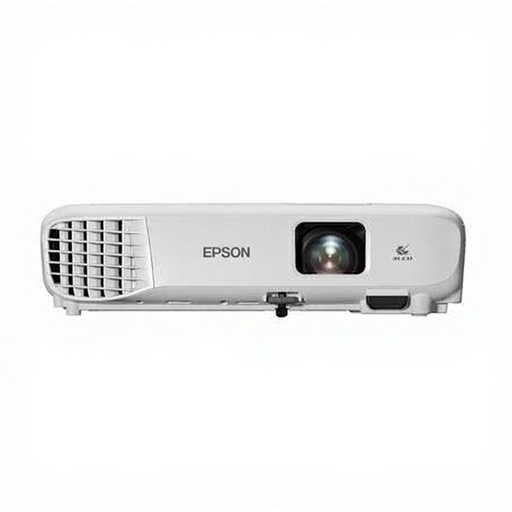 No image available
This WXGA model may suit slides with larger images and headings. Check small historical details from your intended viewing distance.
Stated brightness 4.000 ANSI lumens; WXGA (1200 × 800); two HDMI ports.
Its native WXGA resolution provides less image detail than Full HD for small captions.
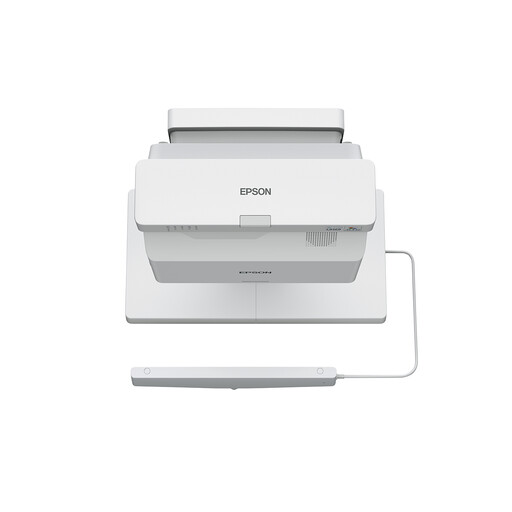 No image available
The ultra-short-throw design may be useful if there’s little distance available from the projection surface. Check how it will fit in the room.
Stated brightness 4.100 ANSI lumens; WXGA (1280 × 800); three HDMI inputs; interactive pen control.
WXGA resolution provides less image detail than Full HD for small captions. With ultra-short-throw projection, the projector needs to be close to the projection surface.
 No image available
The short throw ratio may suit a space with limited projection distance. Check that it can achieve your intended image width.
Stated brightness 3.600 ANSI lumens; native XGA (1024 × 768); throw ratio 0,49:1.
Its native XGA resolution provides less image detail than Full HD for small captions.
Measure the distance from the intended lens position to the screen and decide on your preferred image width. Compare both measurements with the exact model’s throw ratio; the screen diagonal alone won’t tell you where the projector can go.
Not necessarily, but where possible, keep direct light from windows off the projection surface and assess a test slide in the daylight you’ll be presenting in. Ambient light can make the image look washed out; a larger projection surface also calls for attention to brightness.
If you choose a lamp model, it’s worth checking that a suitable replacement lamp is available. ViewSonic describes the LS740HD as a model that doesn’t require lamp replacement. Consumer purchases in the Netherlands are covered by statutory conformity protections. Business.gov.nl, the Dutch government’s business information service, distinguishes between consumer purchases and sales to businesses.
Check the specific listing to see which product safety and CE documentation applies. Business.gov.nl, the Dutch government’s business information service, explains the rules for electrical and electronic products. For public use of copyright-protected photos, the Dutch government says you need permission from the creator. Don’t assume a photo is free to use based on its age alone.