
Presenters in a bright shared space
You want to share historical images and text with a group without having to darken the room completely. BenQ and Epson point out that ambient light and image size both affect how bright a projection appears.


Start by considering the light in the room, the image size you want and where you can position the projector. Then compare its native resolution and connections with the requirements of your photographs and captions. A presentation projector may be a good fit if the lights will stay on, while an ultra-short-throw model is worth considering if walkways or shadows make a conventional set-up difficult. Manufacturer specifications alone cannot tell you how legible slides will be from the back of the room.
You want to share historical images and text with a group without having to darken the room completely. BenQ and Epson point out that ambient light and image size both affect how bright a projection appears.
You’re showing old photographs, maps and captions, so you want to assess the native resolution and how clearly details appear, rather than looking only at the input resolution the projector accepts. Epson and BenQ list model specifications that you can compare.
You need to fit the projector around furniture and walkways, and may switch between source devices. Epson describes the EB-685W as being positioned close to the screen; connections vary by model.
Start with the conditions in the room and where you can position the projector. Then check whether its native resolution and connections suit the slides and source devices you want to use.
| Factor to consider | What should you check? | Who is this important for? |
|---|---|---|
| Visibility in ambient light | Make a note of how much light falls on the screen and decide on the image size you want; then compare the stated brightness. | If I can’t darken the room while people are watching, I want to know how the images will look in that light. Around 31% of consumers prioritise visibility in ambient light above all else. |
| Photographs and captions | Compare the native resolution and view sample slides at the intended image size. | If small text and details in old photographs need to be legible, I want to assess them at their actual size. Around 25% of consumers prioritise photographic detail and captions. |
| Distance and positioning | Measure the throw distance and the image width you want; check the specifications for the exact model and its installation instructions. | If a projector at the back of the room would block walkways, I’m looking for a set-up that takes this into account. Around 19% of consumers prioritise positioning and clear walkways. |
| Switching between sources | Check your laptop’s outputs, the model’s inputs and whether you’ll need an adapter. | If the same room is used for slides and other media, I want to be able to switch easily between source devices. Around 13% of consumers prioritise connecting different sources. |
| Use and maintenance | Compare the light source type, stated lifespan for each operating mode and set-up requirements for each model. | If the projector will be used often, I want to factor in maintenance and ongoing use before buying. Around 12% of consumers prioritise running costs and maintenance. |
According to ViewSonic, the ViewSonic PA503W accepts a Full HD input signal, but has a native resolution of 1280 × 800. This difference may matter when displaying small captions.
Compare the native resolution and view your actual slides at the planned image size.
According to BenQ, ambient light and image size affect how bright a projection appears. A stated brightness rating alone therefore won’t tell you how legible slides will be in your room.
Consider the light falling on the screen and the image size you want, alongside the brightness specification.
An ultra-short-throw model can sit close to the screen and, according to Epson, reduce shadows, but you’ll still need to make sure its precise position works in your room.
Measure the distance, image width and walkways before choosing a model and any mounting equipment.
The EB-FH52 and EB-685W illustrate two different set-ups: a conventional presentation projector and an ultra-short-throw model.
The MH560 is a Full HD presentation model worth comparing for slides in a room where the lights may be on.
The PA503W is a business WXGA projector with stated projection and connection specifications.
The HZ147X is a Full HD laser model worth comparing if the room will also be used for other entertainment.
This selection includes projectors for shared spaces, including models for entertainment, presentations and positioning close to the screen. Compare each model’s native resolution, available connections and specifications relevant to where you plan to set it up.
 Image unavailable
The product description presents this model as suitable for home cinema and gaming, making it an option for a shared space that’s also used for other entertainment.
The product name specifies 4K UHD and Triple Laser. The description mentions gimbal adjustment, automatic keystone correction, two HDMI inputs and built-in Dynaudio audio.
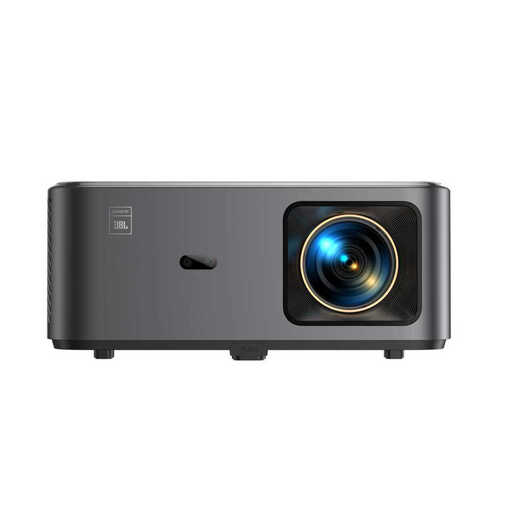 Image unavailable
The product description lists presentations and entertainment as possible uses; check that it connects to the source device you plan to use for your slides.
The title specifies native 1080P and 4K support. The description mentions Google TV, JBL audio, autofocus and automatic keystone correction, as well as connection via the included TV dongle.
 Image unavailable
The product description mentions photo albums, presentations and entertainment; check in advance that the connections suit your source device.
The title specifies native 1080P and 900 ANSI. The description mentions HDMI and USB, a throw ratio of 1:1, 180° rotation and automatic keystone correction.
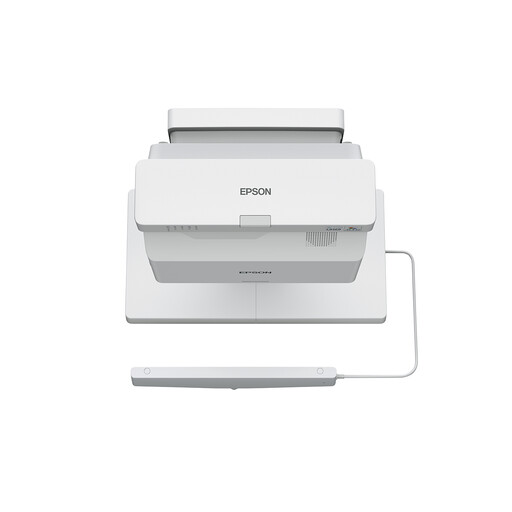 Image unavailable
The short throw distance may be useful if space for positioning the projector is limited or a walkway runs in front of the screen.
The product name specifies 4,100 ANSI lumens, 3LCD and WXGA (1280 × 800). The description mentions a laser light source and three HDMI inputs. Test small captions at the image size you want.
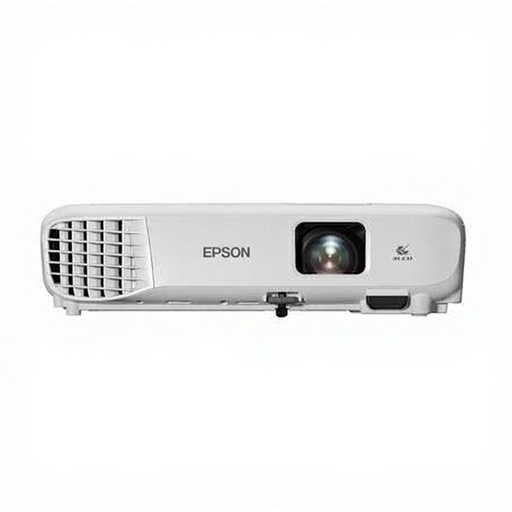 Image unavailable
The description presents this model as suitable for business presentations; check that its native resolution is a good fit for the detail in your slides.
The product name specifies 4,000 ANSI lumens and WXGA (1200 × 800). The description mentions two HDMI inputs, split-screen, manual focus and keystone correction.
Measure the distance between the possible projector position and the screen, then decide on the image width you want. Check the throw distance or throw ratio for the exact model; for example, Epson lists 1,32–2,14:1 for the EB-FH52. Don’t base your decision on the maximum image size alone.
Only use a mount and method that are suitable for the exact model. Epson warns that incorrect mounting of the EB-FH52 could cause injury or damage, and refers users to the mounting points in the manual.
According to ACM ConsuWijzer, statutory warranty in the Netherlands has no fixed duration: what you can expect from a product depends, among other things, on the product and normal use. A commercial manufacturer’s warranty does not replace this right. According to ACM, consumers buying online generally have a cooling-off period that ends 14 days after delivery; check the terms and any applicable exceptions.
Not automatically just because a photograph is old or available online. The Dutch Government states that you need the creator’s permission to use copyright-protected photographs, and that a private copy for personal use must not be made available to the public. Before showing specific images beyond your own private use, check who holds the rights, the licence and whether any relevant exception applies.