
Presenter in a bright room
Shows historic photos and captions to a group in a space that’s difficult to darken. Assess legibility in the conditions you’ll actually be presenting in.


Start by considering whether photos and captions need to remain legible in the room’s lighting, then check whether the projection distance suits the space available. A mains-powered projector may be a good fit if you’re presenting in a room that’s difficult to darken. A compact battery-powered model is worth considering if you often change locations or can’t use a power socket. Brightness figures aren’t directly comparable across different models: Epson, BenQ and XGIMI list their product specifications using different measures.
Shows historic photos and captions to a group in a space that’s difficult to darken. Assess legibility in the conditions you’ll actually be presenting in.
Takes the slideshow to different venues and wants to keep equipment to a minimum or rely less on a power socket.
Has little distance from the wall or limited room for equipment. Measure the space available and decide on your preferred image size before choosing a model.
Choose this if: you’re presenting in a room that’s difficult to darken and there’s a power socket available. Epson lists a brightness of 3.800 lumens for the EB-W49.
Bear in mind: the required projection distance and space for the projector; this set-up relies on mains power.
Choose this if: you often change locations or can’t rely on having a power socket. BenQ lists a built-in battery for the GV50; XGIMI specifies up to 2,5 hours of battery playback for the MoGo 4.
Bear in mind: check the battery life against the length of your entire presentation, and test how legible your own slides are in the room you plan to use.
When choosing a projector for this slideshow, legibility, portability, available space and connectivity could each be your main priority.
| Consideration | What should you check? | Who does this matter to? |
|---|---|---|
| Legibility in room lighting | Test your own slides at the planned image size and in the expected room lighting; don’t compare brightness figures without taking the unit of measurement into account. | If I’m showing small captions to a group, I want to know whether the text and photos will remain legible in that room. Around 33% of consumers put legibility first. |
| Portability and power | Check the weight of the exact model and whether the venue has mains power; if you’re considering a battery-powered projector, also check its stated battery life. | If I often take the projector with me or want to present without a power socket, weight and power supply are crucial. Around 27% of consumers prioritise this need. |
| Projection distance | Measure the distance to the wall and the image width you want, then check that this combination suits the model’s projection distance. | With limited space between the projector and the wall, I want to know in advance whether the image I want will fit. Around 20% of consumers prioritise the space available for positioning. |
| Connections and controls | Compare the connections on your media source with those on the projector; check separately whether wireless projection is standard or optional. | If I want to use my own laptop or another media source, I want to be sure in advance that the connections and controls are suitable. Around 20% of consumers prioritise this compatibility. |
Manufacturers use measures including ISO lumens and ANSI lumens. These figures don’t come from a single shared real-world test using the same slides and room lighting.
Check the measurement used and test legibility with your own slides, at your preferred image size and in the room’s lighting.
Epson lists wireless connectivity for the EB-W49 as optional. XGIMI sells the PowerBase stand, which provides extra battery life, separately.
Check which accessories are included with the exact model and test the full presentation length using the power source you intend to use.
A compact model won’t necessarily suit the distance from the wall and the image size you want. BenQ explains that projection distance and screen size need to be considered together.
Measure the available distance and image width, then check that combination for the exact model.
According to the Dutch government, an additional warranty provides extra cover on top of your existing statutory rights.
Read the terms of any additional cover and compare what it includes with your statutory rights.
Epson describes the EB-W49 as a portable projector for presentations and lists a brightness of 3.800 lumens.
The TH585P and GV50 are different models: the TH585P is mains-powered, while the GV50 has a built-in battery according to BenQ.
XGIMI describes the MoGo 4 as a compact projector with a built-in battery, Full HD 1080p playback and 450 ISO lumens.
Nebula’s Capsule range is designed for compact, portable projectors. For the Capsule 3 Laser, Nebula lists 300 ANSI lumens and 1080p.
This selection includes projectors for presentations and slides, including models for limited projection distances and a battery-powered projector. Check the specifications for the exact model and make sure it’s compatible with your own media source.
 No image available
May suit a short-distance set-up; check whether the stated image sizes work for your room.
Native 1080P; 1.000 ANSI lumens. The product description lists projection of 60 inches at 1,33 m and 120 inches at 2,66 m, automatic focus and keystone correction.
 No image available
May suit presentations at different venues when you need a built-in battery.
Full HD 1080p, 450 ISO lumens and a built-in battery. XGIMI specifies up to 2,5 hours of battery playback; the PowerBase stand for longer use is sold separately. This edition includes an EA SPORTS FC 26 game code.
 No image available
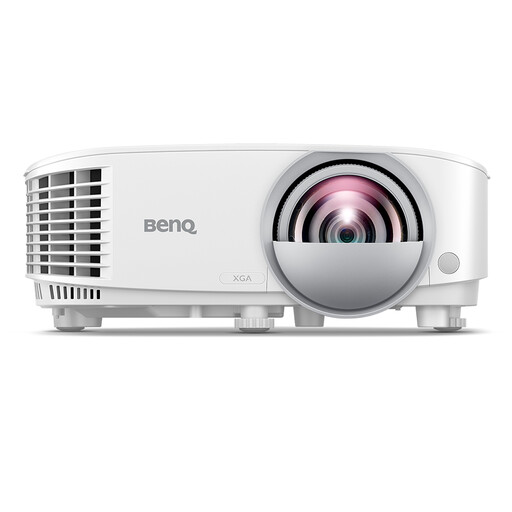
May be worth considering if your set-up allows for only a short projection distance; check the image size you want and the distance available in your room.
3.500 ANSI lumens, DLP XGA resolution (1024 × 768) and two HDMI connections.
 No image available
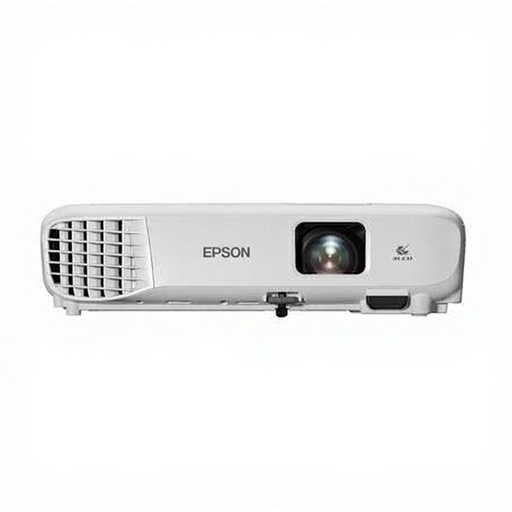
May suit presentations with photos and captions; test your own slides at the image size you want.
4.000 ANSI lumens and WXGA (1200 × 800). The product description lists a weight of 2,5 kg and two HDMI ports.
 No image available
May suit a portable presentation set-up; check in advance that the stated features work with your media source.
3.000 ANSI lumens, 3LCD and WXGA (1280 × 800). The product description lists wireless presentations via the iProjection app, automatic vertical and horizontal keystone correction, and a carrying case.
First, measure the available distance and image width, and decide how much light you can block out. Then check which image size suits that distance for the exact model, and test a slide with your smallest caption.
No, it isn’t standard on every model. Epson lists wireless connectivity for the EB-W49 as optional; check which connection and any accessories are needed for your projector and media source.
According to the Dutch government, you’re entitled to a product that works as it should, and the seller must resolve issues covered by the statutory warranty. The Netherlands has no fixed statutory warranty period; an additional warranty you buy provides extra cover.
Not automatically: for protected material, the rights holder generally controls its publication and reproduction, and exceptions come with conditions. Check the rights and terms of use for each image. Auteursrecht.nl describes a different situation for screenings in a private circle of family and friends where no admission is charged.
Identifiable people in photos are personal data. What’s permitted depends, among other things, on who processes the material and how widely it’s shared; the Dutch Data Protection Authority distinguishes between limited personal use and sharing more widely or on behalf of an organisation.