
A group in a bright room
You can’t darken the room properly and want viewers at the back to be able to follow the film. So consider screen size, viewing distance and the brightness of the exact model together.


First, choose a screen size that’s easy to see from the back row, then check whether the projector can produce that size from the available distance. Match the brightness to the ambient light, and only compare lumen figures when they use the same measurement method. Epson Netherlands and BenQ explain the importance of screen size and viewing distance, and the different ways brightness is measured. A compact projector designed for a dark room won’t automatically be suitable for a brightly lit group space.
You can’t darken the room properly and want viewers at the back to be able to follow the film. So consider screen size, viewing distance and the brightness of the exact model together.
You want a large image, but there’s little space between the projector and screen, or people need to move around the setup. Check the throw ratio and measure the available space.
You can darken the room and want to connect your film source and sound easily. Beforehand, check the inputs and available audio output on the model you’ve chosen.
| What to consider | What should you check? | Who is this important for? |
|---|---|---|
| Visibility in ambient light | Consider how much you can darken the room, and only compare brightness figures that use the same measurement method. | If you can’t darken the room properly, you’ll want the film to remain visible to viewers at the back too. Around 36% of consumers rank visibility in ambient light as their top priority. |
| Screen size and placement | Measure the distance from the lens to the screen, the available screen width and the distance to the furthest viewer. | If space is limited, you’ll want a setup that can achieve the desired image size without obstructing walkways. Around 29% of consumers prioritise placement and visibility for the whole group. |
| Film details | Check the projector’s native resolution and the resolution of the film file. | If you can darken the room, you’ll want the details in the landscape to stand out. Around 21% of consumers rank the display of film details as their top priority. |
| Film source and sound | Check that your player and projector are compatible, and how to connect external speakers if needed. | If you mainly want to connect a film source and suitable group audio, check those connections beforehand. Around 14% of consumers prioritise playback and sound over the other considerations. |
Manufacturers may use different brightness measurements, so figures aren’t necessarily directly comparable.
Note the measurement method for each figure, and compare models using the same basis wherever possible.
The distance between the lens and screen partly determines the image size you can achieve. The group’s viewing distance matters too.
Measure the room and check the desired screen size against the specifications for the exact model before choosing a screen or mount.
Optoma states that the Photon Go can play for up to 1.5 hours on its built-in battery. The film’s running time therefore needs to fit within the available battery life.
Check the film’s running time and, if necessary, find out which power supply is suitable for this model.
The EB-L260F Full HD laser projector is worth considering if you can’t darken the room properly.
The GP520 is a film-focused projector to compare if you can partially darken the room and move the device around.
The NeoPix 550 is a compact Full HD option for a room you can darken.
The Photon Go is an ultra-short-throw projector to consider if there’s little space between the projector and screen.
These Joybuy projectors suit different considerations for a film screening, including screen size, film source and available space for positioning.
 No image available
An option to compare if you want to connect an HDMI film source and are considering a large image.
The product name lists 3,800 lumens, 4K UHD, 1.3× zoom and a 15 W speaker.
 No image available
Worth considering if you want to use a Full HD film source. Match your choice to the lighting and the image size you want.
The product name lists native 1080p and 1,000 ANSI lumens.
 No image available
A model to compare if you’re looking for a 4K UHD projector. Also check the distance to the screen and the connections you’ll need.
The product name lists 4K Triple Laser UHD.
 No image available
The short throw distance may be a good fit if there’s little space between the projector and screen.
Optoma specifies Full HD and a 0.18:1 throw ratio. The manufacturer states that the built-in battery provides up to 1.5 hours of playback; a longer film may require a power supply.
 No image available
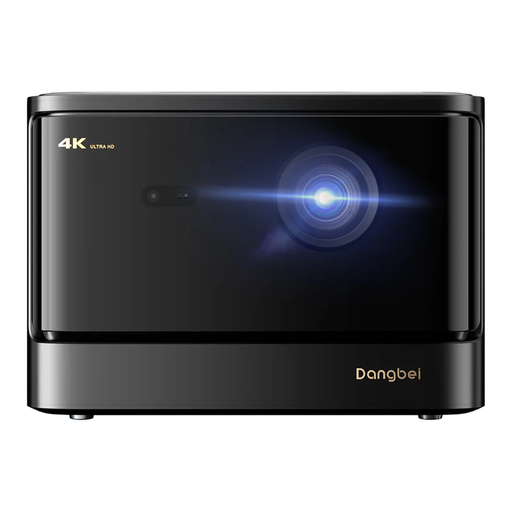
An option to compare if you’re considering a 4K projector with built-in speakers.
The product name lists 2,450 ISO lumens and two 12 W speakers.
Measure the viewing distance from the back row, then work out which screen will fit in the room. For passive video viewing, Epson gives a maximum viewing distance of eight times the screen height as a general guideline. This doesn’t guarantee that every film detail will be visible.
First, check the throw distance for the exact model. Measure from the lens to the screen and compare that distance with the screen width you want and the stated throw ratio.
Test the film file on your chosen player, the video connection, the audio setup and the image under the lighting conditions you’ll have during the screening. For example, Optoma lists HDMI 2.0 as an input on the Photon Go; also check that your player can connect to it.
According to ACM ConsuWijzer, the retailer is responsible under the legal guarantee if the product doesn’t meet the expectations you were entitled to have. A manufacturer’s warranty period doesn’t replace this right; the circumstances of the fault matter.
Check who owns the rights to the film and any music, and whether the screening is limited to a domestic setting. The Rijksoverheid states that permission from the creator is required for protected film material; FilmService explains licensing for screenings outside the home. The permission needed for a particular film and screening depends on the rights and the circumstances.