
Group watching with some light
You want your guests to be able to follow the race while indoor lights are on or there’s still some twilight outdoors. Light output and screen size are the first things to consider.


Choose a projector for a night of cycling based on the ambient light and the distance to the screen. A mains-powered model with a higher stated light output may suit a room with some light; a battery-powered model is more convenient when there’s no socket nearby, but its battery life may be quoted for a lower brightness setting. Test the live coverage and sound in advance, and check the permitted conditions for the exact model if you plan to use it outdoors.
You want your guests to be able to follow the race while indoor lights are on or there’s still some twilight outdoors. Light output and screen size are the first things to consider.
You have a fixed spot for the screen, but limited distance or room to walk around the projector. First, choose a throw ratio that will work in your space, then consider the other features.
You want to move the projector, or there’s no mains power where you plan to watch. In that case, the battery life at the stated settings and a suitable outdoor set-up are important considerations.
Start by considering the light and space where you’ll be watching. Then check that your chosen source can play the race, and that everyone can follow the picture and hear the commentary clearly.
| What to consider | What should you check? | Who should prioritise this? |
|---|---|---|
| Picture visibility with some light | Compare the stated light output and unit of measurement with your planned screen size and the light in the room. Direct sunlight is not a typical evening viewing condition. | If it’s still light when the race starts, I want the picture to remain visible at my chosen screen size. Around 36% of consumers give visibility in ambient light their highest priority. |
| Suitable positioning | Measure the screen width and available projection distance, then check the throw ratio for the exact model. BenQ lists a ratio of 1,49–1,64:1 for the TH575i. | With a fixed screen position and limited space, I want to know whether the projector can create the picture I want from a suitable position. Around 29% of consumers prioritise positioning and distance. |
| Live source and sound | Check whether the specific race can be played through your chosen service or an external source, and whether that source can connect to the projector. Test the picture and commentary where you plan to watch. | If the race is the main event, I want to be able to start the coverage and make sure everyone can hear the commentary. Around 21% of consumers give a working live source and sound their highest priority. |
| Portability and power | Compare the length of the full broadcast with the battery life at the stated brightness and volume settings. If you’re using the projector outdoors, also check the conditions permitted for the exact model. | At a spot without a socket, I want to be able to move the projector without the power supply limiting how long we can watch. Around 14% of consumers prioritise portability and power supply. |
For the Nebula Mars 3, Nebula quotes up to 5 hours of playback in Eco mode at 300 ANSI lumens, 25% volume and 1080p resolution. That figure won’t necessarily apply at a higher brightness setting.
Compare the full broadcast, including the build-up and post-race coverage, with the battery life at the settings you plan to use.
BenQ describes the GS50’s IPX2 protection as protection against light splashes. This feature does not automatically apply to other models or the rest of your power set-up.
Check the protection rating for the exact model and use it only in the permitted weather conditions.
A smart platform or built-in speaker doesn’t guarantee that the cycling coverage you want is available or that everyone in the group will be able to hear the commentary.
Test the specific broadcast through your chosen source in advance, and check both picture and sound where you plan to watch.
The Epson EF-21W is a different model from the EF-61W. A product page for the EF-21W therefore won’t necessarily describe the features or availability of the EF-61W.
Check the full model name and product specifications before choosing a product.
These brands offer options for different viewing set-ups during a night of cycling. The features listed apply to the specific models and product ranges, not automatically to the entire brand.
The TH575i is worth considering if there’s some ambient light and mains power is available; the GS50 is a separate portable model.
The Lifestudio Pop EF-61W is a portable smart projector for anyone looking for an easy-to-set-up option in a darkened room.
The Halo+ (New) is a portable option if you want to move your viewing spot and its stated battery life suits your plans.
The Mars 3 is a portable option to compare for a mobile outdoor set-up.
This selection includes models for viewing spots with mains power and portable set-ups. For each projector, check that the distance, power supply and chosen live source are suitable for your gathering.
 No image available
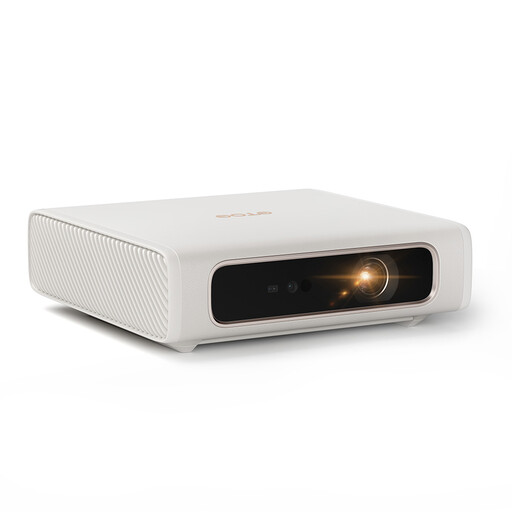
The built-in battery may suit a portable viewing spot without a socket, as long as your viewing time fits within the stated battery life.
Full HD, 800 ANSI lumens, HDMI 2.1 and USB-C.
The product information states up to 2 hours of battery use; for a longer gathering, you’ll need another power source or a break.
 No image available
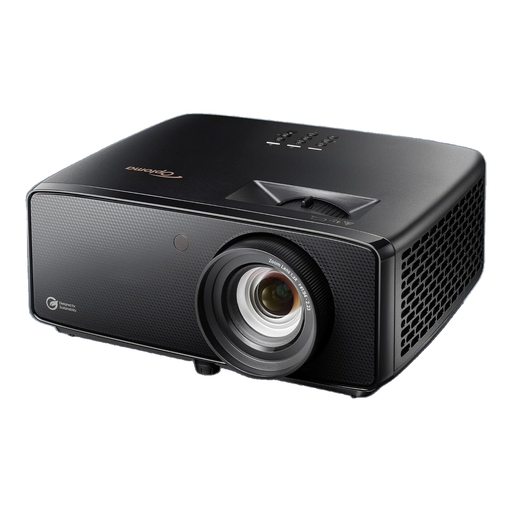
This model is an option for a fixed spot with mains power. Match the throw ratio to the available distance and screen width.
The product information lists 3.500 lumens, 4K UHD, two HDMI inputs and a throw ratio of 1,21:1–1,59:1.
The stated projection distance is 1–8 m; the product information mentions an adapter.
 No image available
An option for a darkened room with mains power, if Google TV or an external source suits your viewing set-up.
The product information lists Full HD, 1.200 ISO lumens, HDMI and two 5 W speakers.
This model doesn’t have a built-in battery and needs to be connected to a power adapter.
 No image available
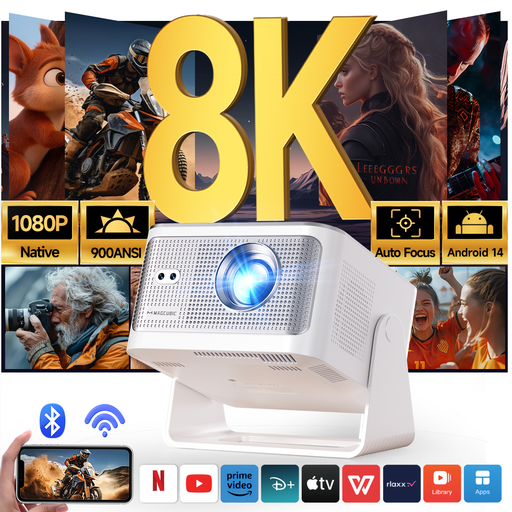
The stated throw ratio may be useful if you have limited space. Check that it can produce your desired picture width from your set-up position.
The product information lists Full HD, 900 ANSI lumens, HDMI compatibility and a throw ratio of 1:1.
 No image available
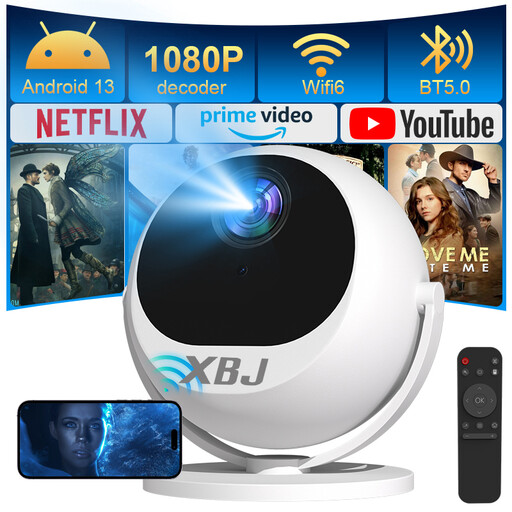
The rotating design is an option if you want to position the projector in different directions. Check its position relative to the screen in advance.
The product information lists Full HD, 500 ANSI lumens, HDMI and built-in 5 W speakers.
No. Ambient light and picture size still make a difference. BenQ notes that a projector can’t compete with direct sunlight, so assess the viewing spot at the time of the race and compare the light output using the stated unit of measurement.
Measure your desired screen width and the distance available for the projector. For the BenQ TH575i, BenQ lists a throw ratio of 1,49–1,64:1, so the required distance is 1,49 to 1,64 times the screen width. For another model, use its own specifications.
No. The presence of Google TV or general entertainment apps doesn’t confirm that the specific race is available. Check the channel or service and the app you’ll need, connect a suitable external receiver if necessary, and test the picture and sound in advance.
It depends on the model and settings. Nebula quotes up to 5 hours for the Mars 3 at 300 ANSI lumens, 25% volume and 1080p resolution; compare these conditions with your planned viewing time for the full broadcast.
This depends, among other things, on whether you’re watching together privately or holding a public or commercial screening, and on the terms set by the rights holder or provider. Ziggo Zakelijk describes a separate business licence for certain public sports screenings; these terms don’t automatically apply to every cycling broadcast.