Who is this buying guide for?

Watching in a bright room

You can’t fully cover your tall windows and mainly want to be able to see the players and the ball. Consider the light falling on the projection surface alongside the projector and screen, rather than looking at the lumen figure alone. Coolblue and Epson Netherlands explain why the light reaching the screen matters.

Short on space for positioning

You want a large picture but don’t have a suitable spot for a projector set further back. Compare an ultra-short-throw setup and check that the screen is compatible with the projector. Epson Netherlands describes this combination for the EH-LS670W and ELPSC36 screen.

Able to darken the room

You can reduce the daylight during the match, so you don’t want to choose a projector based solely on its maximum quoted light output. Also check the picture size, positioning and connection for your match source. Coolblue and Epson Netherlands highlight the impact of ambient light and screen choice.

What should you look for when buying?

What to consider What to look for Who should consider it
Visibility in daylight Check where daylight falls on the projection surface and compare the quoted light output for each picture mode. Also consider whether you can cover the windows. If you can’t properly darken the room, you’ll want to know whether the picture will remain visible where your screen is positioned. Around 40% of consumers put visibility in daylight first.
Positioning the projector and screen Measure the available distance and your preferred picture size. Check the throw ratio of the exact model and whether the screen is suitable for that type of projection. If you have little space in front of the screen, the setup still needs to work in your room. Around 25% of consumers prioritise positioning as their main buying consideration.
Match source and sound Check that your source device can connect to the projector and find out which audio connection or speaker is available. Test the broadcast in advance. If you want to watch the final without problems and make sure everyone can hear it, check the complete connection setup. Around 17% of consumers prioritise playback and sound.
Total cost of buying and using it Check whether a screen is included, which screen you need and what model-specific information applies to the light source, maintenance and replacement. If you also want to factor in the cost of a screen and future maintenance, look beyond the projector itself. Around 18% of consumers name total cost as their main buying consideration.

Common buying mistakes

  • Choosing based only on the highest lumen figure

    Daylight on the projection surface and the picture mode you choose both affect how visible the picture is. For example, the Acer H6815 has separate figures for standard and eco mode.

    First, assess the light reaching the screen and compare light output in a suitable mode for how you’ll use the projector. Don’t base your decision on a single figure.

  • Choosing an ALR screen without checking the projection type

    A screen designed for ultra-short-throw projection won’t necessarily work with every projector model or projection type.

    Before buying, check specifically that the screen is suitable for your projector and intended setup.

    An unsuitable screen could mean you have to buy another one.

  • Assuming built-in features guarantee a broadcast

    Smart features or connections don’t prove that you’ll be able to watch a particular match through your chosen provider and source.

    Connect your own source device well before kick-off and test the broadcast, picture and sound.

Brands to consider

Acer

The H6815 and PL2535 are two model-specific options to compare if you’re looking at quoted light output and positioning.

  • Acer quotes 4,000 ANSI lumens in standard mode and 3,200 ANSI lumens in eco mode for the H6815. For the PL2535, Acer quotes 5,500 ANSI lumens in standard mode.
  • These manufacturer figures aren’t comparative measurements of daylight visibility in the same living room. The models also have different throw ratios.

BenQ

BenQ presents the TH575i as a Full HD home projector suited to uses including watching sport in the living room.

  • BenQ quotes a light output of 3,800 lumens for the TH575i and lists built-in smart features.
  • A manufacturer’s claim about picture quality in ambient light doesn’t prove that a match will remain visible on your screen in direct light.

Epson

The EH-TW6250 and EH-LS670W illustrate a standard-throw home projector and an ultra-short-throw setup respectively.

  • Epson quotes 2,800 lumens for the EH-TW6250 and 3,600 lumens for the EH-LS670W.
  • An ultra-short-throw setup may require a specifically compatible screen. The quoted figures are model specifications, not an independent comparison in the same living room.

Projectors on Joybuy

Projectors to compare for a football final in daylight, with a focus on quoted light output and positioning.

Optoma H117ST short-throw DLP projector

Optoma H117ST Short Throw DLP Projector

Its short throw makes this model worth considering if you have little space in front of the screen. Its quoted light output doesn’t guarantee visibility with your windows.

WXGA resolution, 3,800 ANSI lumens and 3D.

Joybuy

Optoma Photon Beam PK52

Optoma Photon Beam PK52

This model is worth considering if you’re looking at a standard-throw projector. Check that the projection distance works with your screen size and room.

Joybuy
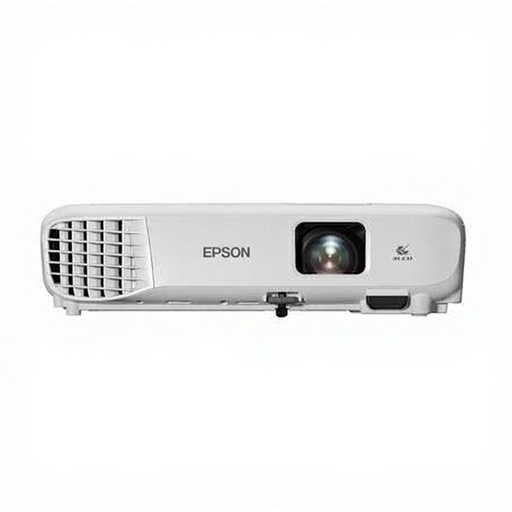
Epson EB-W53 4,000 ANSI lumens 3LCD WXGA

Epson EB-W53 4,000 ANSI lumens 3LCD WXGA

The quoted light output is useful for comparison if some light remains in the room, but it doesn’t tell you on its own how visible the picture will be with your windows.

4,000 ANSI lumens, 3LCD and WXGA (1200x800).

Joybuy
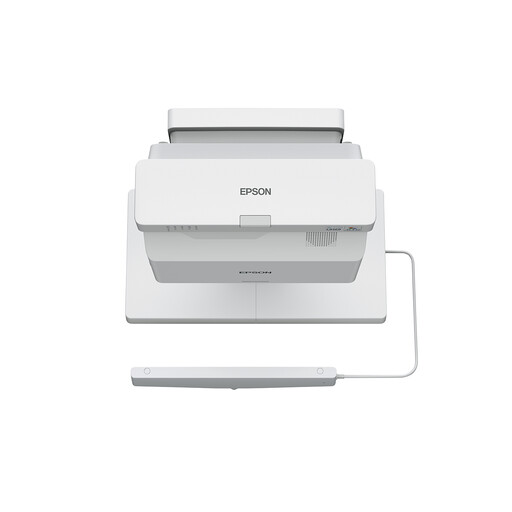
Epson EB-760Wi 4,100 ANSI lumens 3LCD WXGA

Epson EB-760Wi 4,100 ANSI lumens 3LCD WXGA

The quoted light output is one factor to compare. Also consider the light reaching the screen and what you plan to use the model for.

4,100 ANSI lumens, 3LCD and WXGA (1280x800). The product information positions this model primarily for interactive presentations.

Joybuy

Epson EB-1780W short-throw 3,000 ANSI lumens 3LCD WXGA

Epson EB-1780W Short Throw 3,000 ANSI lumens 3LCD WXGA

The short-throw specification makes this model worth considering if you’re comparing available positioning distances. Also check the light falling on the projection surface.

3,000 ANSI lumens, 3LCD and WXGA (1280x800).

Joybuy

Frequently asked questions

Does a high lumen figure guarantee you’ll see the ball if sunlight falls on the screen?

No, a lumen figure doesn’t guarantee that. Ambient light can make the projected picture harder to see, so consider the light reaching the screen, the screen size and the light output in the picture mode you plan to use.

Can you use any ALR screen with an ultra-short-throw projector?

Don’t assume so: check that the screen is suitable for ultra-short-throw projection and for the model you’ve chosen. Epson describes the ELPSC36 screen specifically for Epson laser projectors with an ultra-short throw.

What should you check in your setup before kick-off?

Measure the projection distance and preferred picture size, then test your match source with the projector and sound system. Check the inputs and audio connections on the exact model in advance.

What can you do if a projector you bought online isn’t working properly?

According to the Dutch government, if a product is faulty, you should contact the seller to resolve the issue. For distance purchases, you can also often change your mind within 14 days; terms and exceptions apply.

Which product regulation is relevant when buying an electric projector?

Electrical and electronic equipment offered on the EU market must meet applicable product requirements, including CE marking. This is a legal product requirement, not confirmation that a specific offer has already been checked for compliance.
