
Viewers in a bright shared space
You want the players, ball and score to remain visible when you can’t completely block out windows or lighting. Match the brightness to your intended image size and the conditions in the room.


Start by considering how much light you can block out during the match, then measure the distance from the lens to the wall or screen. Choose a brighter fixed model if the room will stay lit, a projector with a suitable throw ratio if space for positioning is limited, or a portable model if moving it around matters more and you can darken the room. Also check that the match source and audio setup will work for your group.
You want the players, ball and score to remain visible when you can’t completely block out windows or lighting. Match the brightness to your intended image size and the conditions in the room.
You want an image that several people can watch, but may not have the space to position the projector far from the wall. The lens position and desired image width determine which throw range will work.
You take the projector to another living room or garden, for example, and can darken the space if needed. Also consider the power supply and the conditions under which the stated battery life applies.
When several people are watching a final, your choice mainly depends on the light in the room, where you can position the projector, and how the picture and sound are supplied.
| What to consider | What should you look for? | Who is this important for? |
|---|---|---|
| Visibility in ambient light | Compare the stated brightness and unit of measurement, and assess them alongside your desired image size and how much you can darken the room. | If I can’t block out all the windows or lights during the match, I want to know whether the image will remain visible at the size I’ve chosen. Around 36% of consumers put visibility in ambient light first. |
| Image size and positioning | Measure the distance from the lens to the screen and the available image width; check the throw range of the exact model. | If the projector needs to be close to a wall, I want to know in advance whether the image will be wide enough for the group. Around 29% of consumers prioritise image size and positioning. |
| Match source and group audio | Check whether you can connect your playback device to the projector, and which audio connections or speakers the model has. | When we watch together, I want the broadcast to work and everyone to be able to hear the commentary. Around 21% of consumers put the match source and group audio first. |
| Portability and power | Check the brightness, the available power supply and the conditions under which the stated battery life applies. | If I want to watch in different places where I can darken the room, easy portability matters more to me than maximum brightness. Around 14% of consumers choose portability as their main consideration. |
Ambient light and your chosen image size affect visibility; the stated brightness alone cannot fully predict how the picture will look in your room.
Compare the stated units of measurement and assess the picture at a similar image size and in similar lighting. Plan to darken the room if needed.
The lens distance and throw range of the exact model determine whether you can achieve your desired image width where you plan to position the projector.
Measure the available distance and image width before buying, then check them against the model’s projection specifications.
XGIMI states that the MoGo 4 Match Night Collection offers up to 2.5 hours on its built-in battery. The stated maximum is not a guarantee for every picture mode or a match that goes into extra time.
Check the conditions that apply to the battery life claim and arrange a suitable power supply in advance.
Having a working projector does not, in itself, give you permission to show a broadcast in every shared space.
The Dutch Ondernemersplein outlines licensing requirements for businesses or organisations that show TV broadcasts to employees or customers. Videma also refers to an event licence for screenings held as part of an event. First establish whether the gathering is private, business-related or an event, then check which rights apply to the specific broadcast.
The EB-FH08 is an example of a fixed Full HD 3LCD setup for a shared indoor space where brightness and wired sources matter.
The TH575i is a Full HD model to consider if you’re looking for a bright setup for watching sport in your living room.
The European PX701HDH is a Full HD lamp model with two HDMI inputs, designed for a fixed setup.
The MoGo 4 Match Night Collection is a portable option for viewers who move between locations and can darken the room.
European documentation describes the HD146X as a Full HD lamp model for anyone considering a conventional projector with HDMI.
These Joybuy product picks are a starting point for comparing projectors for watching football together. Check the brightness, distance to the screen and the connections you need for each model.
 No image available
The stated throw ratio of 0.52:1 makes this model worth considering if you have limited space for positioning.
WXGA 1280 × 800; 3,800 ANSI lumens; HDMI; built-in 10 W speaker.
 No image available
The stated throw ratio is worth checking if you want to position the projector close to the image.
520 ISO lumens; throw ratio 1.17:1; HDMI; two 5 W speakers.
 No image available
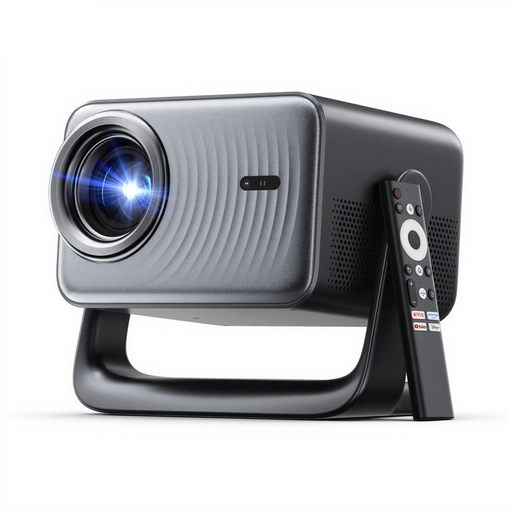
The stated rotation and automatic picture correction are useful if you want flexibility in how you position the projector.
Screen range 50–200 inches; digital zoom 50–100%; 180° rotation; HDMI-compatible and suitable for connecting a TV stick.
 No image available
The product description calls this model portable, making it an option if you want to move your setup around.
1,000 ISO lumens; VIDAA OS with Netflix; Dolby Audio; 4K support; automatic focus and keystone correction.
 No image available
The stated short throw ratio makes this model worth considering when the projector needs to be close to the screen.
XGA 1024 × 768; 3,600 ANSI lumens; throw ratio 0.49; HDMI; built-in 10 W speaker.
Measure your desired image width and the distance from the planned lens position to the wall or screen. Check this combination against the exact model and its zoom range; a maximum screen diagonal alone won’t tell you whether your setup will work.
Test in advance that your specific match source works and that everyone in the group can hear the sound. An HDMI input lets you connect an external source, but doesn’t give you access to the broadcast. Also check that the audio connections are suitable for any external speakers you plan to use.
That depends on the nature of the space and the screening. According to the Dutch Ondernemersplein, a licence is required when a business or organisation shows TV broadcasts to employees or customers, including in a communal area. Videma describes a separate event licence for screenings held as part of an event, for example in a village square or where tickets are sold; some channels may also require a paid subscription. This business and event-related information does not establish a general licensing requirement for a private gathering at home. Before organising a screening, check which rights apply to the specific broadcast.
Check that you can connect your match source to the projector and that the audio setup will work for your group. Also consider whether you’ll need external audio, a suitable screen or an additional power supply, without assuming these are included as standard. For online consumer purchases, ACM ConsuWijzer says you will generally have a 14-day cooling-off period after delivery, subject to legal exceptions. Your statutory guarantee depends on what you can reasonably expect from the product.