
Fan of fast-paced football
You want to follow passes and camera movement clearly, so you compare motion handling rather than looking at resolution alone.


First, choose a projector that can produce the image size you want from the available distance and that you can connect to your actual broadcast source. Then compare motion handling, picture quality and audio connections. A sports mode, frame interpolation and low input lag are different features. Manufacturer specifications describe capabilities, but they don’t guarantee a particular viewing experience with your broadcast.
You want to follow passes and camera movement clearly, so you compare motion handling rather than looking at resolution alone.
You want a large image, but need to position the projector within the space available. The throw ratio and lens position help you work out whether it will fit.
You want to show the match using your own receiver or media player, and need suitable video and audio connections.
The percentages below give an indication of the main priority consumers might have when choosing a projector for this viewing occasion; each row describes a different main reason.
| What to consider | What to check | Who is this more important to? |
|---|---|---|
| Motion handling | Check which motion feature the exact model offers and whether it’s available with your broadcast source. | If I want to follow fast passes and camera movement during the final, I’ll look beyond resolution alone. Around 26% of consumers make motion handling their main buying priority. |
| Distance and positioning | Measure the distance to the screen and your desired image width, then compare these with the model’s throw ratio and positioning options. | When space is limited in my room, I want to be able to project the image I want from the space available. Around 26% of consumers prioritise suitable positioning. |
| Picture in a dark room | Check the stated resolution and light output, and make sure they suit your desired image size. | If I’m watching on a large screen in a dark room, I want to consider sharpness and colour without treating one specification as a complete assessment of picture quality. Around 21% of consumers give picture quality top priority. |
| Broadcast source and sound | Check the connections on your receiver or media player, projector and audio equipment in advance. | For an evening with friends, I want to connect my own match source and make sure the sound works with the set-up. Around 16% of consumers prioritise the combination of connectivity and sound. |
| Light source and usage | Check the type of light source, the stated lifespan for each usage mode and the service terms for the specific offer. | If I want to use the projector regularly, I want to know which usage mode and maintenance requirements apply to the light source. Around 11% of consumers prioritise running costs and maintenance. |
BenQ states the TK710STi’s input lag for different video signals. These figures don’t directly describe how a projector handles motion in a live broadcast.
Assess input lag and motion features separately, and check which features are available on the exact model.
Optoma and ViewSonic state the throw ratio for their models, which helps you work out what distance is needed for a chosen image width.
Measure the room and your desired image width first, then compare them with the model’s specifications.
Changing the positioning or screen you choose may involve extra work. Check the distance before finalising your set-up.
Optoma and ViewSonic state different lifespans for different usage modes; a figure for one mode doesn’t automatically apply to another.
Compare the mode you’re most likely to use and check the service terms for the specific offer.
The EH-TW7000 is a model worth comparing if motion handling and colour brightness matter when watching sport in a dark room.
The TK710STi offers a short-throw option for a set-up where the projector needs to be close to the screen.
The HD146X is a Full HD lamp projector worth comparing if you have space for a conventional projection distance.
The PX701-4K is a 4K lamp projector worth comparing if you need to consider multiple sources and positioning in the room.
These Joybuy product picks are projectors to compare for watching football on a large screen. For each model, check that the positioning, broadcast source and audio set-up will work in your room.
 No image available
The stated throw ratio may be important if the projector needs to be relatively close to the screen; check it against your desired image width.
The product details list native 1080p, 520 ISO lumens and a throw ratio of 1,17:1. HDMI, autofocus, keystone correction and two 5 W speakers are also listed.
 No image available
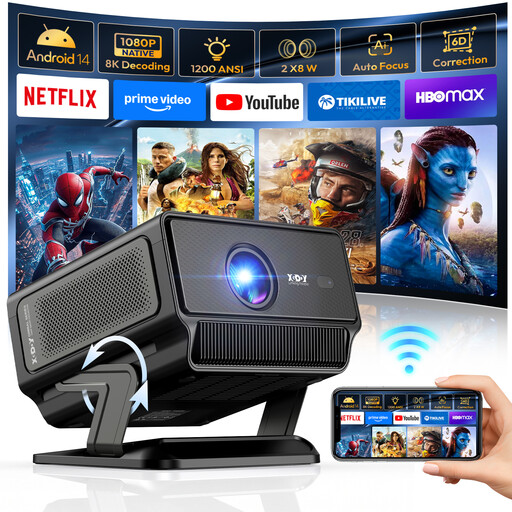
The adjustable gimbal and stated short throw ratio are worth considering when planning a flexible set-up.
The product details list native 1080p, 1200 ANSI lumens, a throw ratio of 1,08:1 and HDMI. An adjustable gimbal, autofocus and keystone correction are also listed.
 No image available
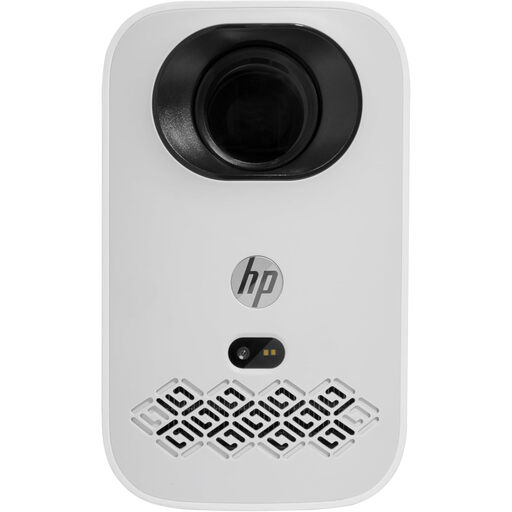
This model is worth comparing if you’re looking for native Full HD and automatic picture adjustment in your set-up.
The product details list native 1080p, HDMI, autofocus, keystone correction and built-in speakers. Check that the listed connections suit your broadcast source and audio equipment.
 No image available
The stated throw ratio and manual zoom are worth considering when planning the projector’s position in your room.
The product details list 4K UHD, 3500 lumens, a throw ratio of 1,21:1 to 1,59:1, manual zoom and two HDMI inputs.
 No image available
The stated short throw ratio of 0,52:1 makes this model worth comparing if the projector needs to be close to the screen.
The product details list native WXGA (1280 × 800), 3800 ANSI lumens, HDMI and a sports mode. WXGA isn’t native Full HD, and a sports mode isn’t proof of measured motion performance.
Measure the distance from the lens to the screen and your desired image width, then compare them with the exact model’s throw ratio. For example, Optoma lists 1,47:1 to 1,62:1 for the HD146X, while ViewSonic lists 1,5:1 to 1,65:1 for the PX701-4K. These ratios don’t represent a fixed distance for every image size.
That depends on your broadcast source and audio equipment. BenQ lists HDMI inputs and eARC for the TK710STi; the Optoma HD146X specification sheet lists one HDMI input and a 3,5 mm audio output. Check in advance that the full connection chain will work with the broadcast you want to watch.
No. Input lag and motion handling describe different features. BenQ states the TK710STi’s input lag for different video signals; on its own, this doesn’t prove that live footage will look smoother. Check which motion feature the exact model offers.
Check the usage mode given for each figure. Optoma states up to 4000 hours in Bright mode and up to 15000 hours in Dynamic mode for the HD146X; ViewSonic states 6000 hours in Normal mode and 20000 hours in SuperEco mode for the PX701-4K. These are manufacturer estimates, not a fixed replacement date.
According to ACM ConsuWijzer, online consumer purchases generally come with a cooling-off period. This ends 14 days after delivery, although exceptions may apply. You also have a legal guarantee if a product is faulty. ACM ConsuWijzer explains that in the Netherlands this doesn’t have a fixed duration of two years for every product.
According to the Dutch government, electrical appliances placed on the market in the EU must bear a CE marking. Check the marking and product information for the specific offer; the model name alone doesn’t confirm this.