First, limit the light falling on the projection surface: even a projector with a high stated brightness can lose contrast in daylight. Then compare brightness figures while taking account of the measurement standard used, and check that the image size, projection distance and connections suit your room and video source. If direct sunlight falls on the image and you cannot block it out or adjust the screen position, a projector may not be right for your needs.
Who is this guide for?
Families who watch during the day
You want to watch family videos while daylight streams in through tall windows. A clear picture matters more to you than the largest possible image. BenQ Europe and ProjectorCentral identify light on the projection surface and image size as relevant factors.
Families with limited space
You want to enjoy a large image together, but first need to work out where the projector and projection surface can go. Epson Netherlands and BenQ Netherlands highlight the distance and positioning required in their product information.
Families with videos on their own devices
You might want to watch videos from a laptop or media player, for example. Check that you can connect your source to the projector and that the sound suits the room. Epson Netherlands and ViewSonic Europe list HDMI connections on the models mentioned.
What should you look for?
Standard projection distance
Choose this option: if you watch during the day, can limit the light on the projection surface and have enough distance from it.
Bear in mind: a larger image spreads the available light over a bigger area. Epson lists 4,000 lumens of both white and colour light output for the EH-TW840; ViewSonic lists 3,500 ANSI lumens for the PX701HDH. These figures use different measurement standards and are not measurements taken under the same conditions.
Flexible set-up with smart features
Choose this option: if you want to be able to change the set-up and value having built-in access to video apps.
Bear in mind: BenQ lists 2,600 ANSI lumens for the GP520, along with adjustment for environmental factors. These manufacturer specifications do not prove that direct sunlight on the screen will not be a problem.
Ultra-short-throw projection
Choose this option: if you have little room to place a projector further away from the projection surface.
Bear in mind: Epson lists an 80-inch image from 2.3 cm away from the wall for the EH-LS800B. Check the exact positioning requirements and use a screen designed for ultra-short-throw projection.
Tackle light from the windows first
Choose this option: if direct sunlight falls on the planned screen position and you can look into using blinds or moving the screen.
Bear in mind: a suitable ambient-light-rejecting screen needs to work with both the direction of the light and the projection method; it is no guarantee against direct sunlight.
First, check where daylight falls on the planned image. Then measure the distance and image width, and make sure the connections work with the device your videos are stored on.
| What to consider |
What should you check? |
Who should pay particular attention? |
| Visibility in daylight from windows |
Check where daylight falls on the image, whether you can block it out and which definition of brightness the manufacturer uses. |
If you watch during the day, you want family videos to remain visible and prioritise that over a larger image. Around 39% of consumers say visibility in daylight from windows is their top buying priority. |
| Projection distance and screen position |
Measure the available distance and desired image width; check the throw ratio of the exact model. |
If you have limited free space, you want to know whether the projector and screen position will fit in the room before choosing a model. Around 23% of consumers put positioning and distance first. |
| Playing video and sound |
Check the video output on your source device and the projector’s inputs and audio connections. |
If you want to play videos from your own device, you need to know whether the connection will work and whether the sound suits your set-up. This is also a top priority for around 23% of consumers. |
| Use and support |
Check the light source type, the operating mode used for stated lifespan figures and who the seller is. |
If you want to take possible replacement and support into account, check the conditions for the light source and the seller. Around 15% of consumers give these points top priority. |
Common pitfalls
-
Choosing based only on the highest lumen figure
Light on the projection surface can reduce contrast, while a larger image spreads the projector’s available brightness over a bigger area. Manufacturers may also use different definitions of brightness.
Check the planned screen position at the time you intend to watch, and compare brightness figures only when you know which measurement standard they use.
-
Using any ambient-light-rejecting screen with ultra-short-throw projection
Ultra-short-throw projection uses a different angle of incidence from standard projection. A screen not designed for this projection method may not suit your set-up.
Before buying, check that the screen is suitable for ultra-short-throw projection and for the direction of light in your room.
-
Assuming the maximum Eco lifespan applies to normal use
ViewSonic lists 5,000 hours in Normal mode and up to 20,000 hours in SuperEco+ for the PX701HDH. The stated lifespan therefore varies by mode.
Compare lifespan figures only when the operating mode is specified. A lamp used in Normal mode may need replacing sooner than the SuperEco+ figure suggests.
Brands to consider
Epson
The EH-TW840 is a Full HD lamp projector, while the EH-LS800B is an ultra-short-throw laser projector.
- Epson lists 4,000 lumens of white and colour light output for both models. The EH-TW840 has two HDMI inputs.
- The EH-TW840 has a built-in 2 W mono speaker. The two models require different positioning, and these manufacturer specifications are not an independent daylight test.
ViewSonic
The PX701HDH is a Full HD lamp projector with two HDMI inputs.
- ViewSonic lists 3,500 ANSI lumens.
- For the light source, ViewSonic gives a lifespan of 5,000 hours in Normal mode and 20,000 hours in SuperEco mode. Do not compare these figures without taking the operating mode into account.
BenQ
The GP520 is a portable 4K projector with built-in smart features.
- BenQ lists 2,600 ANSI lumens and adjustment for environmental factors.
- The manufacturer’s claim about adapting to the environment does not prove that direct sunlight will have no effect on the projection surface.
XGIMI
The HORIZON S Max is designed for those looking for a built-in stand and automatic focusing.
- XGIMI lists 3,100 ISO lumens, a built-in stand and automatic focusing.
- ISO lumens are not directly comparable with other stated lumen figures.
Projectors at Joybuy
These models include short-throw options and other home projectors. Choose according to where you plan to put the image, the projection distance you need and the connection for your video source.
 No image available
Optoma H117ST short-throw DLP projector, WXGA, 3,800 ANSI lumens
The short projection distance may suit you if you have limited space between the projector and the image; the stated brightness does not guarantee a clear picture in direct sunlight.
WXGA resolution; 3,800 ANSI lumens; throw ratio 0.52:1; HDMI; built-in 10 W speaker.
View at Joybuy
 No image available
Optoma Photon Beam PK52
This projector may suit you if you want to connect an external video source via HDMI; measure the distance and image width before choosing your set-up.
4K UHD; 3,500 lumens; DuraCore laser light source; two HDMI inputs; stated projection distance 1–8 m with 1.3× manual zoom.
View at Joybuy
 No image available
BenQ MW809STH short-throw projector, 3,600 ANSI lumens, XGA
The short-throw ratio may suit a set-up where you want a large image from a short distance; check the image size you want for your room.
XGA (1024 × 768); DLP; 3,600 ANSI lumens; throw ratio 0.49.
View at Joybuy
 No image available
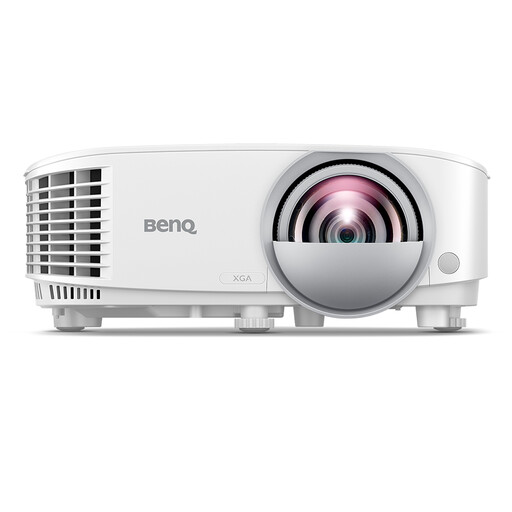
BenQ MX825STH short-throw projector, 3,500 ANSI lumens, XGA
The short-throw set-up may suit you if you want to project an image from a short distance; check that the image size and connections suit your needs.
XGA (1024 × 768); DLP; 3,500 ANSI lumens; two HDMI ports; built-in 10 W speaker; stated image size 60–120 inches.
View at Joybuy
 No image available
XGODY N7 Cine smart projector, native 1080P
The short-throw specification and built-in apps may be useful if you want a compact set-up and access to video apps; check that your preferred video source is supported.
1,000 ANSI lumens; native 1080P; Whale OS and pre-installed apps; 60 inches at 1.33 m; two built-in 8 W speakers; autofocus and automatic keystone correction.
View at Joybuy
Frequently asked questions
Will a bright projector work if the sun is shining on the screen?
Do not rely on the lumen figure alone. Light on the projection surface reduces contrast, so first look into using blinds or moving the screen. A suitable ambient-light-rejecting screen needs to match the direction of the light and your projection set-up.
How can you tell in advance whether the image will fit your room?
Measure the available projection distance and the image width you want, then check the throw ratio of the exact model. For ultra-short-throw projection, choose a screen designed for that projection method.
What does a projector lamp’s stated lifespan mean?
The figure applies to a particular operating mode. ViewSonic lists 5,000 hours in Normal mode and up to 20,000 hours in SuperEco+ for the PX701HDH; do not treat the latter figure as the lifespan at normal settings.
What cooling-off period and warranty apply to an online purchase in the Netherlands?
For a standard online consumer purchase, you generally have a statutory cooling-off period of up to 14 days after delivery, subject to legal exceptions. ACM ConsuWijzer explains this period. If a product is faulty, the seller is responsible for the statutory guarantee, which is not replaced by a manufacturer’s warranty.


