
Viewer without a dedicated TV spot
You want to clear the floor, table or shelf again after watching a documentary. So it’s important to consider where the projector can stand while you’re watching and whether the set-up suits your room.


When shelf space is limited, your choice mainly depends on the distance from the wall and where you can place the projector while watching. Choose a tiltable model if you want to project from a small table or bedside table, a compact battery-powered model if you want to put the projector away between uses, or compare models with a higher stated light output if you want to keep the room less dark. Also check the native resolution, the unit used to measure light output and the product information for the exact version.
You want to clear the floor, table or shelf again after watching a documentary. So it’s important to consider where the projector can stand while you’re watching and whether the set-up suits your room.
For charts, captions and nature footage, you’ll want to consider the native resolution, image size and projection distance.
You can’t always make the room dark, so you’ll want to assess the stated light output alongside its unit of measurement.
Start with the available space and projection distance, then compare image detail, light output and how you’ll watch documentaries.
A good fit if: you have a bedside table or small table, but no dedicated TV shelf.
Bear in mind: the projector still needs a suitable projection distance and power supply.
A good fit if: you want to put the projector away after use or move it between rooms.
Bear in mind: the stated battery life may apply to a specific mode, so check that it suits your viewing session.
A good fit if: built-in smart features and flexible positioning matter more than using the projector without a power supply.
Bear in mind: check whether a required battery, app or account is included with the exact version.
A good fit if: you want to keep the room less dark and a very small casing isn’t your top priority.
Bear in mind: lumen figures using different units of measurement aren’t directly comparable.
| What to consider | What should you check? | Who is this most relevant to? |
|---|---|---|
| Placement without a dedicated shelf | Measure the distance from the wall and check the throw ratio, footprint and cable routing. | If I don’t have a permanent spot, I want to be able to put the projector away afterwards without having to rearrange my room permanently. Around 36% of consumers make placement without a dedicated shelf their top priority. |
| Readable labels and fine detail | Check the native resolution and assess your preferred image size for your viewing distance. | If I want to follow charts and small captions, I look beyond the maximum screen size. Around 29% of consumers prioritise detail. |
| Picture in ambient light | Note the stated lumen figure and its unit of measurement, and factor in how dark the room is and the image size. | If I can’t always make the room dark, I want to know how the stated light output will suit my situation. Around 21% of consumers say ambient light is their main concern when buying. |
| Watching documentaries | Check the specific app and region, account or subscription requirements, HDMI and power requirements. | If I want to avoid using extra equipment where possible, I first check whether my documentary service works on the projector. Around 14% of consumers make ease of playback their top priority. |
The distance and chosen positioning angle both help determine whether the image will fit on the available wall.
Measure from the spot where the projector will actually stand and compare that distance with the throw ratio for the exact version.
A stated ANSI lumen figure and a figure based on a different measurement method don’t prove which projector will be more visible in the same room.
Note the unit exactly as stated and only compare figures that use the same measurement method. Also factor in your preferred image size and how dark the room is.
A bundle may include accessories or extra components that aren’t supplied with the projector on its own.
For the version on offer, check the full model name, included items, app support and power requirements.
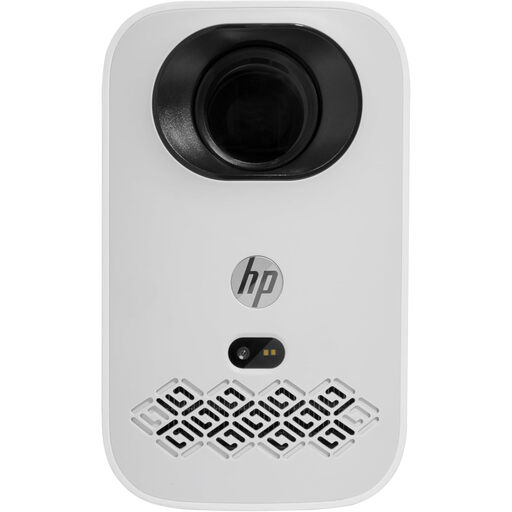
The GV50 is worth considering if you want to project on to a wall or ceiling from a small viewing area.
The MoGo 4 is a compact projector to consider if you want to move it or put it away between viewing sessions.
The Freestyle 2nd Gen. is a compact smart projector with an adjustable angle to consider if that combination suits your set-up.
The Lifestudio Pop Plus EF-62N is a portable model to compare if stated light output and built-in sound are important to you.
This selection includes portable projectors, models with adjustable positioning and projectors with smart features. For each exact version, check the applicable EU product information and required CE marking. Product specifications alone don’t confirm compliance with all applicable requirements.
 No image available
Worth considering if you’re looking for a portable projector with a battery and adjustable stand.
Native Full HD 1080p and 800 ANSI lumens. The product information states up to 2 hours of use on the built-in battery.
 No image available
A bundle to consider if you’re looking for a portable projector supplied with a projection screen and stand.
Full HD 1080p, Google TV and 250 ISO lumens. The stated battery life is up to 1.2 hours of video playback in Eco mode.
 No image available
Worth considering if you need a short throw distance and adjustable positioning.
Native 1080p Full HD, 520 ISO lumens and a throw ratio of 1.17:1. The product information lists an adjustable gimbal and Google TV.
 No image available
Worth considering if you’re looking for a smart projector with pre-installed apps.
The product information lists native 1080p Full HD, autofocus and automatic keystone correction. The stated light output figures are 500 LED lumens and 220 ANSI lumens.
 No image available
A portable version to consider if you want to put the projector away after use and are looking for built-in smart features.
Full HD 1080p, Google TV and 450 ISO lumens. The title lists a battery life of 2.5 hours and an EA SPORTS FC 26 game code.
Measure from the intended position to the projection surface, then compare the distance with the throw ratio and preferred image size for the exact version. Also check where the power cable will go and allow space for ventilation. A rotating base won’t make an unsuitable projection distance work.
You can with models that have the required app built in, but check that your specific service and app work in the Netherlands on the exact version. Also check whether you need an account or subscription. HDMI is an alternative if you’re using an external device.
That depends on the stated battery life and the settings you choose. Check which mode the manufacturer used when stating the battery life and whether it will last for your viewing session. Battery life alone doesn’t tell you how easy the picture is to see in ambient light.
No. According to the European Union, CE marking is the manufacturer’s declaration that the product complies with the applicable EU requirements; it isn’t a centrally issued quality certificate. Before buying, check the product information and compliance details for the exact version.
According to ACM ConsuWijzer, online purchases generally come with a statutory 14-day cooling-off period after delivery, subject to legal exceptions. The statutory guarantee is separate from any manufacturer’s warranty: if a product develops a fault too soon under normal use, the seller is responsible for providing an appropriate solution.