What should you look for when choosing?
First, measure the distance between the intended position and the wall. Then decide whether you can darken the room while presenting. Finally, check how easy it is to see small details and assess colour reproduction using your own files.
| What to consider |
What to look for |
Who is this important for? |
| Projection distance |
Measure the distance from the lens to the wall and compare it with the throw ratio of the exact model and your desired image width. |
If the projector needs to sit close to the wall, you’ll want the image to fit in that space. Around 31% of consumers making this choice prioritise projection distance. |
| Detail and colour |
Compare the native resolution with the presentation format and test your own files; don’t treat a stated colour gamut as proof of colour accuracy. |
If typography, line work and colour choices need to remain clear, you’ll want to check them using your own portfolio. Around 25% of consumers making this choice prioritise detail and colour. |
| Visibility in ambient light |
Consider whether you can darken the room and how large the image will be. Check the measurement standard used for brightness ratings. |
If you can’t darken the room during your presentation, you’ll want to know whether the image will remain visible in the available light. Around 25% of consumers making this choice prioritise visibility in ambient light. |
| Portability |
Check the dimensions, weight, power requirements and whether accessories are included. A battery or laser light source won’t make up for an unsuitable projection distance. |
If you want to put the projector away after use and avoid permanent installation, a freestanding set-up may be important. Around 19% of consumers making this choice prioritise portability. |
Joybuy projectors for a flexible set-up
These Joybuy projectors are options for a temporary or flexible set-up. Check the stated resolution, positioning options and connections for each model to make sure they suit your presentation.
 No image available
Video projector with 180° rotation, black
The stated rotation may suit a set-up where you want to adjust the projection direction.
Automatic image correction; 50–100% digital zoom; compatible with HDMI, TV stick, USB stick, iOS, Android and laptop.
View at Joybuy
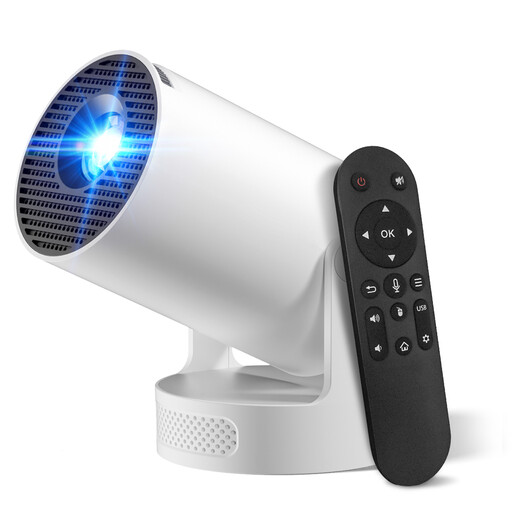 No image available
Video projector with 180° rotation, white
The 180° rotation is useful if you want to adjust the projection direction flexibly.
Automatic image correction; 50–100% digital zoom; compatible with HDMI, TV stick, USB stick, iOS, Android and PC.
View at Joybuy
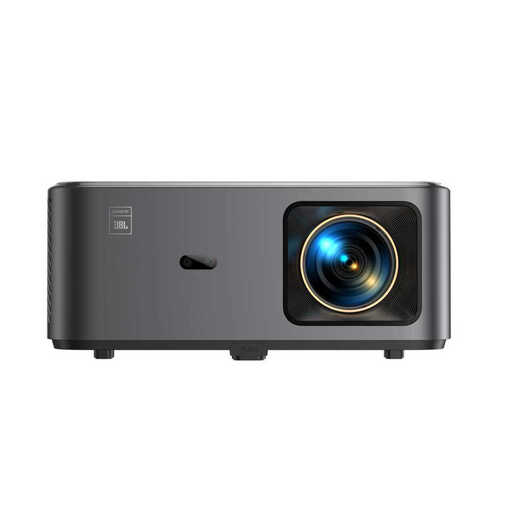 No image available
Yaber K2s
The stated autofocus and keystone correction are useful if you want to align the projected image.
Native 1080p; 4K support. Supported 4K input is not the same as native 4K resolution.
View at Joybuy
 No image available
Magcubic HY350Max
This model, described as portable, features 180° rotation for flexible positioning.
Native 1080p; stated brightness of 900 ANSI; throw ratio of 1:1; Android 14.
View at Joybuy
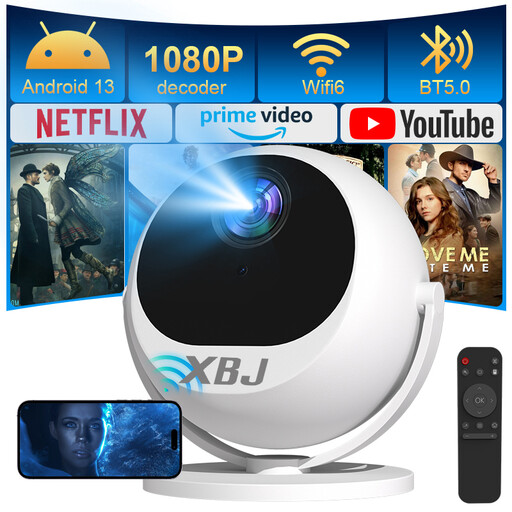 No image available
XBJ 360° portable projector, European version
The portable design and 360° rotation suit a set-up where you want to adjust the projector to different directions.
Full HD 1080p; stated brightness of 500 lumens; image size up to 200 inches.
View at Joybuy
Frequently asked questions
Should I choose a short-throw projector for a portfolio in a small room?
Choose a short-throw model if the available distance is too short for a projector with a longer throw. Measure the distance and desired image width, then compare them with the throw ratio of the exact model. The word ‘compact’ on its own doesn’t tell you whether the projector will fit.
Can I permanently install a projector in my rented home?
According to the Government of the Netherlands, you can make minor alterations that are easy to reverse without much expense, such as small holes that can be filled, without permission. Renovations or more significant changes require permission. Consider your specific installation plan and any agreement with your landlord separately.
What are my rights if a projector bought online is disappointing or faulty?
For online purchases, there is generally a 14-day cooling-off period after delivery, subject to exceptions, according to ACM ConsuWijzer. This is separate from your statutory guarantee: the Netherlands Authority for Consumers and Markets says the seller is responsible if a product doesn’t meet what you could reasonably expect from it.
What should I check about projector safety in the Netherlands?
The European Commission lists electrical and electronic equipment as a product category that may be subject to EU rules on CE marking; the manufacturer is responsible for meeting the applicable requirements. CE marking is not an independent quality mark for image quality. Check the product information and safety instructions for the specific device you’re considering.


