With tall windows, a projector is only a practical choice once you’ve assessed how much light reaches the screen. XGIMI says that no projector can compensate for direct sunlight on the screen, so you’ll need to block it out. If you can control the light, you’ll have more options. Otherwise, the stated brightness, a suitable screen and the throw distance all need to work for your room. Manufacturer figures alone can’t guarantee picture quality in a room with tall windows.
Who is this guide for?
Watching films during the day with tall windows
You want to watch animated films while daylight is coming in. First, assess how much light reaches the spot where you plan to put the screen. Blocking out the light or choosing a suitable screen may matter more than simply opting for a high stated lumen output.
Limited space for the projector
You want a large picture but can’t put the projector in the middle of the room. Choose a throw distance and screen that suit the space available and the picture size you want.
You can block out light from the windows
You can limit the amount of light coming in while you watch films, and then choose based on picture quality, positioning and overall cost, rather than looking only at maximum brightness.
What should you look for?
XGIMI says that a higher stated lumen output won’t solve the problem of direct sunlight on the projection screen. So check the screen position at the time you plan to watch films, and consider light control, picture quality, positioning and cost together.
Standard projection with light control
Choose this when: you can block out light from the windows while watching and have space between the projector and the screen.
The trade-off: you’ll have more projectors and screens to choose from, but you’ll need to limit incoming light.
Standard or short-throw projection with a suitable ALR screen
Choose this when: some indirect daylight remains and direct sunlight doesn’t fall on the planned screen position.
The trade-off: check that the ALR screen is suitable for your chosen throw distance. The screen is an additional purchase and won’t guarantee picture contrast in a room with light coming through the windows.
Ultra-short-throw with a UST screen
Choose this when: you want to place the projector close to the screen wall and have enough room for the exact setup.
The trade-off: the short throw distance won’t automatically solve the daylight problem. Choose a screen specifically designed for UST.
| What to consider |
What to check before buying |
Who is this important for? |
| Daylight and contrast |
Check the screen position at the time you’ll be watching and look out for direct or indirect light. Only compare brightness figures if you know they’re based on the same measurement method. |
If I want to watch during the day, I need to know how much light reaches the screen and whether I can block it out. Around 42% of consumers say daylight and visible contrast are their top priorities. |
| Colour and film detail |
Compare the stated picture resolution and, where provided, colour and white light output. Don’t assume HDR compatibility guarantees a visible improvement. |
If colour and detail in animated films matter most to me, I want to assess them in the lighting conditions in which I’ll be watching. Around 25% of consumers put colour and film detail at the top of their list. |
| Positioning and screen |
Measure the distance from the projector and the picture size you want. Check whether the screen is designed for standard, short-throw or UST projection. |
If the projector needs to stay in a fixed position in my room, I want both the throw distance and the screen to suit it. Around 17% of consumers prioritise positioning and screen compatibility. |
| Total cost and peace of mind when buying |
Allow for the projector, a suitable screen and any window blinds or curtains you may need. Check the model identity, applicable CE information, seller and terms and conditions. |
If I want to understand the total cost before buying, I need to know which components and purchase terms apply to my setup. Around 16% of consumers say total cost and peace of mind when buying are their top priorities. |
Common buying mistakes
-
Assuming ‘4K support’ means 4K playback
A supported input signal doesn’t automatically tell you the resolution the projector itself displays.
Check the displayed or native resolution of the exact model separately from its supported input signals.
-
Choosing an ALR screen without checking the throw distance
Standard and ultra-short-throw projection use different projection angles and may require different screen materials.
Choose your projection type first, then check that the specific screen is designed for it.
-
Treating a lumen figure as a daylight test
A stated figure alone won’t tell you what the picture will look like when light from a window falls on the screen. What’s more, the measurement methods for colour and white light output aren’t necessarily the same.
Check the measurement method and the exact model, and assess the light reaching the screen position too.
Brands to consider
Epson
The EH-TW7100 and EH-LS800B offer different setup options: standard projection from further away and ultra-short-throw, respectively.
- Epson Netherlands lists 3.000 lumens for the EH-TW7100 and 4.000 lumens for the EH-LS800B.
- The stated figures and Epson’s claims about 3LCD and colour brightness don’t predict how the picture will look when sunlight falls on your screen. The EH-LS800B needs a screen designed for UST.
BenQ
BenQ describes the TK710ST as a 4K laser projector with a short throw, for situations where a more conventional throw distance won’t work.
- BenQ Netherlands lists 3.200 ANSI lumens, a 100-inch picture at 1,5 m and 95% Rec.709 for the TK710ST.
- These are manufacturer figures, so check the exact positioning and screen compatibility. Describing it as suitable for a well-lit living room doesn’t guarantee a picture when sunlight falls on the screen.
Optoma
According to the European product information, the UHZ66 is a laser projector for a longer throw distance.
- Optoma lists 4.000 lumens, 4K UHD and 1,6× zoom for the UHZ66.
- These specifications don’t confirm that you’ll get good film contrast with tall, uncovered windows. Also check the version and delivery terms that apply to your purchase.
XGIMI
The European product information for the HORIZON 20 Max lists optical zoom and lens shift as positioning options for home projection.
- XGIMI lists a peak brightness of 5.700 ISO lumens for this model.
- An ISO figure can’t be directly compared with ANSI lumens unless the measurement method is the same. This figure doesn’t guarantee performance in direct light from a window.
Projectors at Joybuy
These picks are projectors for watching films at home. For each model, check the stated picture features and positioning, and make sure the screen position and ambient light suit when you plan to watch.
 No image available
Yaber L2 projector with built-in Google TV
The stated short-throw ratio may be useful if you have limited space. Check that the picture size you want suits the space available for this exact model.
Native 1080p; stated brightness: 520 ISO lumens; throw ratio: 1,17:1. The title lists automatic focus and keystone correction.
View at Joybuy
 No image available
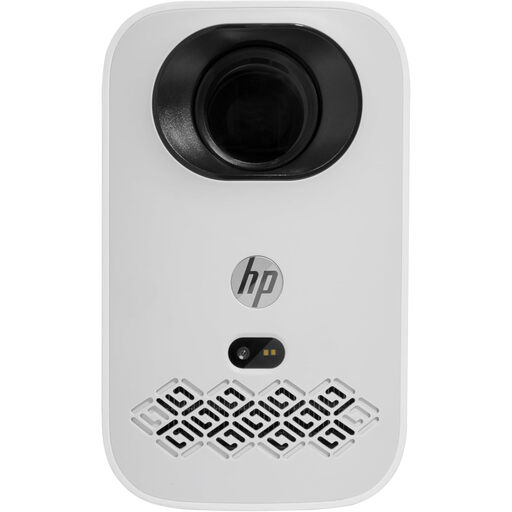
HP CC360 Full HD projector
The stated throw ratio can help you make an initial assessment of the setup. Check that it works with the picture size you want and the space you actually have.
Native 1080p; stated brightness: 220 ANSI lumens; throw ratio: 1,2. The title lists automatic focus and image correction.
View at Joybuy
 No image available
Projector with built-in apps, digital zoom and 180° rotation, black
The zoom and rotation may be useful if you want to adjust the projection position. Check that the stated picture size suits your screen position.
The title lists 50–100% digital zoom, a stated picture size of 50–200 inches and 180° rotation. It also mentions Wi-Fi 6 and Bluetooth.
View at Joybuy
 No image available
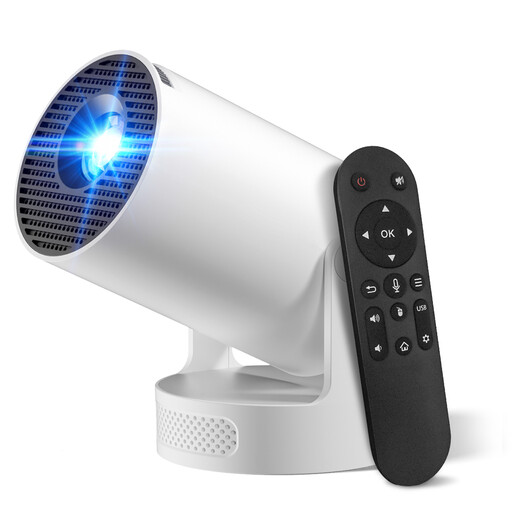
Projector with zoom and 180° rotation, white
The zoom and rotation give you options for adjusting the setup. Check the picture size you want and the connections available on the exact model.
The title lists a picture size of 50–200 inches, 50–100% zoom, 180° rotation and HDMI compatibility.
View at Joybuy
 No image available
Optoma Photon Beam PK52
The stated throw ratio and manual zoom can help you assess the setup. Check that they work with the picture size you want and the distance available.
4K UHD; stated brightness: 3.500 lumens; throw ratio: 1,21:1–1,59:1. The description lists a throw distance of 1–8 m and manual zoom.
View at Joybuy
Frequently asked questions
Can a high lumen figure compensate for daylight on the screen?
Not as a general rule. Light falling on the projection screen can make the picture look washed out. XGIMI says that a projector can’t compensate for direct sunlight on the screen, so you’ll need to block it out. Then assess the brightness and screen for your setup, taking the measurement method into account.
Will any ALR screen work with an ultra-short-throw projector?
No. Elite Screens distinguishes between screen materials for standard projection and those designed for UST. Check that the exact screen is explicitly compatible before pairing it with a UST projector.
What should I measure before installing a projector?
Measure the available distance from the lens to the screen position and the picture size you want, then check these against the specifications for the exact model. Also check the screen position in the daylight you’ll have when watching films.
What are my rights when buying a projector online?
The Dutch government generally allows a 14-day cooling-off period for distance purchases from businesses. Check the terms that apply to your purchase. Your statutory guarantee is separate from the manufacturer’s warranty: if there’s a problem, contact the seller.
What Dutch safety requirement should I check for an electric projector?
According to the Netherlands Food and Consumer Product Safety Authority, CE marking is mandatory for electrical products covered by the relevant product legislation. Check the marking and product information for the projector and any mains adapter. The rules that apply depend on the electrical design. CE marking doesn’t assess picture quality in daylight.


