What should you look for when choosing?
Start by checking the light where the image will appear. If there’s no direct light on the projection surface, you can then weigh up image size, resolution, throw distance and connectivity.
| What to consider |
What to look for |
Who is this important for? |
| Visibility in daylight |
Check where the light from the windows falls and compare the stated brightness for your preferred image size. |
If I want to look at photos with my family during the day, I first want to know whether I can keep direct light off the image. Around 31% of consumers put daylight visibility at the top of their list. |
| Photo detail and colour |
Compare native resolution, not just supported input resolution; check colour light output as a separate manufacturer specification. |
If I want to share landscapes and fine details on a large image, I look at what the exact model can actually display. Around 25% of consumers give photo detail top priority. |
| Space and image size |
Measure the distance from the lens to the projection surface and compare it with the model’s throw ratio. Where possible, align the projector physically. |
If there’s little room to position the projector, I want to know whether I can achieve the image width I want from that spot. Around 19% of consumers choose space for set-up as their main consideration. |
| Connecting and sharing |
Check which input or wireless method is supported by both the projector and your phone, tablet or computer. |
If I want to show photos from my existing phone or laptop, I want to know in advance how it connects to the projector. Around 13% of consumers prioritise connectivity. |
| Maintenance and running costs |
Check the operating mode for the stated lamp life and find out which connection accessories or other items you’ll need for your set-up. |
If I want to use the projector regularly, I want to understand in advance what maintenance and accessories the model requires. Around 12% of consumers focus on maintenance and accessories. |
Projectors at Joybuy
These projectors are designed for home use and sharing photos. Check the stated resolution, brightness and connectivity for each model. These specifications alone don’t determine how visible the image will be in your room.
 No image available
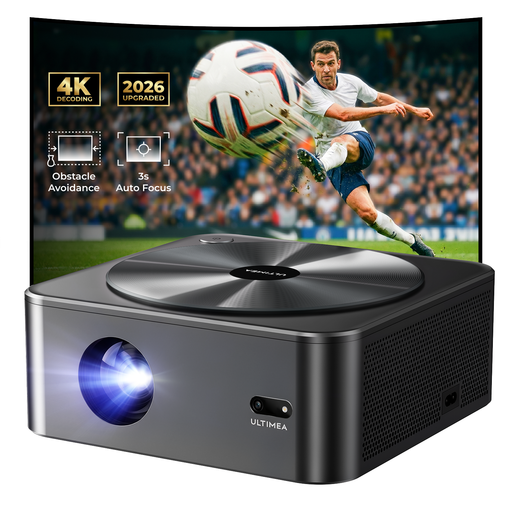
ULTIMEA Apollo P40
The stated native 1080p resolution may be useful if you want to share photo details; 700 ANSI lumens is a product specification, not a measurement taken in your room.
HDR10; Wi-Fi; Bluetooth; automatic focus and automatic keystone correction.
View at Joybuy
 No image available
Yaber L2
The stated native 1080p resolution is suited to sharing photos; the stated 520 ISO lumens isn’t a measurement taken under your viewing conditions.
Google TV built in; two 5 W speakers; 360° rotating gimbal; wireless casting and HDMI.
View at Joybuy
 No image available
XGODY N7 Cine
The stated native 1080p resolution is useful if you want to display photo details; brightness is listed as 1,000 ANSI lumens.
Wi-Fi 6; automatic focus and keystone correction; HDMI and USB.
View at Joybuy
 No image available
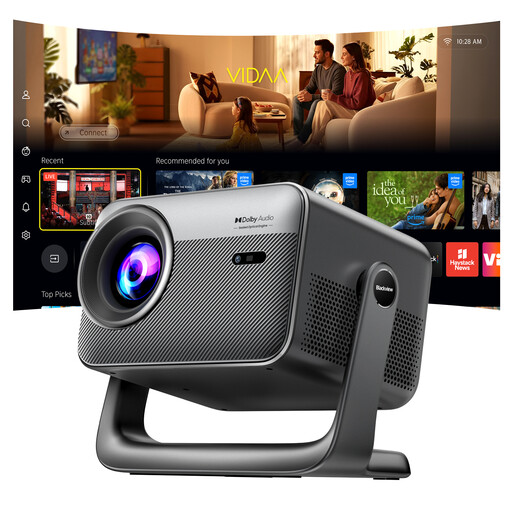
Blackview PV1000 Max Grey
The title lists native 1080p and 1,000 ANSI lumens; the lumen rating alone can’t predict visibility in daylight.
AirPlay 2; 360° rotating design; Wi-Fi 5 and Bluetooth.
View at Joybuy
 No image available
Video projector with built-in apps
The title lists compatibility with laptops, phones and tablets; check which connection your photo device requires.
Wi-Fi 6 and Bluetooth; 180° rotation; 50–200-inch image size; 50%–100% digital zoom; HDMI.
View at Joybuy
Frequently asked questions
Can a projector compensate for direct sunlight on the screen?
Don’t count on it: light on the screen makes dark areas look lighter and reduces contrast. Tweakers describes this effect. Block the light from the projection surface, or consider a TV if you can’t.
How can I position a projector safely when there are children around?
Place the projector on a stable surface, keep cables out of walkways and make sure nobody looks into the lens while the device is on. Epson Support specifically warns against looking into the lens when it’s switched on. Also follow the instructions for the exact model.
What can I do if my projector doesn’t work properly after purchase?
When you buy as a consumer in a European country, you have statutory rights if a product is faulty on delivery. Subject to the applicable conditions, the Rijksoverheid lists repair or replacement as possible remedies. A manufacturer’s warranty is separate from this statutory protection.
Can I try out a projector at home before deciding to keep it?
For online purchases from a business, you’ll often have a 14-day cooling-off period. The Rijksoverheid advises checking the seller’s information for your specific purchase and any exceptions.
Which product marking is relevant for a projector in the Netherlands?
One or more EU rules requiring CE marking may apply to electrical and electronic products. According to the Rijksdienst voor Ondernemend Nederland, the applicable requirements depend on the device, so check the product information for the specific model.


