Who is this guide for?

Afternoon viewer with high windows

Wants a clear picture while there’s still daylight in the living room. ProjectorCentral tested screens with light coming from windows at the side, so consider where the light falls on the projection surface and how large the image needs to be.

Viewer with limited space for positioning

Wants a large image without putting the projector somewhere unsuitable. XGIMI explains that projection distance is the distance between the lens and the screen. Measure this distance and your preferred screen width.

Film fan who wants to follow the dialogue

Wants a usable picture as well as clear dialogue. Check the speakers and connections on the exact model you’re considering, not just its stated light output.

What should you look for?

Control incoming light and compare brightness

A good fit if: you want to watch during the day and can limit light from the windows with curtains or by choosing a different screen position. Epson lists 4,000 lumens of both white and colour light output for the EB-W55; Optoma lists 4,000 lumens and native Full HD for the HZ40HDR.

Trade-off: these are manufacturer specifications, not measurements taken in your room. A higher lumen figure won’t eliminate direct sunlight on the screen.

Choose a screen for light coming from the side

A good fit if: light from the high windows mainly falls on the screen from the side, and you want a large image during the day too.

Trade-off: In a test with light from windows at the side, ProjectorCentral found differences between ALR screens in contrast, viewing angle and installation. The screen, incoming light and positioning all matter; a screen is an additional purchase.

Darken the room or reduce the image size first

A good fit if: bright light from the windows falls on the image, or you don’t always need the same large picture. BenQ points out that a larger image needs more light to stay bright.

Trade-off: Darkening the room changes the setting while you watch. A smaller image may be a practical option before relying solely on a higher stated lumen figure.

A flexible projector for the living room

A good fit if: you regularly move the projector and can reduce daylight first. BenQ lists 2,600 ANSI lumens for the GP520; XGIMI lists 2,300 ISO lumens and automatic set-up features for the HORIZON Ultra.

Trade-off: ANSI and ISO lumens aren’t directly interchangeable measurements here. Automatic adjustment doesn’t replace controlling incoming light, so also check that the projection distance suits your room.

What to consider What to look for Who is this important for?
Visibility and contrast See where light from the windows falls on the projection surface and compare light output using the same unit of measurement. If you’re considering an ALR screen, check that it suits the incoming light and your viewing positions. If I want to watch in the afternoon without completely darkening the room, a visible image is my first concern. Around 42% of consumers in this viewing situation put visibility in daylight first.
Projector and screen position Measure the distance between the lens and screen, along with your preferred image width; compare both with the projection ratio of the exact model. If I have limited space, I want to know whether the projector can go in a suitable position and project the image onto the chosen wall. Around 25% of consumers in this viewing situation put finding a suitable set-up first.
Dialogue and picture quality Check the native resolution, speaker set-up and any suitable audio connections. When watching classic comedies, I want to follow the dialogue and know what picture and sound the projector itself can deliver. Around 17% of consumers in this viewing situation put dialogue and picture quality first.
Running costs and support Check the light source type, service terms and who the seller is. Also allow for a possible screen or external speakers. When considering the whole set-up, I want to know in advance which additions and support I might need. Around 16% of consumers in this viewing situation put running costs and support first.

Common buying mistakes

  • Choosing a projector based only on its highest lumen figure

    Light from windows and image size both affect how bright a picture looks. Direct light on the projection surface remains a separate problem.

    First check how light falls on your planned screen position, then compare light output using the stated unit of measurement.

    You may still need light control or a different screen.

  • Confusing 4K-compatible input with native 4K projection

    Optoma specifies the HZ40HDR as native Full HD, while the model also supports 4K UHD input.

    Check the native resolution and supported input formats separately before deciding whether the model is right for the picture you want.

  • Planning a large image without checking distance and audio

    The required distance between the lens and screen depends on the projection ratio. Built-in speakers also vary from model to model.

    Measure the room and your preferred screen width, then decide how you want to play the dialogue.

    You may need a different position or external speakers for the set-up you have in mind.

Brands to consider

Epson

The EB-W55 is an example of a WXGA lamp projector with stated light output that you can compare for use in ambient light.

  • Epson lists 4,000 lumens of white and colour light output and two HDMI ports for the EB-W55.
  • This model has WXGA resolution and a built-in 2 W mono speaker; assess film sound separately. These are manufacturer specifications, not the result of an independent performance test.

BenQ

The GP520 is a portable living-room model to consider when you can control the incoming light.

  • BenQ lists 2,600 ANSI lumens and features that adapt to the surrounding conditions.
  • BenQ’s own description of picture quality in different lighting conditions doesn’t prove that direct sunlight on the screen won’t be a problem.

Optoma

The HZ40HDR is a Full HD laser projector to compare if a fixed set-up and stated brightness are important to you.

  • Optoma specifies 4,000 lumens, native 1920 × 1080, a projection ratio of 1,48–1,62:1 and an audio output.
  • Check that the projection ratio suits the measured distance in your room; the stated values are manufacturer specifications.

XGIMI

The HORIZON Ultra is worth considering if you regularly adjust your set-up and want to compare built-in stereo sound.

  • XGIMI lists 2,300 ISO lumens, automatic set-up features, two 12 W speakers and a projection ratio of 1,2–1,5:1.
  • Don’t compare ISO lumens directly with lumen figures measured or labelled differently, and assess the picture in the lighting conditions of your own room.

Projectors at Joybuy

This selection includes projectors for remaining ambient light and for set-ups with limited projection distance. You’ll still need to consider the screen position if direct sunlight falls on the projection wall.

Optoma H117ST short-throw DLP projector

Optoma H117ST short-throw DLP projector

The short-throw design may suit you if the projector needs to sit close to the screen; control any window light that falls directly on the image.

WXGA; 3,800 ANSI lumens; projection ratio 0,52:1; built-in 10 W speaker. Full HD content is not displayed at native Full HD resolution.

View at Joybuy

BenQ MW809STH short-throw projector

BenQ MW809STH short-throw projector

The short-throw design is worth considering if the available distance between the lens and screen is limited; measure it before you buy.

XGA resolution (1024 × 768); built-in 10 W speakers.

View at Joybuy
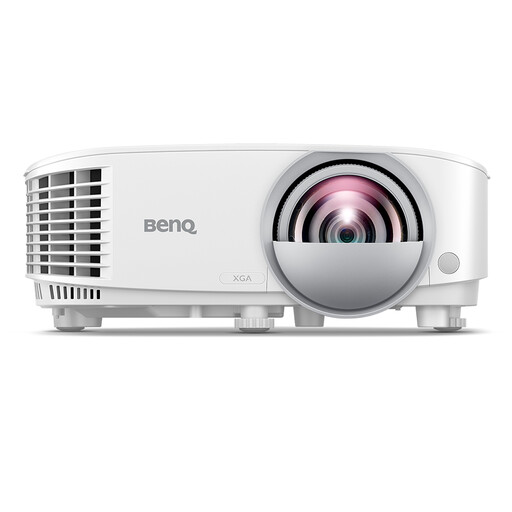
BenQ MX825STH short-throw projector

BenQ MX825STH short-throw projector

The short projection distance may suit a set-up with little space between the projector and screen; check your preferred image width.

XGA resolution (1024 × 768); projection ratio 0,49.

View at Joybuy
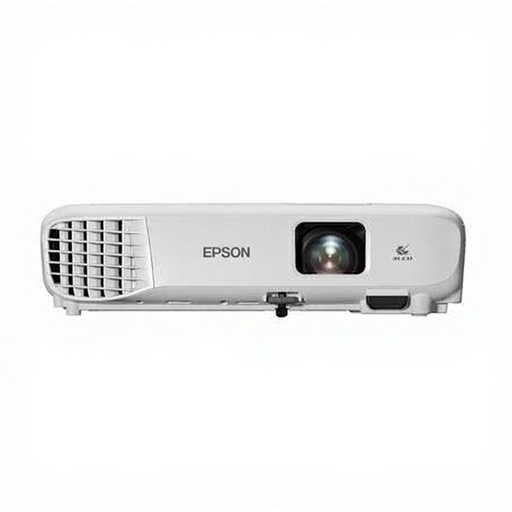
Epson EB-W53 WXGA projector

Epson EB-W53 WXGA projector

Its stated light output may be useful in ambient light, but it doesn’t replace the need to control direct light on the screen.

4.000 ANSI lumens; 3LCD; WXGA resolution (1200 × 800); two HDMI ports; weight 2,5 kg.

View at Joybuy
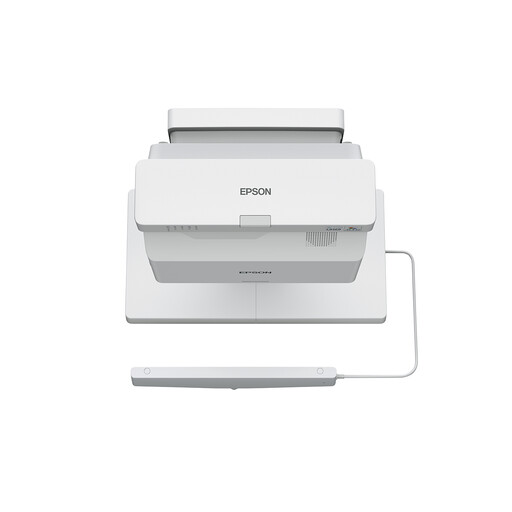
Epson EB-760Wi ultra-short-throw projector

Epson EB-760Wi ultra-short-throw projector

The ultra-short-throw design may suit you if the projector needs to sit close to the projection surface. The product information presents this model as an interactive presentation projector, so consider whether those features suit watching films.

4.100 ANSI lumens; 3LCD; WXGA resolution (1280 × 800); interactive pens.

View at Joybuy

Frequently asked questions

Can an ALR screen help with light from high windows?

It can, particularly if the window light comes from a direction the chosen screen is designed for. In a test with light coming from the side, ProjectorCentral described differences between screens in viewing angle, contrast and installation. Consider the incoming light and screen specifications together.

How can you tell in advance whether a projector will fit in your room?

Measure the distance between the planned lens position and the screen, then decide on your preferred screen width. Compare both with the projection ratio of the exact model; don’t rely only on its stated maximum image size.

What does a stated lamp or laser lifespan mean for maintenance?

Treat the stated lifespan as a model specification, not a guarantee of how long your individual projector will last. For a lamp model, check the replacement and service terms; Optoma specifies a laser light source for the HZ40HDR.

Who can you contact in the Netherlands if the projector develops a fault too soon under normal use?

According to ACM ConsuWijzer, the seller is responsible for the statutory guarantee. This is separate from any seller or manufacturer’s warranty; there isn’t one fixed statutory warranty period that automatically applies to every device.

Should you check for a CE marking on an electric projector?

Yes. The Dutch government states that electrical devices placed on the market in the EU must have a CE marking. Check this for the specific device being offered; a product title alone doesn’t confirm it.
