Who is this relevant to?

Daytime viewer with tall windows

You want to watch TV series while daylight comes in through the windows, and you’re particularly keen to find out how much light reaches the screen itself. BenQ identifies ambient light and image size as factors to consider when assessing projector brightness.

Viewer who enjoys dark scenes

You want to make out details in the shadows and may be able to adjust the curtains or screen position. ProjectorCentral describes differences between ALR screens, including contrast and optimum viewing angles.

Viewer with limited space for positioning

You have little space between the projector and the wall and want to assess throw distance, image size and screen type as one complete setup. The stated throw distance and image size for the exact model will help you work out whether it will fit.

What should you look for when buying?

Bright projector for a standard throw distance

When: if there’s enough space between the projector and screen and you also want to watch during the day. Optoma rates the UHZ66 at 4,000 lumens.

Consider: its 1.4:1–2.24:1 throw ratio means you’ll need to check the available distance; the lumen rating alone won’t predict the contrast in your room.

Short-throw projector

When: if a projector at the back of the room won’t fit; BenQ states that the TK710ST can produce a 100-inch image from 1.5 m.

Consider: check the exact position in relation to the screen and windows. BenQ’s description of the picture in a well-lit living room is a manufacturer’s claim, not an independent test in your viewing space.

Limit light and choose a suitable screen

When: if your main priority is making out details in dark scenes, limit the window light falling on the screen.

Consider: an ALR screen needs the right light direction and viewing angle; a screen designed for standard projection won’t necessarily suit ultra-short-throw projection.

Projector for a room that’s usually darkened

When: if you can usually close the curtains or mainly watch in the evening, a home cinema model such as the Epson EH-TW6150 may suit your viewing conditions.

Consider: Epson rates it at 2,800 lumens in normal mode and 1,900 lumens in Eco mode, and states that it has a replaceable lamp.

What to consider What should you check? Who is this important to?
Visibility in window light Note where the window light falls on the screen and what image size you want; compare brightness ratings measured on the same basis. If I watch during the day, I want to know whether window light falls directly on the screen before focusing on lumens; around 36% of consumers in this viewing situation prioritise visibility in daylight.
Dark image details Assess the incoming light and check whether any ALR screen is suitable for the projection direction and projector type. If you don’t want to miss details in shadowy scenes, focus on the light falling on the screen; around 29% of consumers give clearly visible dark details top priority.
Throw distance and positioning Measure the distance to the screen and the available image width; compare these with the throw ratio or stated throw distance and image size. If the projector needs to be close to the screen, I want to know in advance whether it can produce the image size I want; around 21% of consumers say positioning space is their main buying priority.
Everyday use and aftercare For the exact model, check the connections, noise level and light-source maintenance requirements. If you use a projector regularly, you’ll also want to know how it connects and what maintenance its light source requires; around 14% of consumers prioritise ease of use and aftercare.

Common buying mistakes

  • Choosing solely by the highest lumen rating

    Window light, image size and screen choice all affect how visible the picture is; a high stated brightness won’t tell you how dark black will look in your room.

    First, work out where the light falls and what image size you want. Then compare brightness ratings and screen features.

    You may also need curtains or a suitable screen.

  • Choosing an ALR screen without checking the projection direction

    ALR screens differ in the direction of light they’re designed for and their viewing angles. An ultra-short-throw projector needs a screen that suits this setup.

    Check the screen material, projector position, direction of the windows and seating as one complete setup.

    An unsuitable screen may need to be remounted or replaced.

  • Treating normal and Eco modes as equivalent

    Epson rates the EH-TW6150 at 2,800 lumens in normal mode and 1,900 lumens in Eco mode.

    Always compare brightness, noise and operating conditions in the same mode.

    With a lamp-based model, you may eventually need to replace and maintain the lamp.

Brands to consider

Optoma

The UHZ66 is an example of a laser projector for a standard throw distance.

  • Optoma rates the UHZ66 at 4,000 lumens and specifies a 1.6× zoom.
  • Its 1.4:1–2.24:1 throw ratio means you’ll need to check the available positioning space; these specifications alone won’t predict the result in window light.

BenQ

The TK710ST is a short-throw option when there’s limited space between the projector and screen.

  • BenQ states that it offers 3,200 ANSI lumens and a 100-inch image from 1.5 m.
  • BenQ’s description of the picture in a well-lit living room is a claim by the manufacturer, not an independent measurement for a room with tall windows.

Epson

The EH-TW6150 is a 3LCD home cinema model for a setup where you can control the light.

  • Epson rates it at 2,800 lumens in normal mode and 1,900 lumens in Eco mode.
  • Epson specifies a replaceable lamp; its lower stated brightness in Eco mode is worth considering when choosing an operating mode.

LG

The CineBeam S PU615U is an example of an ultra-short-throw setup for anyone with little space behind the projector.

  • LG states that the model can produce a 40-inch image from 8.1 cm and a 100-inch image from 39.3 cm.
  • The short throw distance won’t solve the problem of window light falling on the screen; check the brightness and the suitability of any UST screen separately.

Projectors at Joybuy

This selection of Joybuy products includes projectors for home entertainment, including models for shorter throw distances. When comparing projectors for daylight viewing, always consider the stated brightness alongside your preferred image size, positioning and the light falling on the screen.
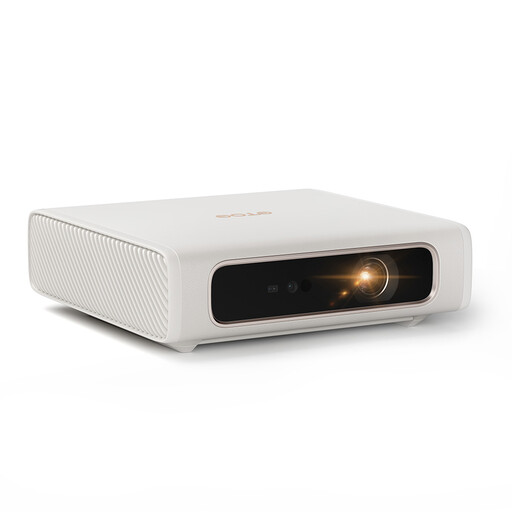
ETOE Dolphin 2 projector

ETOE Dolphin 2 RGB laser projector

For anyone who wants to stream TV series via Google TV and position their projector flexibly.

800 ANSI lumens; native 1080p; Google TV; battery with a stated runtime of 2 hours; HDMI 2.1 and USB-C.

The product description mentions an adjustable stand and automatic image correction. Its stated brightness alone won’t guarantee visibility in window light.

Joybuy
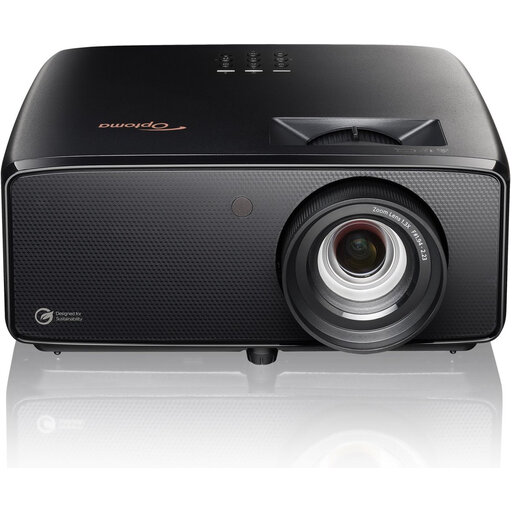
Optoma UZ38X 4K UHD Dual-Laser projector

Optoma UZ38X 4K UHD Dual-Laser projector

For anyone looking for a 4K UHD projector with space between the projector and screen.

3,800 lumens; 1.21:1–1.59:1 throw ratio; 1.3× zoom; two HDMI inputs.

A projection screen and source device are not included. The lumen rating doesn’t guarantee that dark details will be visible in window light.

Joybuy
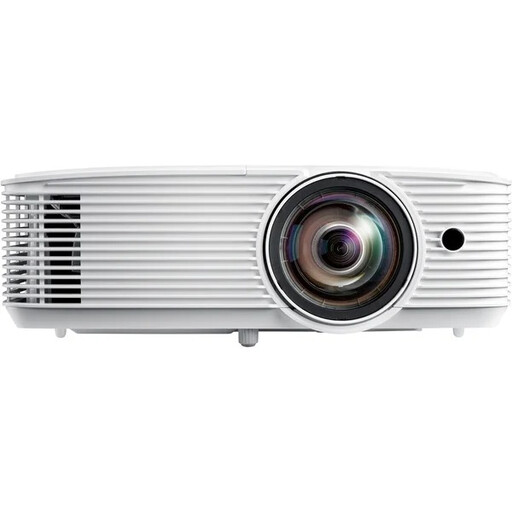
Optoma H117ST short-throw DLP projector

Optoma H117ST short-throw DLP projector

For anyone who needs to position the projector close to the screen; its short-throw ratio is 0.52:1.

3,800 ANSI lumens; native WXGA resolution; HDMI connection.

According to the product description, Full HD content is not displayed at native Full HD resolution. Its stated brightness doesn’t guarantee contrast in daylight.

Joybuy
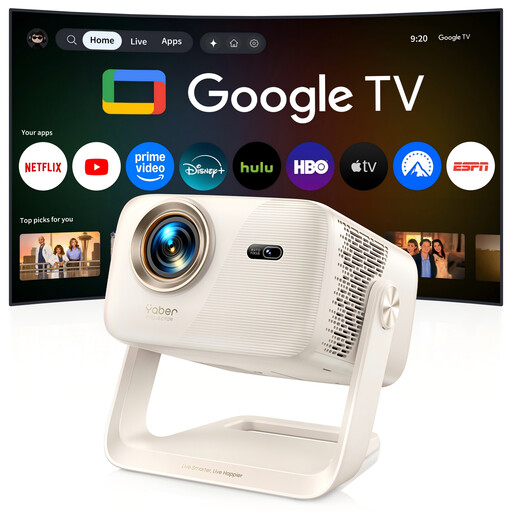
Yaber L2 projector

Yaber L2 projector

For anyone who wants to position a projector at a relatively short distance and stream TV series directly via Google TV.

520 ISO lumens; native 1080p; 1.17:1 short-throw ratio; built-in Google TV.

The product description mentions automatic focusing and a 360° gimbal. Its stated brightness doesn’t guarantee that dark scenes will be visible in window light.

Joybuy
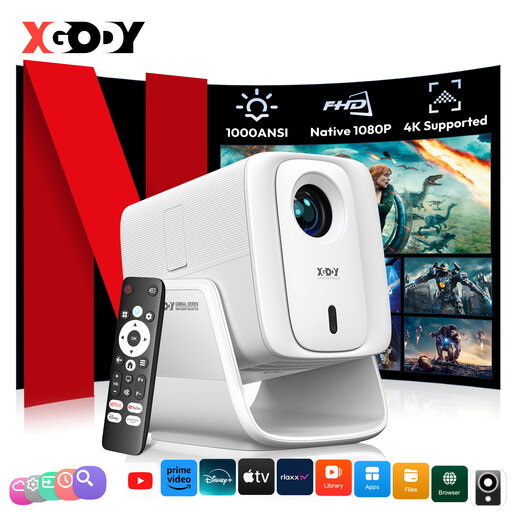
XGODY N7 Cine Smart projector

XGODY N7 Cine Smart projector

For anyone who needs a relatively short throw distance; the product description states that it can produce a 60-inch image from 1.33 m.

1,000 ANSI lumens; native 1080p; 1.1:1 throw ratio; automatic focusing and keystone correction.

Its stated brightness alone won’t predict how easy it will be to make out dark scenes in window light.

Joybuy

Frequently asked questions

Is a high lumen rating enough to make out dark scenes beside tall windows?

No, a high lumen rating alone isn’t enough. Image size and ambient light affect visibility; above all, limit the light falling on the screen and assess the brightness rating alongside the setup.

Can I use any ALR screen with an ultra-short-throw projector?

No, check that the screen is suitable for ultra-short-throw projection. The projector light hits the screen at a different angle, so the screen material needs to suit the setup.

What should I measure before installation?

Measure the distance from the projector to the screen, the available image width and where daylight falls on the screen. Then compare the distance and image size with the specifications for the exact model; for example, BenQ states that the TK710ST can produce a 100-inch image from 1.5 m.

What warranty and cooling-off period apply to online purchases in the Netherlands?

According to the Dutch government, there is no fixed statutory warranty period in the Netherlands; your rights depend on what you can reasonably expect from the product. For eligible online distance purchases, a 14-day cooling-off period generally applies. Check the terms and exceptions that apply to your order.

Does an electrical projector sold in the Netherlands need to carry a CE mark?

Yes, the Netherlands Food and Consumer Product Safety Authority states that CE marking is mandatory for electrical and electronic products. The mark is the manufacturer’s declaration of conformity and is not, in itself, an independent performance test.
