First, choose a screen size that’s easy to see from the back row, then check whether the projector can deliver enough brightness from the available position. In a room with lots of ambient light, the screen material and incoming light also matter; if people will be sitting to the sides, consider the viewing angle. Manufacturer specifications are a useful starting point, but they can’t predict on their own how the image will look in your venue.
Who should consider this?
Organising an event in a bright venue
You want to show a dance competition to a group, but the venue can’t be darkened properly. Compare brightness specifications and operating modes, while also considering the screen size and incoming light. Acer and BenQ publish brightness specifications for the models mentioned here.
Hosting an event with widely spaced seating
You want people at the sides and the back to be able to follow the picture. So don’t just look at the projector: Elite Screens lists different viewing angles for different screen materials.
Organising an event with limited setup space
There’s little distance between the projector and the screen, or you need to set up the equipment from scratch each time. Measure the available distance and compare it with the throw ratio of the exact model; Epson offers a distance calculator to help.
What should you look for?
Start by checking visibility from the back and sides of the room, then see how the brightness, screen and setup will work in your venue.
| What to consider |
What should you check? |
Who should pay particular attention? |
| Picture in a lit venue |
Compare brightness measured on the same basis and in the same operating mode; take screen size and incoming light into account. |
If it’s difficult to darken the venue, I want the picture to remain visible on the screen I’ve chosen. Around 36% of consumers prioritise visibility in a lit venue. |
| Visibility from every seat |
Compare the screen size and stated viewing angle with the positions of the back and side seats. |
When the seating is spread out, I want a good view from the sides too. Around 29% of consumers prioritise visibility from different seats. |
| Throw distance and positioning |
Measure the distance from the lens to the screen and check the throw ratio, zoom and required image correction for the exact model. |
With limited space behind the audience, I want to know whether the projector can achieve the desired screen size from the available position. Around 21% of consumers prioritise a suitable setup. |
| Streaming and sound for the group |
Check the source and HDMI connection for the broadcast, and decide which audio connection will work for the venue. |
I want to connect the broadcast I’ve chosen and make the sound audible to the group. Around 14% of consumers prioritise playback and sound. |
Common purchasing mistakes
-
Comparing only the highest lumen figure
Brightness figures may refer to different operating modes or to white light and colour light. Incoming light and screen size also affect how visible the picture will be in your room.
Compare the measurement basis and operating mode, then check that your chosen projector and screen combination suits the intended room.
-
Choosing an ALR screen without checking the side seats and projector
A screen that rejects ambient light isn’t automatically suitable for widely spaced seating or every projection type. Elite Screens lists a 90° viewing angle and a minimum throw ratio of 1.5 for CineGrey 3D; according to the manufacturer, this material isn’t suitable for ultra-short-throw projectors.
Compare the viewing angle with the side seats and check that the screen material is compatible with your projector and throw ratio.
A screen that isn’t suited to the seating layout or throw ratio may mean you have to adjust the setup all over again.
-
Assuming keystone correction will fix every positioning issue
Digital keystone correction can correct a skewed projection, but BenQ notes that it may slightly reduce image quality.
First measure the throw distance and align the projector as accurately as possible; use correction only for any remaining distortion.
-
Assuming a working stream means you have permission to show it to a group
According to Ondernemersplein, a licence is required to show film or TV footage to employees or guests at a business or organisation. The rights that apply depend on the viewers and the specific broadcast.
Before organising a screening, establish who will be watching and which rights apply to the broadcast and provider. A separate screening licence may be subject to terms and costs.
Brands and models to consider
Acer
The Acer H6546Ki is a lamp-based model worth comparing for a larger or brighter room. Acer lists Full HD, a throw ratio of 1.48–1.62 and brightness of 5,200 ANSI lumens in standard mode.
- Acer also quotes 4,160 ANSI lumens in Eco mode.
- These brightness figures are manufacturer specifications, not measurements taken in your venue. The built-in speaker is rated at 3 W; consider separately whether the sound setup will suit your group.
BenQ
According to BenQ, the BenQ LH750 combines an LED light source, Full HD, 5,000 ANSI lumens, 1.6× zoom and two HDMI 2.0 connections. It’s a model to consider when comparing options for a bright room used by a group.
- BenQ states that LED life is up to 30,000 hours in Eco mode.
- The usage environment described by the manufacturer doesn’t prove that every screen size or lighting situation will be suitable. Check that the setup works for your room.
Epson
The Epson EH-TW6250 is a home cinema model worth comparing if you can darken the viewing room effectively. Epson quotes 2,800 lumens for both white and colour light, and lists 1.6× zoom.
- Specifications for both white and colour light are available to help inform your choice.
- Epson describes the imaging technology as 4K PRO-UHD; that doesn’t necessarily mean native 4K. Check particularly carefully whether the brightness will suit a large screen or a high level of ambient light.
ViewSonic
According to ViewSonic, the ViewSonic PX701HDH is a Full HD lamp-based model with 3,500 ANSI lumens and two HDMI inputs.
- ViewSonic states that the lamp lasts up to 20,000 hours under SuperEco+ conditions.
- Vertical image adjustment alone doesn’t tell you how much horizontal positioning space you have; check the alignment for your chosen setup.
Projectors available at Joybuy
Joybuy projectors for showing a dance competition to a group, including models for setups where the screen is close by.
 No image available
JMGO N1S Ultra 4K Triple Laser UHD projector
The adjustable gimbal is useful if you need to change the projection direction; check that the brightness and screen size suit the venue lighting.
The specifications list 3,000 ANSI lumens, 4K UHD, a 1.2:1 throw ratio, automatic keystone correction and two HDMI inputs. The description mentions a 20 W speaker system.
View at Joybuy
 No image available
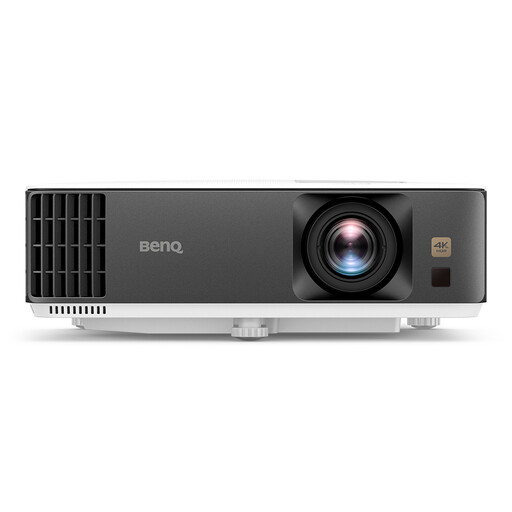
BenQ TK700 Standard Throw projector, 3,200 ANSI lumens
The listed zoom and vertical image correction are worth considering if the setup needs some adjustment; check the distance required for your preferred screen size.
The specifications list 3,200 ANSI lumens, 4K resolution (3840 × 2160), 1.3× zoom and automatic vertical keystone correction.
View at Joybuy
 No image available
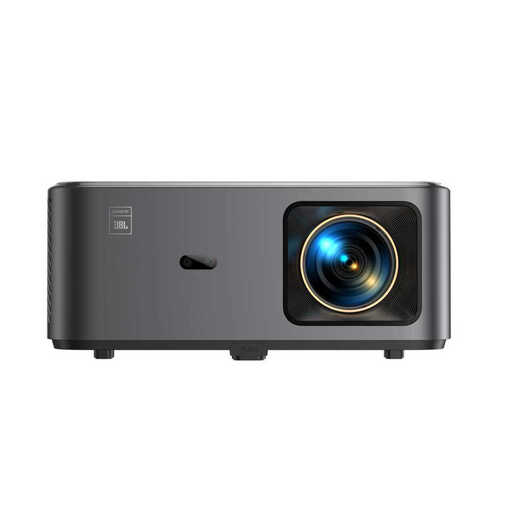
Yaber K2s projector, native 1080p
The stated HDMI compatibility can help when connecting an external source device; check in advance that you can access your chosen broadcast through that source.
The product details list native 1080p and 4K input support. They also mention autofocus, keystone correction, a detachable TV dongle and two 10 W JBL speakers.
View at Joybuy
 No image available
Optoma H117ST short-throw projector, WXGA
The stated 0.52:1 throw ratio is useful when the projector needs to sit close to the screen. Bear the native resolution in mind when showing competition footage.
The specifications list WXGA (1280 × 800), 3,800 ANSI lumens, HDMI and a built-in 10 W speaker. Full HD input won’t be displayed at native Full HD resolution.
View at Joybuy
 No image available
BenQ MW809STH short-throw projector, native XGA
The stated short-throw ratio may be useful when there’s little space between the projector and screen; check that the resolution is suitable for the details you want to show.
The specifications list 3,600 ANSI lumens, a throw ratio of 0.49 and native XGA resolution (1024 × 768).
View at Joybuy
Frequently asked questions
How can I check whether the picture will fit the room?
Measure the distance from the planned lens position to the screen and decide how wide you want the screen to be. Before choosing a fixed mounting position, check that combination against the throw ratio or distance calculator for the exact model.
Is an ALR screen always better when people are sitting at the sides?
No. Viewing angles and projector compatibility vary by screen material. Elite Screens lists a 90° viewing angle for CineGrey 3D and 180° for the CineWhite material mentioned here; according to the manufacturer, CineGrey 3D isn’t suitable for ultra-short-throw projectors. Compare those specifications with the side seats and the exact projector type.
Can I rely on the built-in speaker for a large group?
Not on the basis of the stated power alone. Acer specifies a single 3 W speaker for the H6546Ki; consider whether that will suit your venue and check which connection options are available for an external audio system.
What should I check about the light source?
Check the type of light source and the conditions attached to any stated lifespan. BenQ lists up to 30,000 hours in Eco mode for the LH750 without lamp replacement; ViewSonic lists up to 20,000 hours for the PX701HDH under SuperEco+ conditions. These are manufacturer estimates, not guaranteed operating lifespans.
Can I show a dance broadcast to a large group in the Netherlands?
This depends, among other things, on who is watching and where the screening takes place. According to Ondernemersplein, a licence is required to show film or TV footage to employees or guests at a business or organisation; it also states that a Videma licence doesn’t cover channels that require a separate paid subscription. Auteursrecht.nl distinguishes a strictly domestic setting from, for example, a sports club or business meeting. For an organised screening, check the rights for the specific broadcast and provider.


