What should you look for when buying?
Fixed, brighter setup
Suitable for: watching in a room that can’t be completely darkened.
Bear in mind: the space needed for the projector, cables and projection distance. A stated lumen output doesn’t guarantee a good picture in direct daylight.
Short-throw projection
Suitable for: a setup where the available distance to the screen is limited.
Bear in mind: the throw ratio of the exact model. The term ‘short-throw’ alone doesn’t tell you whether it can produce the image width you want.
Portable smart projector
Suitable for: a viewing spot that changes often and where you can dim the lights.
Bear in mind: whether the battery will last for the whole broadcast. ISO lumens aren’t directly comparable with lumen values stated using other standards.
Fixed setup with zoom
Suitable for: a spot where the projector can stay in place and zoom is useful for positioning.
Bear in mind: resolution and zoom don’t make lighting, image size, viewing distance or a suitable playback source any less important.
Before buying, measure the distance between the projector and screen, and decide how wide the image needs to be for your group. Then check that the broadcast and sound will work with your chosen projector, playback source and speakers.
| What to consider |
What should you check? |
Who is this important for? |
| Visibility in ambient light |
Note how much light there will be during the competition and compare the stated light output at your preferred image size. Don’t assume different lumen standards are equivalent. |
If I can’t darken the room properly, I want the group to be able to see the picture without relying solely on an advertised maximum screen size. Around 36% of consumers put visibility in ambient light first. |
| Projection distance and sightlines |
Measure the distance from the lens to the screen and the image width you want. Check them against the throw ratio or calculator for the exact model. |
In a shared space, I want to find a spot where the image fits and people don’t have to awkwardly walk past the projector or cables. Around 29% of consumers make finding a suitable setup their top priority. |
| Broadcast and sound for the group |
Check the streaming service or external playback source, the video input and the audio output you want. Test the whole setup in advance. |
When I watch the competition with others, I want to know that this particular broadcast will work and that everyone can hear the sound. Around 21% of consumers prioritise the source and sound for the group. |
| Setting up, moving and putting away |
Check the weight, stand, alignment features and battery life in the relevant mode. If necessary, plan for access to a power socket. |
When the room needs to be used for something else afterwards, I want to be able to move and store the projector easily. Around 14% of consumers make portability their most important consideration. |
Projectors for watching together
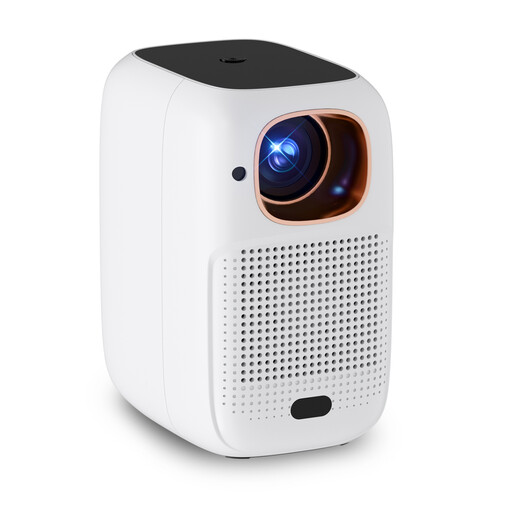
This selection of Joybuy products includes portable projectors and short-throw models. For each one, check that the lighting conditions, playback source, connections and setup suit your viewing space.
 No image available
V1 Outdoor Mini Projector, 720P, 10400mAh battery
The portable design and battery may suit a changing viewing spot. Before you buy, check that the picture quality and connections work for the competition and your group setup.
The product title lists 720P and 4K support. Supporting 4K isn’t the same as having a stated native 4K display resolution.
The title mentions a 10.400 mAh battery, autofocus and Bluetooth 5.0. The product description also mentions Wi-Fi and Bluetooth.
Joybuy
 No image available
ETOE Dolphin 2 RGB Laser Projector, 1080P
The built-in battery and automatic picture alignment may be useful if the viewing spot changes. Check that the connections and sound work for your intended audience.
The product information lists 1080P, 800 ANSI lumens, Google TV and dual 5 W speakers.
The product title mentions HDMI 2.1 and USB-C. Check that your chosen playback source and sound setup are compatible.
Joybuy
 No image available
XGIMI Vibe One Match Night EU Edition with projection screen and stand
The portable design, projection screen and stand may suit a changing viewing spot. Bear in mind the stated battery life and the light in the room.
The product title lists Full HD 1080p, 250 ISO lumens and a built-in battery. The product information mentions Google TV and JBL audio.
The product information states up to 1,2 hours of battery-powered video playback in Eco mode. Compare this with the full length of the competition.
Joybuy
 No image available
Optoma H117ST Short Throw DLP Projector, WXGA
Short-throw projection may be useful when there’s limited space between the projector and screen. Check the model specifications against the image width you want.
The product information lists native WXGA, 3.800 ANSI lumens and a throw ratio of 0,52:1.
The stated projection distance is 0,4–3,4 m. According to the product information, the projector has an HDMI input and an integrated 10 W speaker.
Joybuy
 No image available
Yaber L2 Projector, native 1080P
The product information mentions a flexible stand and short-throw projection. Measure the available space and the image width you want before choosing this model.
The product information lists 520 ISO lumens, native 1080P, Google TV and dual 5 W speakers.
The stated throw ratio is 1,17:1. Check that the connection works with your chosen playback source and the sound setup you want for the group.
Joybuy
Frequently asked questions
How can you work out whether a projector can produce the image size you want in this spot?
Measure the distance from the projector to the screen and the image width you want. BenQ defines the throw ratio as the projection distance divided by the image width. Then use the specifications for the exact model, rather than relying only on its advertised maximum screen size.
Can you watch the dance competition directly through an app on any smart projector?
No. The ‘smart’ label doesn’t confirm that your chosen service will work on the exact device. For example, Netflix recommends using a supported playback device connected with a suitable video cable or adapter if a projector isn’t supported. Before the competition, check the service and connection you’ll actually be using.
What should you do if the projector breaks down too soon during normal use?
ACM ConsuWijzer says that your statutory guarantee applies alongside any manufacturer’s or seller’s guarantee, and that under the law the seller must put right a fault that occurs too soon during normal use, free of charge. Don’t assume there’s one fixed statutory guarantee period for every projector.
Is CE marking compulsory for an electrical projector in the Netherlands?
Yes. The Netherlands Food and Consumer Product Safety Authority (NVWA) states that CE marking is compulsory for electrical products. The NVWA also says that testing isn’t compulsory for this product group. CE is a manufacturer’s declaration, not proof of independent testing.
Can you show a dance competition in any shared space without seeking further permission?
Not automatically. The rules depend on the venue, audience, broadcast and rights. The Dutch Government outlines restrictions on making copyright-protected material available to the public, while BumaStemra lists licences for commercial music use. Check the specific screening before showing the competition.


