Who this setup is suitable for

Watching with the kitchen lights on

You want to follow the competition without darkening the whole open-plan kitchen-diner. Light falling on the wall or screen affects how bright and contrast-rich the picture appears; Epson Netherlands and BenQ Netherlands point out that the viewing environment matters too.

A big picture with limited space

You want a big picture but can’t position the projector far from the wall. Measure the distance from the lens to the wall, then compare standard, short-throw and ultra-short-throw models to find one that suits the space you have.

Getting movement, streaming and sound to work together

You want to follow the dancers’ movements clearly and watch the competition through your own service or device. Check your source, connections and sound setup; model specifications alone can’t tell you how the broadcast will look in your room.

What to look for

What to consider What to check before you buy Who is this important for?
Visibility with the kitchen lights on Look at how much light falls on the wall or screen, and compare brightness figures measured on the same basis. If you want to leave the lights on during the competition, you’ll want to know how this affects visibility. Around 31% of consumers say visibility in lit conditions is their main buying concern.
Picture size and space for placement Measure your desired picture width and the distance from the lens to the wall separately, then compare both with the throw ratio of the exact model. If a table, cabinet or walkway limits where you can position the projector, you’ll want a picture that fits without the projector getting in the way in your open-plan kitchen-diner. Around 25% of consumers put placement at the top of their list.
Fast dance movements Watch moving images using your own playback source; don’t treat gaming input lag as proof of smooth dance footage. If you mainly want to follow the action in the competition, you’ll want to assess how the projector handles fast-moving images. Around 19% of consumers say moving images are their main buying concern.
Streaming and sound Check that your service works through your chosen source, and check the HDMI and audio connections on the exact model. If you’re watching together, you’ll want your competition source to work and the sound to suit your setup. Around 13% of consumers give playback and sound top priority.
Maintenance and use Check the light source type, the manual, replacement options and any equipment you may need for the picture, source or audio. If you mainly want to know what the projector requires during use, consider maintenance and any additional equipment you might need. Around 12% of consumers say running costs are their main buying concern.

Common buying mistakes

  • Choosing a projector based only on its highest lumen figure

    A lumen figure alone doesn’t guarantee good contrast. Light falling on the projection surface and the picture size also affect visibility.

    Check how much light reaches your chosen wall and compare brightness figures measured on the same basis. Assess the picture with the lights you’ll have on while watching.

  • Confusing throw distance with viewing distance

    Standard, short-throw and ultra-short-throw projectors all need to be positioned differently. The distance from your seat to the picture won’t tell you whether the lens is far enough from the wall.

    Measure the distance from the lens to the wall, your desired picture width and the available furniture space before choosing a model.

    An unsuitable position may mean you need different furniture, a different screen or another type of projector.

  • Mistaking a 4K input for native 4K

    According to Optoma, the Optoma GT2000HDR accepts 4K input, but has a native Full HD resolution. These are different specifications.

    Compare the supported input signals separately from the native resolution of the exact model.

  • Assuming built-in streaming and speakers take care of everything

    A streaming platform being listed doesn’t confirm that your competition or service is available on it. A speaker’s power rating also isn’t a listening test in your open-plan kitchen-diner.

    Check your service and source, then look at the connections and sound setup you need for the exact model.

    Depending on your setup, you may need a separate playback source or audio system.

Brands to compare

BenQ

BenQ offers standard- and short-throw models that may suit different distances in an open-plan kitchen-diner.

  • BenQ states that the TH575i has a specified brightness of 3.800 ANSI lumens, a lamp light source and a Google TV dongle included.
  • According to BenQ, the TH671ST is a Full HD short-throw model with a 5 W speaker.
  • Manufacturer figures aren’t independent tests of picture or sound in your room; also check the required distance and connections.

Epson

Epson offers standard- and ultra-short-throw models, so placement is a key difference between the ranges mentioned.

  • Epson lists a brightness of 2.800 lumens and 1,6× zoom for the EH-TW6250.
  • For the EH-LS670W, Epson lists a laser light source, 3.600 lumens, built-in sound and Google TV.
  • The EH-LS650W is listed as a discontinued model on the Dutch manufacturer’s website; don’t assume it’s equivalent to a current model.

Optoma

The GT2000HDR is a short-throw model that may be worth considering if the projector needs to sit closer to the wall.

  • Optoma lists a laser light source, 3.500 lumens and a 100-inch picture from just over a metre away.
  • The manufacturer lists 4K input, while the native resolution is Full HD. Check both specifications separately for the exact model.
  • The stated figures aren’t an independent picture test or confirmation that a particular listed item is suitable.

Projectors at Joybuy

These models include standard-, short- and ultra-short-throw projectors to suit different placement options in an open-plan kitchen-diner. Measure the available distance and picture width before choosing a model.

Optoma UZ38X 4K UHD Dual-Laser projector

Optoma UZ38X 4K UHD Dual-Laser projector

An option for standard throw; check that the required distance from the lens to the wall will work in your open-plan kitchen-diner.

The product listing specifies native 4K, 3.800 lumens, PureMotion MEMC, 1,3× zoom and a 15 W speaker. The stated throw ratio is 1,21:1–1,59:1 and the throw distance is 1–8 m.

View at Joybuy

Yaber L2 projector

Yaber L2 projector

A short throw ratio may work if you need to position the projector closer to the wall; measure your exact setup first.

The product listing specifies native 1080p, 520 ISO lumens, a throw ratio of 1,17:1, Google TV and two built-in 5 W speakers. According to the description, direct wireless mirroring of phone screen content isn’t supported; the listed TV Stick Lite and HDMI and USB cables aren’t included.

View at Joybuy

JMGO N1S Ultra 4K Triple Laser UHD projector

JMGO N1S Ultra 4K Triple Laser UHD projector

The adjustable gimbal may be useful if you need to project in different directions; check that your chosen position will work with your screen or wall.

The product listing specifies 4K UHD, a triple-colour laser, 3.000 ANSI lumens and automatic keystone correction.

View at Joybuy
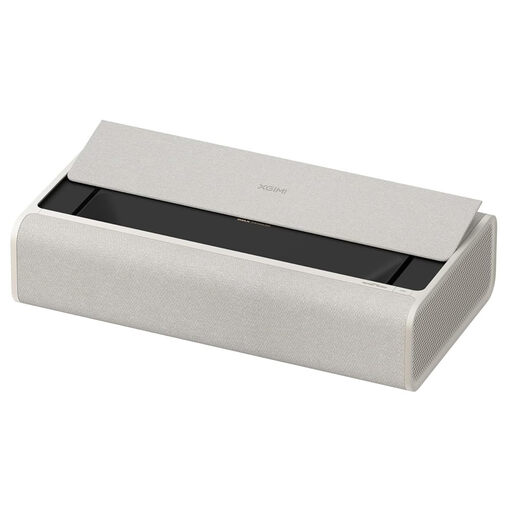
XGIMI AURA 2 UHD 4K Ultra Short Throw projector

XGIMI AURA 2 UHD 4K Ultra Short Throw projector

An ultra-short-throw model may suit you if you want to position the projector very close to the projection wall; check that your furniture and projection surface are suitable.

The product title specifies UHD 4K, Dolby Vision, 2.300 ISO lumens and a 60 W Harman Kardon speaker.

View at Joybuy
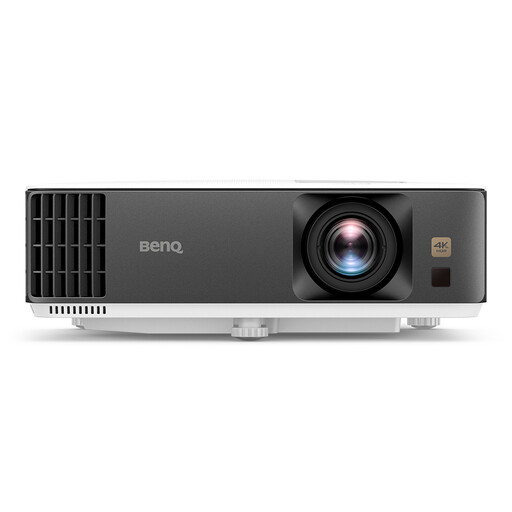
BenQ TK700 Standard Throw projector

BenQ TK700 Standard Throw projector

This standard-throw model is suitable only if you can leave enough space between the lens and the wall.

The product listing specifies native 4K UHD, 3.200 ANSI lumens and 1,3× zoom. The description recommends a throw distance of at least 1,5 m.

View at Joybuy

Frequently asked questions

How can you tell whether a projector will give you a big enough picture from your dining table?

Measure the distance from the lens to the wall and the picture width you want, then compare these with the throw ratio of the exact model. BenQ lists a throw ratio of 1,49–1,64 for the TH575i; this is different from the distance between your seat and the picture.

Can you rely on the built-in streaming function for the dance competition?

First check that your specific service and competition are available through your chosen source. BenQ lists a Google TV dongle included with the TH575i, and Epson mentions Google TV for the EH-LS670W; these listings don’t confirm that every competition or service is available.

What should you consider when using a projector in the kitchen?

Choose a stable spot away from cooking and splashes, and keep the ventilation clear as instructed in the manual for the exact model. Also check the fan noise from where you’ll be listening; BenQ describes the fan as part of the cooling system.

What can you do if a projector you bought online isn’t suitable?

For eligible online consumer purchases, ACM ConsuWijzer says you’ll generally have a statutory cooling-off period of up to 14 days after delivery; check the exceptions and applicable terms. If a product develops a fault too soon under normal use, you’re also entitled to a statutory guarantee through the seller.

Is CE marking required for a projector in the Netherlands?

Yes. The Netherlands Food and Consumer Product Safety Authority states that CE marking is compulsory for electrical products covered by the applicable rules. Check the marking and the identity of the model being offered; a model listing alone doesn’t confirm that a particular item meets the requirement.
