
Viewer with limited projection distance
You want a large view of the race, but have little space between the projector and the wall. Compare a short-throw model with placing the projector on a TV stand.


Choose based on the distance between the lens and the projection surface. A short-throw projector could be suitable if space is limited, while an ultra-short-throw model is designed to sit close to the wall. A standard projector is only an option if you can allow for the required distance. If you watch during the day, also bear in mind the amount of ambient light and check in advance that your chosen broadcast is available through an app or connected source.
You want a large view of the race, but have little space between the projector and the wall. Compare a short-throw model with placing the projector on a TV stand.
You often watch when daylight is coming in and want to know how curtains, the projection surface and the stated light output work together.
You want to know how the broadcast will appear on screen before it starts, and whether your chosen app or external source works with your equipment.
Suitable when: you want a large picture without placing the projector far from the wall. BenQ gives the TH671ST a throw ratio of 0.69–0.83:1.
Bear in mind: the unit still sits in front of the screen, so check the lens position, walking space and cables.
Suitable when: you want to place the projector on a TV stand close to the wall. The Epson EH-LS670W and Samsung The Premiere 7 are examples of this type of setup.
Bear in mind: check the required stand depth, picture size and how flat the wall is. Samsung recommends a dedicated ultra-short-throw screen for optimal viewing.
Suitable when: you have the required projection distance available. Epson lists Full HD, 3000 lumens and HDMI for the CO-FH02.
Bear in mind: work out the achievable picture width for your room. A model's stated maximum picture size doesn't tell you whether the required distance will work with your setup.
| Point to consider | What to look for | Who it's for |
|---|---|---|
| Picture size and distance | Measure the distance from the lens to the wall and the available wall width. Calculate the picture width using the exact model's throw ratio. | If I want a large view of the race without the unit or cables blocking my walking space, I first check that the distance works. Around 33% of consumers put projection distance first. |
| Visibility during the day | Consider where daylight falls, whether window coverings are practical and what light output is stated for the exact model. Only compare figures measured on the same basis. | When I watch an afternoon race, I want to know whether daylight falls on the projection surface and whether it’s practical to darken the room. Around 27% of consumers prioritise daytime visibility. |
| Access to the broadcast | First check which provider is showing the race you want to watch. Then see whether the app works on your chosen device, or test the HDMI source you plan to use. | If I want to watch live without a fuss, I want to know in advance which service is showing the race and how it will appear on screen. Access to the broadcast is the main concern for around 20% of consumers. |
| Running costs and additional equipment | Compare the light source, included items and required equipment for each model. Don't treat the manufacturer's warranty as a substitute for your statutory rights. | When I want to factor in additional equipment and maintenance, I check what my setup requires before choosing a model. Around 20% of consumers prioritise the total cost of ownership. |
Without knowing the available lens-to-wall distance and wall width, you can't tell whether the picture you want will fit your room.
Measure first and calculate the picture width using the exact model's throw ratio. Also allow for space for the unit and its cables.
You may need to reposition the projector or use a more suitable projection surface.
Ambient light falling on the projection surface remains a factor, even when the manufacturer states a high light output.
Check where the daylight falls and whether window coverings are practical. Consider the stated light output alongside your intended picture size.
Window coverings or a different projection surface may be part of your setup.
Whether a specific broadcast is available and whether an app is compatible are two separate things.
First check where the race you want to watch is being broadcast, then make sure the app works on your device or test the HDMI source you plan to use.
An HDMI setup may require a compatible external video source.
BenQ offers a short-throw model, as well as a model with a different throw ratio and 4K UHD resolution. Compare the models individually.
The CO-FH02 is a standard Full HD home projector; the EH-LS670W is an ultra-short-throw laser projector designed to sit close to the wall.
The Premiere 7 is an ultra-short-throw model with smart features, designed to sit close to the wall.
This selection features projectors available at Joybuy that are suited to use in a small living room, with a focus on short projection distances and connecting a broadcast source.
 No image available
The short-throw ratio and HDMI connection suit a setup with limited space and a compatible external source.
 No image available
The stated throw ratio and HDMI connection are worth considering if you want to plan the projector position and viewing source in advance.
 No image available
The stated short throw ratio, HDMI and streaming features could suit a compact setup. Check that your chosen service works on your device.
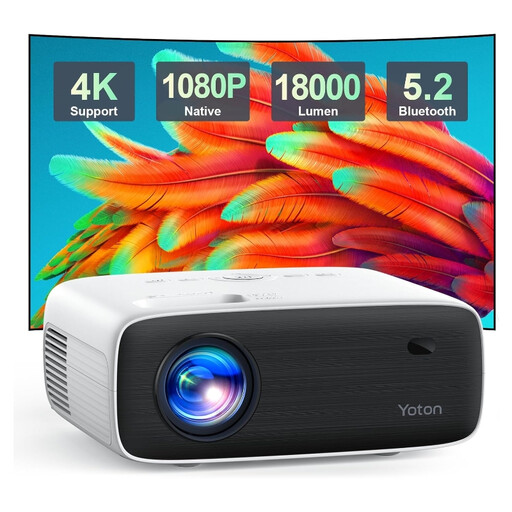 No image available
The stated HDMI connection offers one option for connecting a compatible external source.
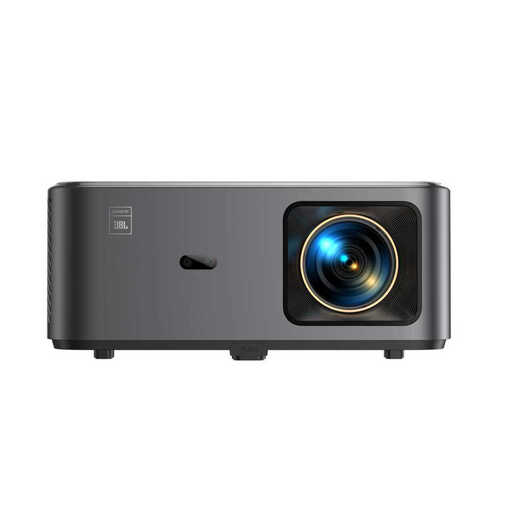 No image available
The stated streaming features and detachable TV dongle may be useful if you want to watch a live broadcast through an app or another source. Check compatibility with your service and equipment.
Measure the possible distance from the lens to the wall and the available width of the wall or screen. Compare these with the exact model's throw ratio and check where the unit and cables will go.
That depends on the provider showing that particular race and on the app or connected source. NPO Start offers live streams of its TV channels, but that doesn't mean every cycling race is shown there or that the app works on every projector. Check the broadcast and compatibility in advance.
Check the placement options for the exact model and, if possible, position the unit directly in front of the projection surface. BenQ says that digital keystone correction can reduce picture quality slightly.
Check whether your setup requires a screen or an external video source. According to ACM ConsuWijzer, when you buy a product online you generally have up to 14 days from delivery to change your mind, subject to exceptions. You are also covered by statutory guarantee rights if the product doesn't perform as you could reasonably expect under normal use; the seller is responsible for this.