What should you look for?
Choose your image size and set-up first. Then consider how the projector handles dark scenes, ambient light and playback in your living room.
Standard home cinema projector
Choose this when: you have space between the lens and the screen, and your preferred image size is within the range of the exact model.
Trade-off: you'll need a permanent position and suitable cabling. Lens shift and optical zoom vary by model.
Ultra-short-throw projector
Choose this when: you want to place the projector close to the screen, for example on a piece of furniture.
Trade-off: a short lens distance won't automatically make a small image look larger from the sofa. Image size and viewing distance still matter.
Portable smart projector
Choose this when: you want to move the projector around and built-in viewing features are important to you.
Trade-off: check the brightness measurement, your preferred streaming services and the sound set-up for the exact model.
| What to consider |
What should you check? |
Who should pay particular attention? |
| Image size and distances |
Measure the distance from your seat to the screen and from the lens to the screen. Check the throw ratio and any optical zoom to see if they can deliver your preferred image width. |
I want to make out faces and subtitles from the back of the room, but also check whether that image width will fit. Around 33% of consumers focus on image size and placement. |
| Dark scenes |
Check which picture settings are available and assess scenes you know at your intended image size and level of darkness. |
When watching crime dramas, I want to see important details in dark images without relying on a single contrast claim. Around 27% of consumers prioritise shadow detail. |
| Ambient light |
Consider when you'll be watching and how much you can darken the room. Only compare lumen figures when they're based on the same stated measurement method. |
I sometimes watch with the living room lights on and want to know whether my chosen image size will work. Around 20% of consumers prioritise viewing in ambient light. |
| Playback and dialogue |
Check that the streaming service or HDMI source you want to use is supported, along with the audio connections and how the sound will reach your seat. |
I want to start a series easily and hear conversations clearly from the sofa. Around 20% of consumers prioritise playback and dialogue. |
Brands to use as a reference
The examples below cover specific product ranges and models. The brand name alone won't tell you whether a projector is right for your room.
Epson
The EH-TW7100 is an example to consider if you're looking at a permanent home cinema set-up with external HDMI sources.
- Epson Netherlands lists 3,000 lumens, two HDMI ports, built-in stereo speakers, optical zoom and lens shift for this model.
- It's a lamp-based model. Its stated figures don't predict on their own how dark scenes will look in your living room.
BenQ
The W2720i is worth considering if you're looking at film-focused picture settings and varying levels of light in your room.
- BenQ describes this model as featuring AI Cinema and HDR-PRO.
- BenQ notes that actual performance may vary by environment. Also check the projection distance for your preferred image size.
XGIMI
The HORIZON S Max is an example of a portable home projector with a built-in adjustable stand.
- XGIMI lists 3,100 ISO lumens for this model and offers a projection calculator to help plan the distance and image size.
- The lumen figure doesn't guarantee a particular result in dark scenes or ambient light. ISO lumens and ANSI lumens aren't directly comparable measurement standards.
Nebula
The Cosmos 4K SE is a model to look into if you're considering a portable smart projector for TV series.
- Nebula lists 1,800 ANSI lumens for this exact model.
- Don't treat brand claims or user feedback as independent comparative tests. Check the placement and playback features you need separately.
Joybuy projectors for different set-ups
This selection includes standard home cinema projectors, a portable smart projector and an ultra-short-throw projector. Compare the placement and specifications of the exact version with your preferred image size.
 Image unavailable
Optoma UZ38X 4K UHD Dual-Laser Projector
An option for a permanent set-up where you can match your preferred image size to the lens distance.
The product name lists 3,800 lumens, DLP, 1.3× zoom and a 15 W speaker. The screen and playback source are not included.
View at Joybuy
 Image unavailable
Yaber L2
A portable smart projector to consider if its built-in viewing features suit your set-up.
The product name lists 520 ISO lumens, native 1080P, Google TV, two 5 W speakers and a flexible stand suitable for 360° mounting. Check that your preferred apps work on the version you're buying.
View at Joybuy
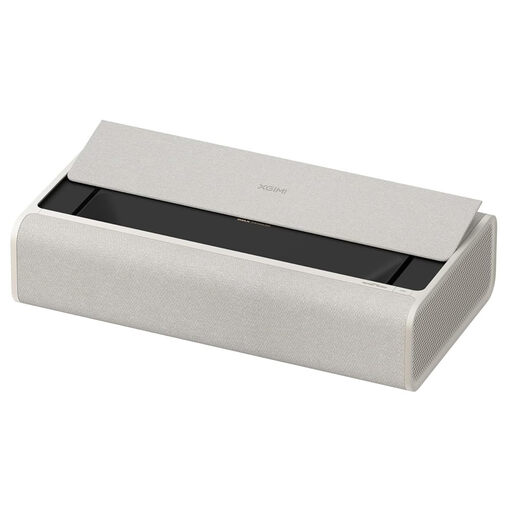 Image unavailable
XGIMI AURA 2 4K UHD
An ultra-short-throw model to consider if the projector needs to sit close to the screen.
The product name lists 2,300 ISO lumens. The stated image range is 60–100 inches and the zoom is fixed, so check that the range suits your seat and screen.
View at Joybuy
 Image unavailable
Optoma Photon Beam PK52
A model to compare if you're considering a permanent home cinema set-up with an external source.
For the exact version, check the throw ratio, the range for your preferred image size, the connections and which items are included.
View at Joybuy
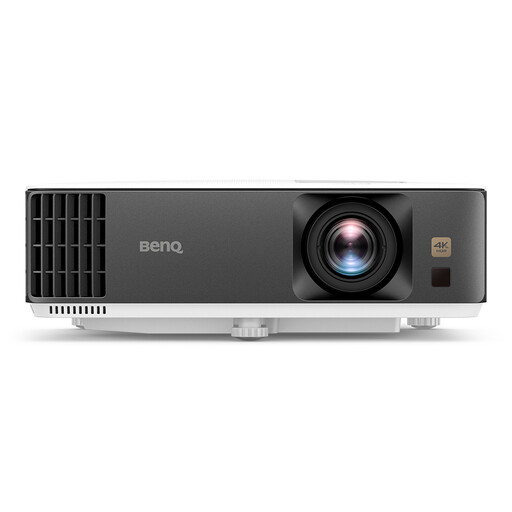 Image unavailable
BenQ TK700 Standard Throw
A standard projector for a set-up with space between the lens and the screen. Check that the projection distance suits your preferred image size.
The product name lists 4K UHD, DLP and 3,200 ANSI lumens. That figure doesn't predict how the picture will look in your room.
View at Joybuy
Frequently asked questions
Does a sofa at the back of the room mean you need a long-throw projector?
No, not necessarily. The distance from the sofa to the screen helps you decide what image size you want; the throw ratio relates to the distance from the lens to the screen. Measure both separately and check the specifications of the exact model.
What should you check before mounting or moving a projector?
Check the lens distance, image size, position relative to the screen, power and source cables, and mounting method. On a suitable model, lens shift can help you align the image without relying solely on digital keystone correction.
How does the legal guarantee work when buying in the Netherlands?
According to the Dutch Government, you're entitled to a product that works properly, and if a product is faulty you should contact the seller. The Netherlands doesn't have a fixed two-year statutory guarantee period; an additional manufacturer's or paid-for guarantee doesn't replace this right.
Which product safety rules apply to projectors in the Netherlands?
Electrical equipment placed on the market in the Netherlands must comply with the applicable European product rules. The requirements depend on the exact product. Equipment with Wi-Fi, Bluetooth or a radio module may also be subject to radio equipment rules. Where required, this includes assessment, CE marking and an EU declaration of conformity. A product listing alone doesn't prove that the applicable requirements have been met.


