
Host who wants ambient lighting
Wants guests to be able to follow the picture while keeping some lights on. The amount of ambient light matters more than extra features.


Start by choosing a projector based on how much light will be on during the film and the distance to the projection wall. A fixed, brighter set-up may be suitable if you plan to leave some ambient lighting on. A portable model is more convenient if you want to move between viewing spots, but you’ll need to pay extra attention to darkening the room. Then check that you can connect your film source and that everyone will be able to hear the dialogue.
Wants guests to be able to follow the picture while keeping some lights on. The amount of ambient light matters more than extra features.
Has a small room and wants to know in advance whether the projector can produce the desired picture on the wall from the available spot.
Wants to sort out the film source and sound in advance, so the evening doesn’t depend on improvising with connections.
Start with the lighting conditions and the available projection distance. Then check the film source and sound, and decide whether you want to use the projector in different places.
| What to consider | What should you check? | Who should pay particular attention? |
|---|---|---|
| A visible picture with some lights on | Consider how much you can darken the room and compare the stated light output with the conditions in the room. Lumen figures alone don’t guarantee that the picture will be clearly visible at your desired size. | If I want to leave some ambient lighting on, the picture needs to be easy to follow from the seats. Around 33% of consumers prioritise picture visibility with some lights on. |
| The right picture size from your chosen spot | Measure the distance from the lens to the wall and decide on your desired picture width. Check the throw ratio for the exact model. | In a small room, I want to know whether the projector can fill the desired width of wall from the available spot. This is the main concern for around 25% of consumers. |
| Film source and clear dialogue | Check the connection or streaming options for your film source, and see which audio outputs or speakers are available. | When watching with guests, I want to start the film without connection problems and be able to follow the dialogue. Around 25% of consumers give playback and sound top priority. |
| A portable set-up | Decide whether you want to watch without a fixed power source and whether you can darken the room enough in each location. Check the connections and sound too. | If you want to take the projector between different viewing spots, fixed placement may matter less. Around 17% of consumers prioritise portability. |
The stated light output of the BenQ GV50 is lower than that of the brighter home models reviewed. This difference matters if you plan to leave lights on during the film.
First decide how much you can darken the room, then weigh portability against the light output you need.
A stated large picture size doesn’t tell you whether the projector can fill the wall you want from your available spot.
Measure the distance between the planned lens position and the wall. Then check the throw ratio for the exact model.
The models reviewed differ in the streaming options and audio connections included. A built-in streaming option doesn’t automatically tell you whether you can connect your film source or whether the sound will be easy to follow in the room.
Test your chosen film source and sound from the planned seating area before finalising your set-up.
An external film source, connection cable or separate sound system may require extra equipment and connections.
Auteursrecht.nl distinguishes between screenings in a strictly domestic setting and, for example, a club night. A private gathering doesn’t automatically count as the same kind of event.
Establish who you’ll be showing the film to. If the event is outside a strictly domestic setting, check in advance what permission you need.
The CO-FH01 is a Full HD home projector with HDMI, designed to be used with an external film source.
The models reviewed offer different set-ups: the TH575i is a home model supplied with a Google TV dongle, while the GV50 is portable and has a battery.
The UZ38X is another option if you’re also considering a projector for wider 4K home cinema use.
This selection focuses on portable projectors for a film night. Whether the brightness is suitable depends on the remaining ambient light, so check the lighting in the room where you’ll be watching too.
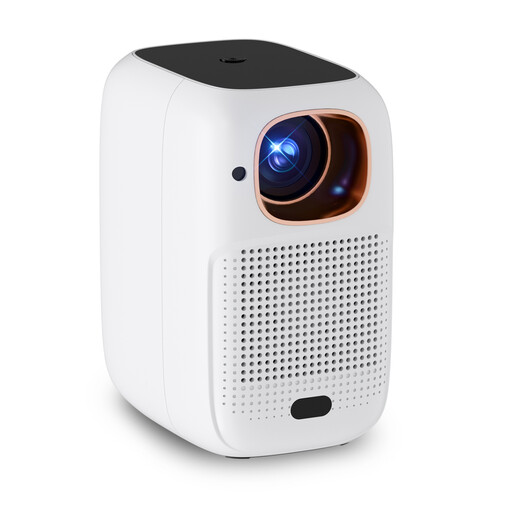 No image available
The stated battery and autofocus are suited to a portable viewing set-up; bear in mind the lighting in your chosen location.
720P; 4K support; 10,400 mAh battery; autofocus; Dual WiFi and Bluetooth 5.0.
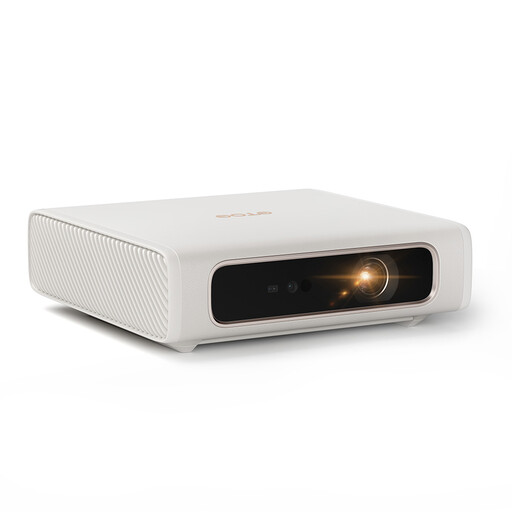 No image available
The product title mentions Google TV for watching films without a separate streamer; check that the connections suit your other equipment.
Full HD 1080P; 800 ANSI lumens; Google TV; battery; HDMI 2.1 and USB-C.
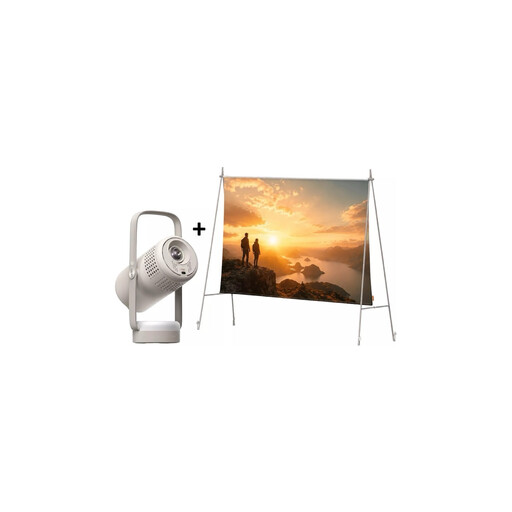 No image available
The built-in battery and the stated projection screen with stand are suited to a portable set-up. Consider the stated brightness in relation to the ambient light.
Full HD 1080p; 250 ISO lumens; Google TV; JBL audio; built-in battery; projection screen with stand.
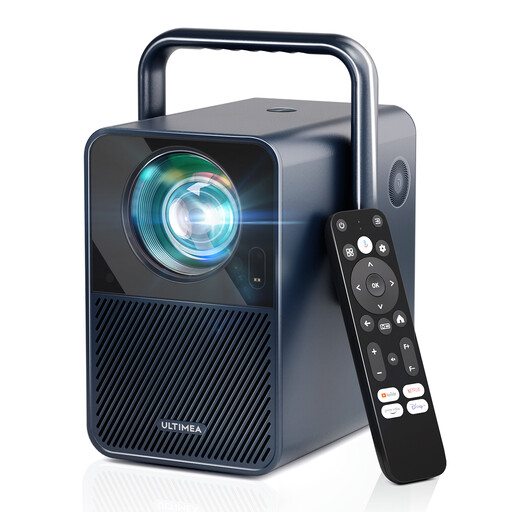 No image available
The stated built-in apps and speaker may suit a simple film set-up; check in advance that the audio works for your seating area.
Native 1080P; 1,000 ANSI lumens; Android TV 11.0 and Netflix; autofocus; 6D automatic keystone correction; Dolby Audio.
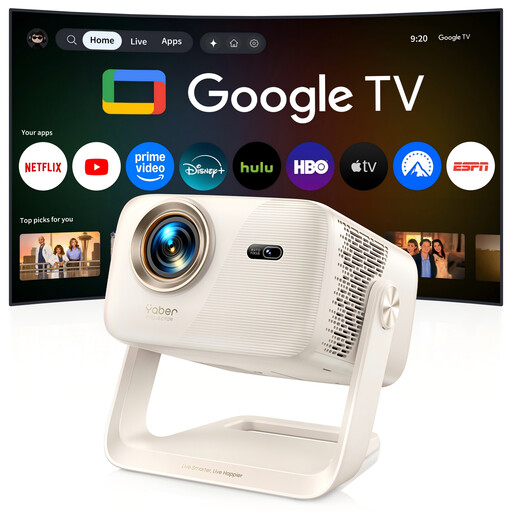 No image available
The title mentions Google TV and an adjustable stand, features that may suit a flexible set-up. Check whether the projector can produce the picture size you want from the available distance.
Native 1080P; 520 ISO lumens; Google TV; dual 5 W speakers; ceiling-mount compatible.
Measure the distance from the planned lens position to the wall and decide on your desired picture width. Compare this with the throw ratio of the exact model. For example, BenQ specifies a fixed throw ratio of 1.2 for the GV50.
That depends on the projector and your film source. Epson lists HDMI for the CO-FH01, while BenQ says the TH575i comes with a Google TV dongle. For the GV50, BenQ lists built-in speakers and an audio output. Test your chosen film and sound from the seats before inviting guests over.
In the Netherlands, you’re entitled to a product that conforms to the contract; if there’s a fault, the seller must offer an appropriate solution. According to the Dutch government, there is no fixed statutory guarantee period. A manufacturer’s or seller’s guarantee is additional to that right.
According to Auteursrecht.nl, a film can be shown without the rights holders’ permission in a strictly domestic setting. This includes family and close friends, but not automatically a club night or company party, even if the event is private. Also check the terms of the film service you use.