
For daytime viewing
You watch documentaries while daylight fills your living room and want to avoid dark scenes and text looking washed out. ProjectorCentral explains how ambient light affects the visibility of an image.


Start by deciding how large you want the image to be, then check that your living room has enough projection distance. Next, consider the stated brightness alongside the light reaching the screen: for a large daytime picture, curtains or a screen suited to your setup can be just as important as the projector.
You watch documentaries while daylight fills your living room and want to avoid dark scenes and text looking washed out. ProjectorCentral explains how ambient light affects the visibility of an image.
You want a large image, but the distance between the projector and the wall is limited, or there’s only a fixed spot behind the sofa. ProjectorCentral explains how projection distance relates to image size.
You want to make out fine details and text in maps, images and charts, so you’re weighing up resolution and image size.
First, decide how large you want the image to be and measure the distance from the planned lens position to the screen. Then compare brightness, ambient light and detail for that specific setup.
| What to consider | What should you check? | Who is this important for? |
|---|---|---|
| Image clarity in daylight | Compare the stated brightness for the same intended image size, and see whether you can reduce the light falling on the screen. | If I watch during the day, I want text and dark scenes to remain visible. Around 36% of consumers prioritise readability in daylight. |
| Distance and screen position | Measure the distance from the lens to the wall and check the exact model’s specifications to see what distance suits your preferred image width. | With a fixed position or limited space, I want to know whether the image size I want is achievable. Around 29% of consumers prioritise placement. |
| Detail in images and text | Check the model’s resolution and the documentary source; consider detail alongside image size and the light in the room. | For maps, charts and fine details, I want to match the resolution to the source and planned image size. Around 21% of consumers put image detail first. |
| Total cost and usage | Check what’s included with the model and whether your setup requires a separate screen or other equipment. | When weighing up the total cost and practical operation, I want to know in advance what my setup will need. Around 14% of consumers prioritise running costs. |
Ambient light falling on the screen can limit visible contrast, even when a projector can display a lot of detail.
First, decide on the image size and consider how much light reaches the screen. Then compare the resolution and stated brightness of models that will fit your room.
How well an ambient-light-rejecting screen works depends in part on the direction of the projector’s light and the ambient light; the ideal viewing angle can also vary.
Before choosing a screen, check that it suits the projector position and the main light source in your living room.
A high stated lumen figure alone doesn’t tell you whether text and details will be easy to make out at your preferred image size. The product description on Joybuy lists the Epson EB-X49 at 3.600 ANSI lumens, with a native XGA resolution of 1024 × 768.
As well as stated brightness, compare the resolution, aspect ratio and resolution of your documentary source.
Epson’s home cinema projectors include the EH-TW6250 and EH-TW7100.
The TK710ST is a short-throw model, while the GP520 is a portable home projector with built-in smart features.
Optoma describes the UHZ66 as a 4K UHD laser projector for big-screen entertainment.
Compare these projectors for documentary viewing based on stated brightness, resolution and placement options. Check whether the distance suits your preferred image size for each model.
 No image available
An option to compare if you’re considering 4K UHD resolution and adjustable projection distance.
The product name lists 3.800 lumens, DLP and 1.3× zoom. The stated throw ratio is 1.21:1–1.59:1. Screen and source device are not included.
 No image available
Compare this model if 4K UHD resolution and flexible image positioning matter to you.
The product description lists 3.000 ANSI lumens, an adjustable gimbal and automatic keystone correction.
 No image available
A model to include in your comparison if 4K UHD resolution and adjustable projection distance suit your setup.
The product details list 3.500 lumens, 1.3× manual zoom and a throw ratio of 1.21:1–1.59:1.
 No image available
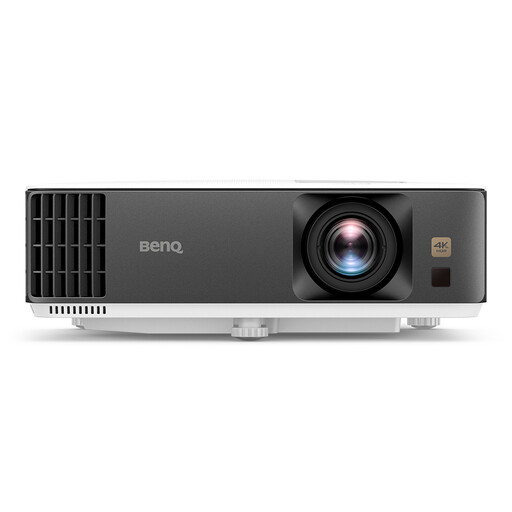
Compare this standard-throw model if your setup has enough space between the projector and the screen.
The product name lists 3.200 ANSI lumens, DLP and UHD 4K (3840 × 2160). The product description mentions 1.3× zoom and automatic vertical keystone correction.
 No image available
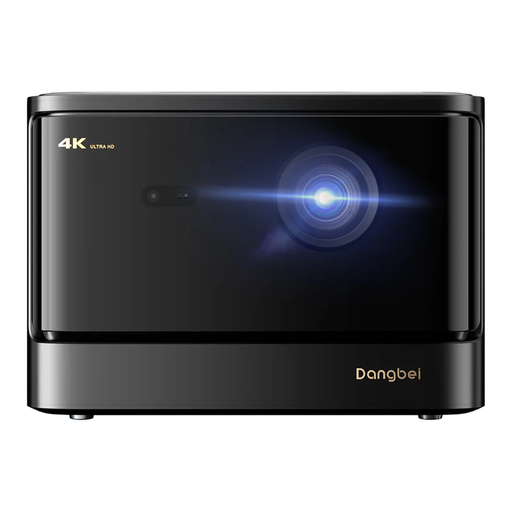
An option to compare if built-in features and 4K resolution suit your documentary source.
The product name lists 2.450 ISO lumens and 4K. The product description mentions GTV, automatic focus and keystone adjustment, and two 12 W speakers.
No. A higher stated lumen figure alone doesn’t guarantee a clearly visible image. Compare the measurement unit and intended image size, and bear in mind that ambient light falling on the screen can limit visible contrast.
Measure the distance from the planned lens position to the screen, then check the exact model’s distance specifications for your preferred image width. For example, BenQ states that the TK710ST can project a 100-inch image from 1,5 m; that distance doesn’t automatically apply to other models.
No. Suitability depends on the direction of the projector’s light and the ambient light. Match the screen to your projection setup and check which viewing angle is suitable too.
If there’s a problem, contact the seller. According to the Dutch government, the seller must provide a solution if there’s a problem with a product; an additional manufacturer’s warranty doesn’t replace this legal right.
For distance purchases, the seller must tell you about the cooling-off period. According to the Dutch government, it’s usually 14 days; check which terms apply to your order before you buy.