
Daylight viewer
You want to watch adventure films during the day while keeping some light in the living room. Consider how much light reaches the screen and whether you can darken the room or use a suitable screen.


Start by considering the light falling on the screen, the image size you want and the available projection distance. Then assess brightness and film detail. An ultra-short-throw projector can sit on a TV cabinet, but you’ll need to make sure you have a suitable screen. Manufacturers’ specifications alone don’t guarantee a good picture in direct sunlight.
You want to watch adventure films during the day while keeping some light in the living room. Consider how much light reaches the screen and whether you can darken the room or use a suitable screen.
You want a large picture without placing the projector at the back of the room. The distance between the projector, furniture and screen determines which set-up will work.
You look for depth in dark scenes and good picture quality, and you can adjust the lighting during films if needed.
First, choose a set-up that suits the distance and light levels in your living room. Then compare models using the same measurement basis and viewing conditions.
Best suited to: getting a large picture from a TV cabinet, with space for a screen designed for ultra-short-throw projection.
Trade-off: check screen compatibility and dimensions. A suitable screen won’t eliminate all the effects of direct sunlight.
Best suited to: a room with enough distance from the screen, where you can place the projector on a shelf or mount it on the ceiling.
Trade-off: placement and cabling take up space. Check the throw ratio and picture positioning options.
Best suited to: moving the projector regularly, with automatic focus or picture adjustment high on your list.
Trade-off: automatic correction can’t replace a suitable projection distance or overcome strong incoming light.
| What to consider | What to look for | Who is it most relevant to? |
|---|---|---|
| Visibility in ambient light | Consider where and when light falls on the screen. Check the lumen measurement method and whether the screen suits the type of projection. | If I watch during the day, I want to know whether the picture will remain visible without having to darken the room every time. Around 40% of consumers prioritise visibility in ambient light. |
| Projection distance and screen | Measure the furniture, wall and available distance. Check the throw ratio and whether the screen is designed for UST or standard projection. | With little space behind my seating area, I want to know whether the projector can produce the picture size I want from the cabinet. Around 30% of consumers give top priority to placement and screen set-up. |
| Contrast and film detail | Assess the picture in lighting conditions similar to your living room. Ambient light can affect perceived contrast. | When watching dark film scenes, I want to see the details without pretending the living room is always completely dark. Around 20% of consumers put film detail first. |
| Installation and complete set-up | Check the adjustment features and audio connections on the exact model. Remember to factor in the screen, mounting, cabling and sound, too. | If I want to position the projector easily, I want to know in advance what the complete set-up involves. Around 10% of consumers say ease of use and set-up costs are their main concerns. |
ANSI lumens and light-source lumens are different measurements. Image size and ambient light also affect how bright the picture appears.
Only compare figures when they use the same measurement basis, and assess the picture under similar viewing conditions.
A white wall or standard screen doesn’t handle light in the same way as a dedicated UST screen.
Check the projection direction, screen compatibility and available wall space before choosing your set-up.
A separate, suitable UST screen may be needed to get close to the picture you want in ambient light.
A fixed set-up needs space and suitable connections. The screen, mounting, cabling and sound may also be part of the installation.
Plan the complete set-up and check which components are included with the model you’ve chosen.
Your chosen set-up may need additional mounting, cabling, a separate screen or a sound system.
Epson provides product information for the Netherlands on both an ultra-short-throw model and a standard laser home cinema model.
According to BenQ, the GP520 product line is designed for portable 4K home entertainment. The brand also publishes information about placement and brightness measurements.
European product information for the HORIZON Ultra describes a standard home projector with automatic set-up features.
These Joybuy products are projector options for watching films. Check the placement, brightness rating and screen requirements for each model.
 No image available
The product title describes this projector as suitable for home cinema. Check the projection distance and zoom against your fixed set-up.
The title lists 3800 lumens, 1.3× zoom and a 15 W speaker. The screen and source device are not included.
 No image available
The title describes it as suitable for home cinema. Automatic focus and picture correction are also mentioned in the product title.
The title lists 1000 ANSI lumens, native 1080P, 4K support and Whale TV OS.
 No image available
The product title lists built-in apps and automatic screen correction. Check that the stated features suit your viewing set-up.
The title lists Wi-Fi 6, Bluetooth, digital zoom and 180° rotation.
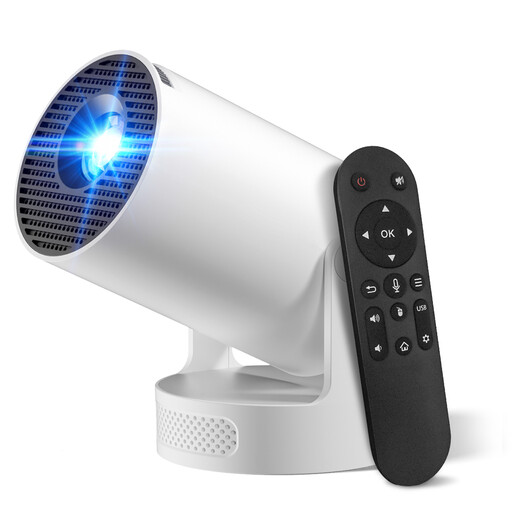 No image available
The product title lists built-in streaming features and automatic picture correction. Check the features against where you plan to position it.
The title lists Wi-Fi 6, Bluetooth, zoom and 180° rotation.
 No image available
The product information describes it as suitable for home cinema and features an adjustable gimbal for different projection angles.
The title lists 4K UHD. Check your preferred projection position and screen set-up before buying.
No. Also consider the measurement method, picture size and ambient light. According to BenQ, ANSI lumens and light-source lumens are not measured in the same way.
You can, but check whether the wall and incoming light are suitable for the picture you want. A specialist screen retailer explains the benefits of an ALR screen designed for UST projection, which helps maintain perceived contrast in ambient light.
Measure your desired picture width and the available space for the projector and screen, then compare these with the projection distance for the exact model. For a fixed installation, also check the picture positioning options, such as lens shift.
Report a faulty product to the seller. According to the Dutch government, there is no fixed statutory warranty period in the Netherlands. What you can expect from a product depends, among other things, on the product and the information provided. A manufacturer’s warranty does not replace your statutory rights.
For distance purchases from a business, the Dutch government says you often have a 14-day cooling-off period. Check the applicable terms and exceptions. A purchase from a private individual is not covered by the same example of a distance purchase.