First, measure the available distance from the lens to the projection surface and decide how wide you want the image to be. Then choose between a standard, short-throw or ultra-short-throw projector. For dark space scenes, room darkening and picture settings also matter. If you plan to watch with the lights on, consider the brightness rating and how it was measured. Finally, check whether you can play programmes using built-in apps or an external source.
Who is this relevant to?
Viewers with limited projection space
If you can’t position a projector far behind the seating in a small sitting area, check the throw ratio and available lens-to-screen distance. BenQ and Optoma list throw distances and ratios for their models; work these out for your preferred image width.
Viewers who want to see dark space scenes clearly
If you want to make out details in dark scenes, consider how well you can darken the room, the image size and the picture settings, rather than focusing only on the largest stated screen size. BenQ explains how the room and viewing distance affect your choice.
Viewers who want to stream with ease
If you want to start programmes without extra equipment, check that the app you need is available on the exact model. Also make sure the connections and built-in audio suit your set-up; BenQ, Optoma and Samsung models offer different features.
What should you consider when choosing?
First, measure the available distance and decide how wide you want the image to be. Then consider how you’ll watch dark scenes, how much ambient light there is and how you want to play your programmes.
| What to consider |
What should you check? |
Who is this important for? |
| Image size and distance |
Measure the lens-to-screen distance and usable image width. Work out the distance using the throw ratio for the exact model and check its permitted image size. |
If the projector needs to sit close to the seating, I want to know whether I can get the image width I want from that spot. Around 36% of consumers say getting the right distance is their top buying concern. |
| Dark scenes |
Decide whether you can darken the room and assess your preferred image size using comparable dark scenes. Manufacturer claims about contrast or HDR are not independent real-world tests. |
For astronomy programmes, I want to see dark details, so I’d like to know how much room darkening and picture settings can help. Around 29% of consumers put the display of dark scenes first. |
| Watching with the lights on |
Check how brightness is rated and measured. Assess the picture in your own lighting conditions and at your preferred image size. |
If I can’t always darken the room, I want to know what the picture looks like with the lights on. Around 21% of consumers give watching in ambient light top priority. |
| Programmes and sound |
Check whether your programme works through an available app or external source, whether the required connection is available and whether the sound suits your sitting area. |
I want to start my programmes without unnecessary extra equipment, so I’ll check that the built-in apps, connections and sound are up to the task. This is the top buying concern for around 14% of consumers. |
Avoid common buying mistakes
-
Assuming a compact design means a short throw distance
A compact projector won’t necessarily produce a large image from a short distance. For example, Epson says the EF-22N needs to be 1.33 metres away to project a 60-inch image.
Work out the required distance using the throw ratio and image width of the model you’re considering, and check its stated image size range.
Choosing the wrong distance could mean the projector won’t fit in your planned spot, or that you’ll need to find another place for it.
-
Comparing lumen ratings with different labels as if they were the same
ANSI, ISO and other brightness ratings don’t necessarily use the same measurement method. So a higher number alone won’t tell you how dark scenes will look in your room.
Check how the brightness was measured and assess the picture in the lighting conditions and at the image size you expect to use at home.
-
Assuming automatic keystone correction can fix any set-up
BenQ warns that digital keystone correction can affect the edges, sharpness and image size, among other things.
First, find a physical position where the projector faces the projection surface as straight on as possible. Use correction to fix any remaining distortion.
Brands to compare
BenQ
Compare the short-throw models if you have limited space between the projector and the projection surface, but can’t place it right next to the wall.
- BenQ says the TK705STi has a throw ratio of 0.8, 4K and built-in Google TV.
- Work out the image size for your room and check whether the apps you need are available on the exact model.
Optoma
The Photon Go is an ultra-short-throw option to compare if you want to place the projector on a piece of furniture close to the wall.
- Optoma lists a throw ratio of 0.18:1, 1080p, HDMI, Google TV and a built-in battery for this model.
- Optoma says the maximum video playback time on battery power is 1.5 hours. Check that the power supply and programme length suit the way you plan to use it.
Epson
The Lifestudio range includes ultra-short-throw models designed for a permanent position close to the wall.
- Epson describes the EH-LS970 as a model that can project from close to the wall.
- Epson lists the EF-22N as discontinued. A listing at a retailer doesn’t necessarily mean the manufacturer still sells the model as a current product.
Samsung
The Freestyle+ is a portable option if flexible positioning matters more to you than a fixed ultra-short-throw set-up.
- Samsung lists automatic picture correction and a brightness rating of 430 ISO lumens for The Freestyle+.
- Automatic correction doesn’t replace measuring the projection distance. Don’t compare ISO lumens directly with brightness ratings measured using a different method.
Hisense
The PX3-PRO is a model to compare if a fixed ultra-short-throw set-up suits your sitting area.
- A fixed set-up close to the wall can be a good option if you want to keep the floor between the seating and projection surface clear.
- Check that the smallest image size you want and the required furniture space suit the exact version.
Projectors at Joybuy
These projectors are a starting point for comparing models for a compact sitting area. For each model, check the throw ratio, preferred image size and available placement options.
 No image available
Optoma H117ST Short Throw DLP Projector
The short-throw designation makes this model worth comparing if projection space is limited.
WXGA 1280 × 800; 3800 ANSI lumens; throw ratio 0.52:1; stated projection distance 0.4–3.4 m; HDMI; built-in 10 W speaker.
View at Joybuy
 No image available
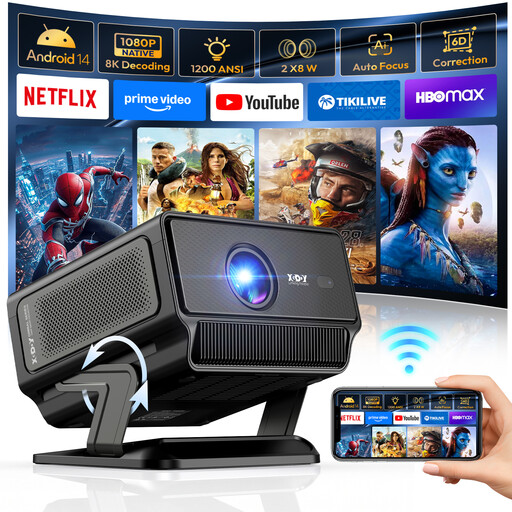
XGODY Gimbal A8 projector
Compare the stated throw ratio and image size with the spot where you plan to place the projector.
Native 1080p; 1200 ANSI; Android 14; Wi-Fi 6; throw ratio 1.08:1; stated image size range 60–180 inches; automatic focus and automatic keystone correction.
View at Joybuy
 No image available
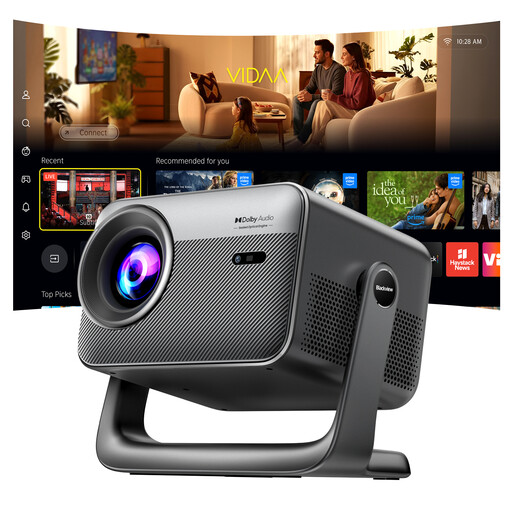
Blackview Smart Projector PV1000 Max Grey
Check that the stated image size and rotating set-up suit your viewing direction and available space.
1000 ANSI lumens; native 1080p; stated image size range 40–150 inches; 360° rotation; Wi-Fi 5.
View at Joybuy
 No image available
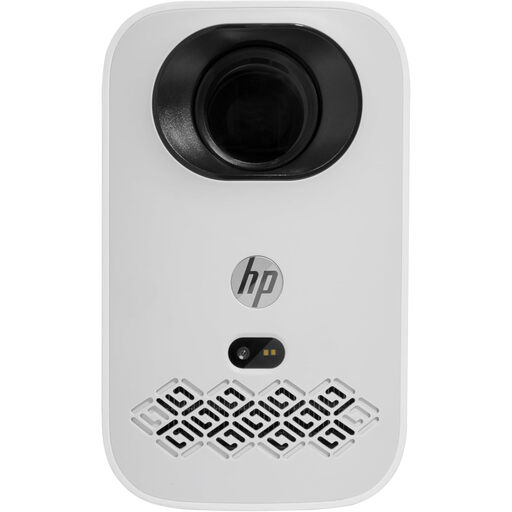
HP CC360 FHD Smart Projector
The stated projection distance and app features give you a few things to check for a permanent set-up and playing programmes.
Native 1080p; 220 ANSI lumens; throw ratio 1.2:1; 80 inches at 2.1 m according to the product description; HDMI; built-in 6 W stereo speakers.
View at Joybuy
 No image available
XGIMI MoGo 4 Full HD – Match Night EU Edition
A portable model could be a good choice if you want to move the projector between viewing spots. Check that the stated battery life is long enough for your programmes.
Full HD 1080p; 450 ISO lumens; Google TV; Harman Kardon audio; stated battery life 2.5 hours; edition with EA SPORTS FC 26 game code.
View at Joybuy
Frequently asked questions
How do I work out whether a projector will fit in my sitting area?
Measure the usable image width and the distance from the lens to the wall or screen. BenQ says the throw ratio is the projection distance divided by the image width; also check the permitted image size for the exact model.
Can automatic keystone correction fix a poor set-up?
Keystone correction can straighten a skewed image, but BenQ warns that stronger digital correction can affect the edges and sharpness, among other things. So position the projector as straight on as possible first, then use correction to fix any remaining distortion.
Do I need a screen or separate speakers?
It depends on your wall, the image size you want and your sound preferences. Check the projection range and audio connections for the exact model, and decide whether the built-in sound suits your sitting area.
How do I assess a projector for dark astronomy images?
Consider whether you can darken the room, the image size you want and the picture settings. Only compare brightness ratings if they use the same measurement method, and don’t treat manufacturer claims as independent real-world tests.


