What should you consider when choosing?
First, reduce the amount of light coming in where possible, then decide on the image size you need from the furthest seat. Next, compare projectors by light output, viewing distance and how well they suit the room’s layout.
| What to consider |
What should you check? |
Who should pay particular attention? |
| Visibility in daylight |
Check the light levels around the screen during the presentation. Compare light output using the same measurement standard and test the image in the room. |
If I want to show dark photos with daylight falling on the screen, I also consider the screen position and ways to block out light. Around 33% of consumers say visibility in daylight is their top priority. |
| Photos and captions |
Test your own images from the furthest seat, then decide on the screen height and image size. Epson Netherlands recommends a viewing distance of no more than four times the screen height for viewing fine details. |
If you want visitors to be able to read names, dates and small details in photos, you should assess image size and viewing distance together. Around 27% of consumers put readability first. |
| Set-up and connections |
Measure the distance from the lens to the screen and the available screen width. Check the throw ratio and whether the connections will work with your source device. |
If I present at different venues, I want to know in advance whether the projector can produce the image I need from the available position. Around 20% of consumers say positioning and connections are their top priority. |
| Use and maintenance |
Compare the light source type, the mode used to calculate the stated lifespan and the applicable service conditions. |
If you show archive material regularly, you’ll want to weigh the purchase price and potential maintenance costs against how often you use it. Around 20% of consumers put running costs and maintenance at the top of their list. |
Projectors at Joybuy
This Joybuy selection includes models with 4K UHD resolution, as well as short-throw and ultra-short-throw projectors. Before deciding whether a model is suitable for your captions and room, check its native resolution, connections and distance from the screen.
 No image available
Optoma UZ38X 4K UHD Dual-Laser
An option to consider if 4K UHD resolution and flexible installation are important to you.
Native 4K UHD, 3,800 lumens, DLP, 1.3× manual zoom and two HDMI 2.0 inputs. The stated projection distance is 1–8 m; check the image size in your own room.
View at Joybuy
 No image available
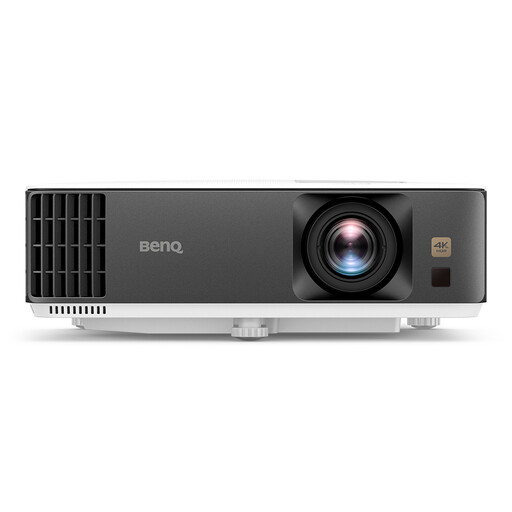
BenQ TK700 Standard Throw, Black/White
A model to compare if native 4K resolution and adjustment options are relevant to your presentation.
Native 4K (3840 × 2160), 3,200 ANSI lumens and 1.3× zoom. The description mentions automatic vertical keystone correction; check that the available projection distance suits the room.
View at Joybuy
 No image available
Optoma H117ST Short Throw, WXGA
A short-throw model to consider if space between the projector and screen is limited.
The stated throw ratio is 0.52:1 and the projection distance is 0.4–3.4 m. Its native resolution is WXGA (1280 × 800), not Full HD, which may limit how clearly small captions and archive details are displayed.
View at Joybuy
 No image available
BenQ MW809STH Short Throw, XGA
A short-throw model to include in your comparison if the projector needs to be close to the screen.
The stated throw ratio is 0.49 and the light output is 3,600 ANSI lumens. Its native resolution is XGA (1024 × 768), not Full HD, so small captions and archive details may appear less clearly.
View at Joybuy
 No image available
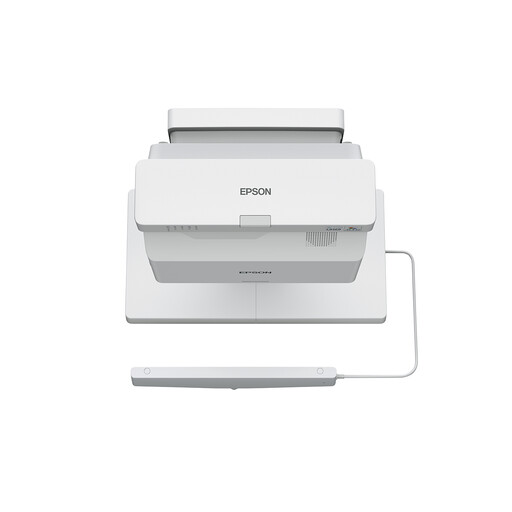
Epson EB-760Wi Ultra Short Throw, WXGA
An ultra-short-throw model to consider if it’s difficult to position the projector further from the screen.
The title lists 4,100 ANSI lumens and 3LCD; the description mentions three HDMI inputs. Its native resolution is WXGA (1280 × 800), not Full HD, which may limit how clearly small captions are displayed.
View at Joybuy
Frequently asked questions
Can an ALR screen help if daylight falls on the projection wall?
According to Epson, an ALR screen can block ambient light coming from other directions. Choose one only once you know the projector position, light levels and seating layout. Direct sunlight doesn’t automatically mean the image will remain readable.
What should I measure before installing the projector?
Measure the distance from the lens position to the screen and the available screen width. Then check whether the specific model’s throw ratio will produce the image size you want at that distance.
What warranty applies when buying as a consumer in the Netherlands?
The Dutch government distinguishes between statutory consumer rights and any additional manufacturer’s or seller’s warranty. If a product is faulty, the seller must provide a solution; there is no fixed statutory warranty period that applies to all products in the Netherlands. If an organisation is buying for business use, check the terms separately.
Can I return a projector bought online if it doesn’t work well in the hall?
In many cases, consumers who buy at a distance from a business have 14 days to change their mind, but exceptions and the terms of purchase still apply. The same cooling-off period doesn’t necessarily apply to a business purchase.
Can I show archive photos featuring identifiable local residents?
That depends on where the photos came from, the rights involved and how you show them. The Dutch government states that you need the creator’s permission to use copyright-protected photos. The Dutch Data Protection Authority explains that identifiable people are personal data, and an organisation may need a legal basis under the GDPR to use them. Check these points for the specific presentation.


