Vandaag of morgen in huis

Kwaliteit gegarandeerd

Welkomstaanbiedingen ontgrendelen: GRATIS bezorging | Tot 80% korting | Gratis 30 dagen JoyPlus-proefperiode
Download de app
Choosing the wrong racket can be a frustrating setback, especially for players with competitive ambitions. A racket that doesn’t match your playing style can hinder your progress and impact your performance at the table. For advanced and competitive players, selecting the right equipment isn't an afterthought—it's an essential part of the sport. This article provides a practical overview of the specifications to consider when buying a professional table tennis racket and presents a selection of models for serious players.
A racket's specifications determine the balance between speed, control, and spin. To make an informed decision, it's helpful to understand the following components.
The heart of the racket is the blade, typically constructed from multiple layers of wood. In a professional table tennis racket, composite materials like carbon are often added.
The rubber determines the amount of spin and speed you can impart on the ball. Professional rubbers are often approved by the ITTF (International Table Tennis Federation) for use in competitions. Pay attention to the thickness of the underlayer (sponge) and the properties of the top sheet. A thicker sponge delivers more speed, while a tacky top sheet generates more spin.
Most players in Europe use the shakehand grip. Within this style, there are three common shapes:
The choice is personal and depends on hand size and playing style.
Below is a selection of table tennis rackets from the brand Double Fish, aimed at advanced and competitive players. The recommendations are based on the manufacturer's product specifications.
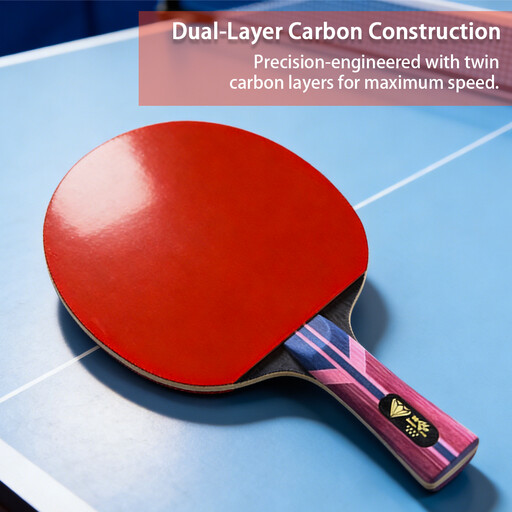
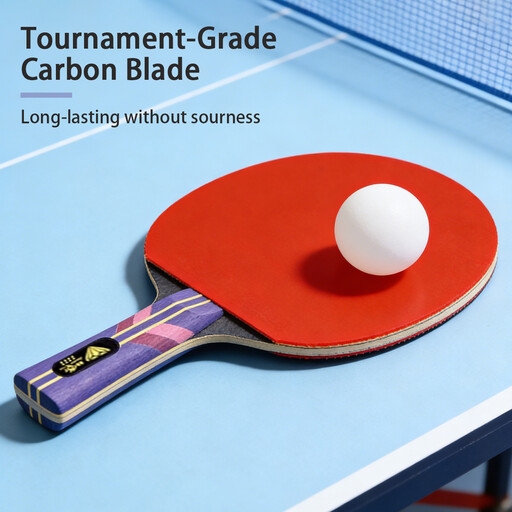
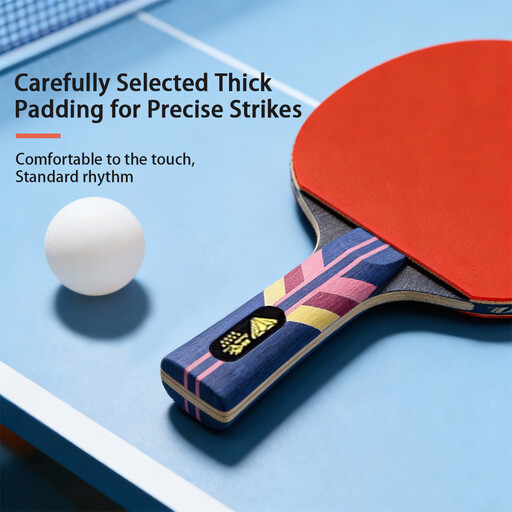
The choice of a table tennis racket is highly personal and depends on your unique playing style and preferences. If the models above don't fully match what you're looking for, or if you're curious about other options, you can explore our broader selection.
Explore all our sports equipment here.
1. What is the main difference between a recreational and a professional table tennis racket? The primary difference lies in the materials and construction. Professional rackets often use multiple plies of high-quality wood and composite materials like carbon for more speed and a larger sweet spot. The rubber is also of a higher quality, enabling more spin and control. Recreational rackets are typically simpler in design, offering a balance geared more towards control than speed and spin.
2. How important is a carbon table tennis racket for advanced players? A carbon table tennis racket isn't strictly necessary, but it offers clear advantages for an offensive playing style. The stiffness of carbon provides a faster ball release from the racket, resulting in more powerful strokes. It also enlarges the sweet spot, making the racket's response more consistent, even when the ball isn't hit perfectly in the centre. For players looking to accelerate their game, upgrading to a carbon racket is a logical step.
3. How do I maintain my professional table tennis racket? Proper maintenance is crucial to preserve performance. According to the manufacturer's specifications, it is advisable to regularly clean the rubber, blade, and grip with a soft, dry cloth. Avoid exposure to high temperatures, direct sunlight, and moisture, as these can damage the rubber and wood. Store the racket in a case to protect it from dust and impacts.