
Vandaag of morgen in huis

Kwaliteit gegarandeerd

Welkomstaanbiedingen ontgrendelen: GRATIS bezorging | Tot 80% korting | Gratis 30 dagen JoyPlus-proefperiode
Download de app
A good pair of pruning shears is indispensable for any gardener. Whether you're tending to rose bushes, pruning fruit trees, or simply keeping your hedge in shape, the right tool makes the work easier and is better for your plants. However, the market is flooded with models that promise a lot but deliver little. As a Joybuy Product Recommendation Officer, I often see where things go wrong. Before you purchase new professional pruning shears, it's wise to know the common pitfalls.
Many gardeners make the mistake of investing in shears that develop problems after just one season. This is often due to:
To avoid a bad purchase, it's helpful to focus on a few objective specifications. These features determine the performance and durability of your tool, regardless of marketing claims.
The most important part of a pair of pruning shears is the blade. The type of steel determines how sharp it stays and how well it resists rust. A term you'll often see with high-quality models is SK5 steel pruning shears. This is a Japanese carbon steel known for its hardness and its ability to hold a very sharp edge for a long time. A blade made of SK5 steel ensures clean, smooth cuts and requires less frequent sharpening.
There are two main types of pruning shears: bypass and anvil.
For most pruning jobs in the garden, a bypass model is the most versatile and plant-friendly choice.
Prolonged pruning can be taxing on your hands. Ergonomic pruning shears are designed to minimize strain. Look for handles with a non-slip coating that fit well in your hand. A smooth spring that automatically opens the shears after each cut significantly reduces effort. A solid safety lock is also essential for storing the shears safely and preventing accidents.
Based on the criteria above, we have made a selection that meets the needs of different gardeners.
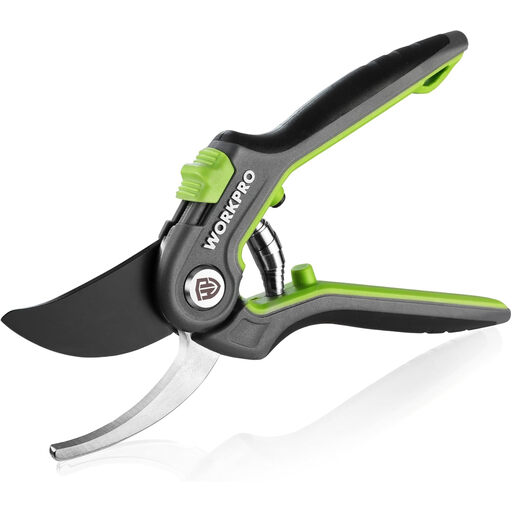
Why This Fits Their Persona: These WORKPRO pruning shears are an excellent choice for the hobby gardener seeking a reliable and durable tool for general pruning tasks, from cutting flowers to maintaining shrubs.
The blade is made of high-quality SK5 steel, ensuring long-lasting sharpness. The ergonomic handles and automatic spring-opening mechanism reduce hand fatigue, while the rust-resistant coating enhances durability.
Offers a combination of a sharp bypass blade for clean cuts (up to 19 mm), a comfortable grip, and a reliable safety lock. A solid all-rounder.
Want to buy loppers or looking for a specific model for your garden? We have compiled a complete list of products that meet these strict selection criteria.
How do I maintain professional pruning shears? Proper maintenance significantly extends their lifespan. Clean the blades with a dry cloth after each use to remove sap and debris. Sharpen the blades periodically and apply a drop of oil to the pivot point to keep the action smooth. Store the shears in a dry place with the safety lock engaged.
What is the difference between bypass and anvil pruning shears?Bypass pruners have two blades that slice past each other, ideal for clean cuts in live wood. Anvil shears have a single blade that presses against a flat surface, which has more of a crushing action and is better for dead, hard wood. For the health of your plants, a bypass model is usually the recommended choice.
Can I use pruning shears for thicker branches? Every pair of pruning shears has a maximum cutting diameter, which is usually stated on the packaging or in the product description (e.g., 19 mm). Do not try to cut branches thicker than recommended, as this can damage both the shears and the branch. For thicker branches, it's better to buy loppers.
