
Vandaag of morgen in huis

Kwaliteit gegarandeerd

Welkomstaanbiedingen ontgrendelen: GRATIS bezorging | Tot 80% korting | Gratis 30 dagen JoyPlus-proefperiode
Download de app
A basic fault code reader can be useful for switching off an engine warning light. But a garage, fleet manager or experienced DIY enthusiast often needs more: scanning multiple vehicle systems, viewing live data, activating components and carrying out the correct reset after maintenance. That’s where a professional OBD2 scanner with ECU coding and bidirectional control comes in.
However, a more expensive device isn’t automatically right for every car. Watch out for these three common pitfalls:
A basic OBD2 diagnostic tool usually reads engine and emissions-related systems. According to the product description, a full-system diagnostic scanner goes further and can also access modules such as ABS, SRS, transmission, TPMS, BMS, EPB, air conditioning and body electronics, depending on the vehicle.
Before you buy, check:
Clearing a fault code doesn’t always fix the underlying problem. Use the scanner to record the data first, then check whether the fault returns after the repair.
According to the supported vehicle functions, a bidirectional OBD2 scanner can send commands to certain control units. For example, an active test can activate a fan, fuel pump, windscreen wiper, valve, window or relay. This can help you work out whether the problem lies with a faulty component, the wiring or the control system.
ECU coding is more specialised. On compatible vehicles, it can be used to adjust settings or programme components after replacement. The options available vary considerably by make and model. So, a product listing that mentions online or offline coding doesn’t guarantee that every coding function will be available for your vehicle.
If you’re unsure, ask for a compatibility check before buying, based on the make, model, engine variant and VIN. This is especially important for injector coding, key or immobiliser functions, and module replacement.
Modern vehicles use new communication architectures. CAN FD can handle larger data frames than traditional CAN. DoIP uses Ethernet-based communication for diagnostics. A CAN FD scanner or DoIP diagnostic tool may therefore be useful for newer vehicles, but protocol support alone doesn’t tell you which functions are actually available.
Also consider the type of connection:
A scanner with 26, 31, 34 or 40+ functions may sound appealing, but check which tasks are available for your vehicles. Commonly requested functions include:
According to the product information from the brands mentioned, these functions vary by vehicle. For work on brakes, airbags, DPFs and high-voltage systems, you should also follow the manufacturer’s procedure and safety instructions. A reset function is no substitute for a mechanical check or a proper repair.
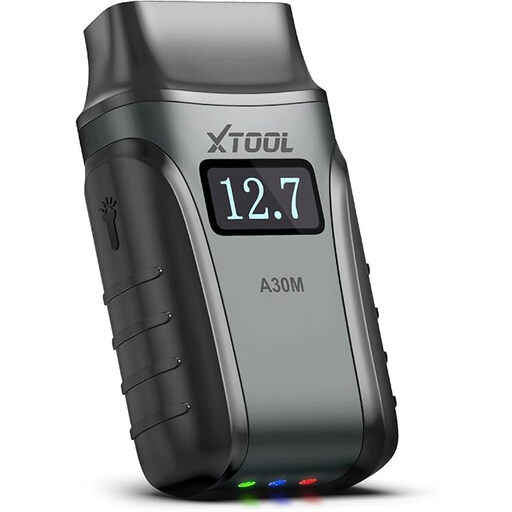
Why it suits this user: A compact Bluetooth solution for anyone who wants to scan several cars at home or on the go using Android or iOS.
The product information explicitly states that functions vary by make, model and year. So, check compatibility before you order.
According to the product listing: 26 service functions, active tests, CAN FD support and free lifetime updates.
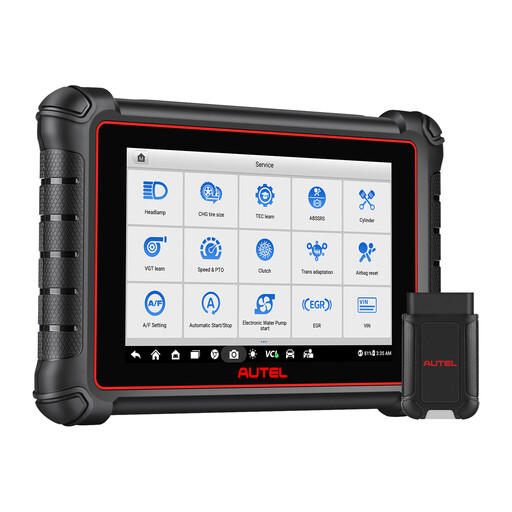
Why it suits this user: Designed for users looking for full-system diagnostics, ECU coding and wireless active tests in one tablet.
The listing includes one year of free updates and highlights that functions vary by vehicle. This means you can check both the update period and coverage in advance.
According to Autel: more than 38 service functions, Bluetooth range of up to 10 metres, active tests and report management support.
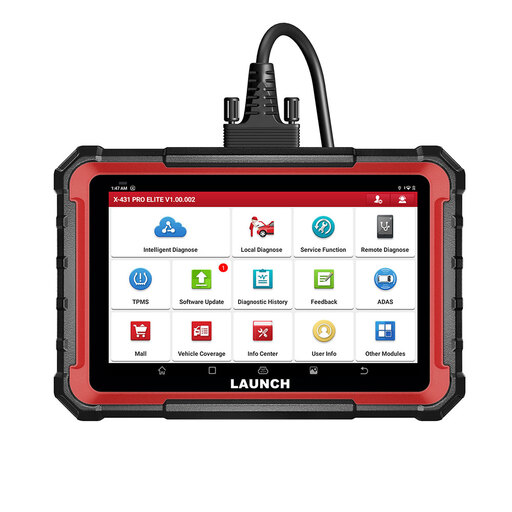
Why it suits this user: Ideal for garages and users who need expansion options, detailed reporting and a wide range of diagnostic functions.
The listing distinguishes between included updates, vehicle-dependent functions and optional expansion modules. Check the costs in advance.
According to the product information: CAN FD, DoIP, ECU coding, bidirectional control, 31+ service functions and report support.
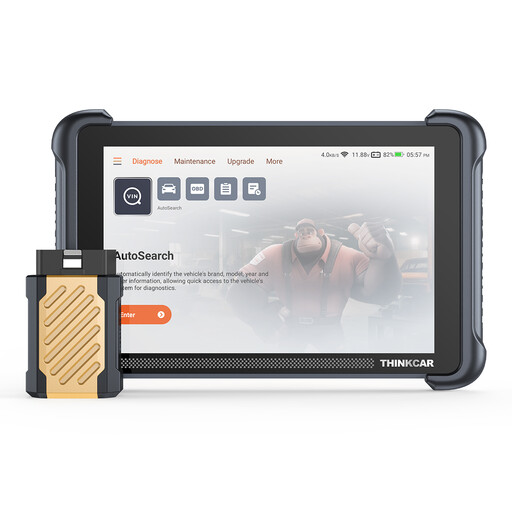
Why it suits this user: A tablet with a wireless VCI for daily use across a range of European, Asian and American vehicles.
The product listing explicitly mentions CAN FD, DoIP and vehicle-dependent functions. This makes it easier to check coverage for your specific needs.
According to the supplier: 34 reset functions, full-system diagnostics, Bluetooth connectivity and free lifetime software updates.
We’ve put together a complete, up-to-date list of products that meet these strict selection criteria and the applicable European safety regulations.
No. ECU coding depends on the make, model, specification and software version, and may sometimes require an online server or secure gateway. Check vehicle compatibility using the VIN before you order.
It varies by product. Some suppliers advertise an OBD2 scanner with lifetime updates, while other models include one year of updates. Also check whether only basic diagnostics remain free or whether additional vehicle software costs extra.
It can be, especially if you want to move around the car during an active test. Check the Bluetooth range, connection stability, compatible app and reporting functions. For longer or critical diagnostic sessions, a wired connection may be more practical.
