
Vandaag of morgen in huis

Kwaliteit gegarandeerd

Welkomstaanbiedingen ontgrendelen: GRATIS bezorging | Tot 80% korting | Gratis 30 dagen JoyPlus-proefperiode
Download de app
A good electric slicer can transform a kitchen. Perfectly uniform slices of your favourite cheese, paper-thin carpaccio, or a fresh loaf of bread that isn't crushed. But the search for a professional electric slicer for home use is fraught with pitfalls. Many models promise the world but prove to be unstable, weak, or a nightmare to clean in practice.
Before you invest, it's crucial to see through the marketing jargon. These are the most common problems home cooks encounter:
Make a lasting investment by paying attention to the specifications that truly matter, not the marketing claims.
To avoid a bad purchase, focus on the machine's technical foundation. These three elements determine the quality and lifespan of a kitchen slicer.
The motor is the heart of the machine. A simple AC motor may suffice for light use, but for consistent and heavy-duty work, a DC motor is often a better choice. These motors deliver more constant torque, even at lower speeds, and are typically quieter and more energy-efficient. A machine with a gear drive instead of a belt is also a sign of a more robust design, which is essential for a good meat slicer for home use.
A metal food slicer offers superior stability. A heavy, solid metal base prevents the machine from vibrating or shifting during use. This directly leads to more precise and safer slicing results. Also, pay attention to the construction of the carriage and the stop plate; here too, metal is the standard for durability. Models with a tilted design (e.g., 15°) use gravity to facilitate slicing, which is particularly useful for larger or heavier products. A slicer made in Germany often guarantees high-quality materials and a well-thought-out construction.
The blade determines what you can slice and how. There are two main types:
A good electric all-purpose slicer offers the ability to swap blades or comes with a universal serrated blade. Also, check the adjustability of the slicing thickness. A range from 0 to about 20 mm gives you the flexibility for almost any application.
Not every slicer is right for every cook. Below are a few models that suit different needs, based on their objective specifications.
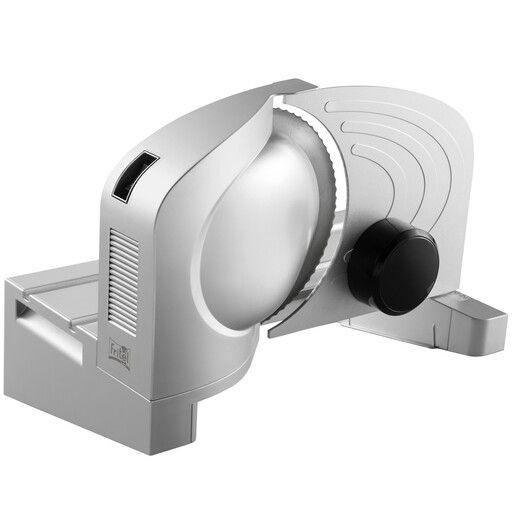
Why This Fits Their Persona: For the serious home cook seeking a reliable and versatile machine for daily use. This slicer provides a solid foundation for slicing bread, cheese, and deli meats without paying top dollar.
The metal housing and gear drive provide the stability and consistent power that plastic models often lack. The tilted carriage makes slicing less strenuous.
15° tilted carriage for efficient slicing; Infinitely adjustable slicing thickness from 0-20 mm; Easily removable serrated stainless steel blade (? 17 cm).

Why This Fits Their Persona: For the culinary enthusiast who makes no compromises. This machine is designed for maximum precision and durability, ideal for slicing delicate meats, cheeses, and artisanal bread.
The all-metal construction and powerful DC motor eliminate instability and power loss. The detachable carriage and included collection tray directly address the cleaning problem.
Made in Germany; Includes both a serrated and a smooth blade; Variable electronic speed control for total command; Slicing thickness up to 23 mm.

Why This Fits Their Persona: For those who want to combine functionality with sleek design and optimal cleaning convenience. This machine is a showpiece in the kitchen while being extremely practical to use and maintain.
The cantilevered metal construction is not only stable but also makes the space underneath the machine fully accessible. Paired with the detachable carriage, cleaning becomes exceptionally simple.
Unique cantilever design for superior hygiene; Base plate made of shatterproof safety glass; Powerful and efficient ECO motor; Made in Germany.
We have compiled a complete, up-to-date list of products that fully meet these strict selection criteria and safety regulations.
Yes, it's possible, but the result depends on the blade. A serrated blade is a good all-rounder and works excellently for bread, but it won't slice deli meats as thinly and cleanly as a smooth blade. For the best results with both, choose a model where you can swap the blades, like the ritter serano?, which comes with both types.
For those seeking durability and precision, a metal food slicer is a key factor. Metal provides weight and rigidity, which minimises vibrations and ensures a consistent slice thickness. Plastic parts can wear, bend, or even break over time with intensive use, negatively affecting performance and safety.
Always unplug the machine from the power outlet first. The safest and most hygienic approach is to choose a model where the carriage and blade are easily removable. This allows you to thoroughly wash all parts that come into contact with food. The motor housing should never be submerged in water; you can wipe it down with a damp cloth.
