
Vandaag of morgen in huis

Kwaliteit gegarandeerd

Welkomstaanbiedingen ontgrendelen: GRATIS bezorging | Tot 80% korting | Gratis 30 dagen JoyPlus-proefperiode
Download de app
As an automotive technology professional, you know that having the right tool is half the battle. A reliable diagnostic tool is indispensable, but the market is flooded with models that promise the world. However, many devices lead to frustration and unexpected expenses. Before you invest, it's crucial to recognise the common pitfalls that can cost you money in the long run.
The biggest misstep is often not the purchase price, but the hidden defects and recurring costs. Let's examine two of the most common traps:
diagnostic tool with lifetime updates isn't a luxury; it's a necessity for sound business operations.all-system car scanner. In practice, this often just means they can read fault codes from various modules. For true diagnostics and repair, you need more, such as the ability to actuate components or code modules.An investment in a professional diagnostic tool should pay for itself through efficiency and reliability, not become a bottomless pit of subscriptions.
To avoid a costly mistake, you need to look beyond the marketing buzzwords. Focus on the technical specifications that truly matter for a modern workshop.
The most significant long-term cost factor is the update policy. Vehicle technology evolves at a rapid pace. Without regular updates, your diagnostic tool will become obsolete for newer models within a few years.
A professional OBD2 scanner must do more than just clear car fault codes. The depth of its functions determines how efficiently you can diagnose and resolve a problem.
bidirectional scanner, you can test a component's operation without disassembling it, saving you hours of diagnostic time.ECU coding tool is necessary for tasks like coding new injectors, adjusting the settings of a body control module (BCM), or unlocking hidden factory options.Check that the device offers broad coverage for the brands you see most often in your workshop. Pay specific attention to support for recent protocols like CAN-FD. This protocol is used in many modern vehicles (including those from GM and Ford after 2020) and provides faster, more stable communication. A device without CAN-FD support will eventually fall short.
Based on these objective criteria, we have selected a few devices that suit different professional profiles.
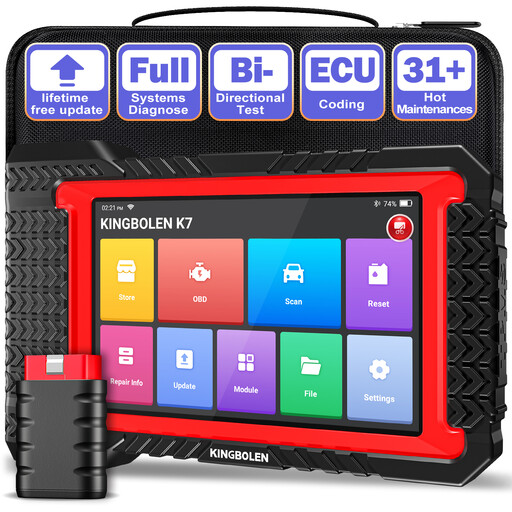
Why This Fits Their Persona: For the garage owner or mechanic who needs a complete and future-proof workshop tool. This device is designed for intensive daily use and maximises efficiency in complex diagnostics.
The KINGBOLEN K7 directly tackles the subscription trap with lifetime free updates. You pay once and are assured of the latest software, with no hidden annual costs.
Full OE-level diagnostics, advanced online and offline ECU coding, and full bidirectional control. The robust hardware with Android 10 and a 7-inch touchscreen makes it a pleasant and fast device to work with.
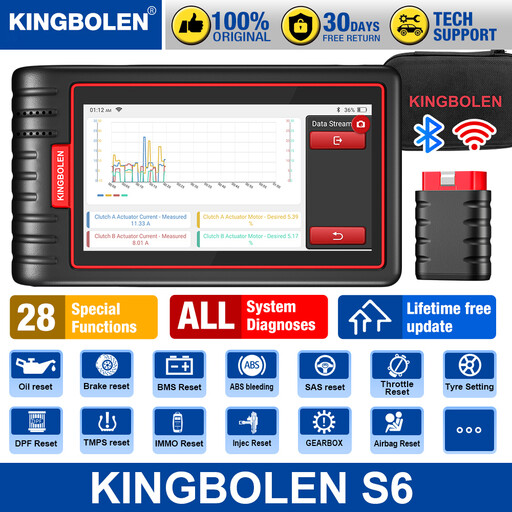
Why This Fits Their Persona: Ideal for the serious hobbyist or small garage that needs a powerful tool for maintenance and service, without the need for daily, complex coding.
This device bypasses the "all systems" illusion by clearly specifying what it can do: full system diagnostics plus more than 28 commonly used maintenance functions. The basic functions and software have lifetime free updates.
A very comprehensive set of 28+ reset functions (oil, brakes, SAS, DPF, etc.) and full system diagnostics. The Bluetooth connection and support for the CAN FD protocol make it a modern and flexible device.
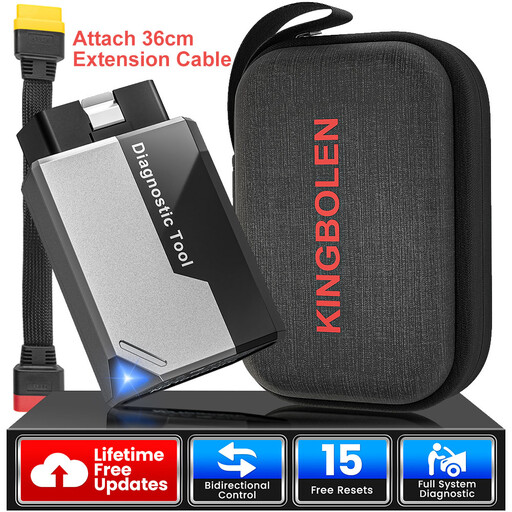
Why This Fits Their Persona: Perfect for the starting professional or mobile mechanic looking for a compact yet powerful device. It turns your smartphone into a full-fledged diagnostic instrument with professional features.
Offers exceptional value by combining lifetime free updates with bidirectional control, features normally reserved for much more expensive devices or subscription services.
Full bidirectional control (active test) and 15+ reset functions in a very compact Bluetooth dongle. Supports CAN-FD and FCA AutoAuth, which guarantees coverage for modern cars.
We have compiled a complete, up-to-date list of products that fully meet these strict selection criteria and current regulations.
A standard OBD2 scanner is primarily designed to read and clear generic fault codes from the engine and emissions systems, as required by law. A professional automotive diagnostic tool goes much further. It can communicate with all electronic modules in a vehicle (ABS, airbag, transmission, BCM, etc.), display live data from sensors, perform service and maintenance functions (resets), and in advanced cases, actuate components (bidirectional control) and code modules (ECU coding).
Yes, for the models that advertise this, such as the KINGBOLEN K7 and Ediag Elite, it means you do not pay annual subscription fees to keep the diagnostic software and vehicle coverage up-to-date. The manufacturer periodically releases updates that you can download and install via Wi-Fi at no extra cost. This covers the core functions of the device for its entire lifespan. Always read the product details to see which functions are specifically covered by the lifetime update.
That depends on the type of work you do. If you mainly focus on standard maintenance, inspections, and resolving basic faults, functions like reading/clearing codes, live data, and reset functions are often sufficient. However, if you regularly replace components (like injectors, ABS modules, or steering angle sensors), perform repairs on complex electronics, or want to make customisations for clients (such as activating comfort features), then an ECU coding tool is an indispensable investment that will significantly broaden your service offerings.
