
Vandaag of morgen in huis

Kwaliteit gegarandeerd

Welkomstaanbiedingen ontgrendelen: GRATIS bezorging | Tot 80% korting | Gratis 30 dagen JoyPlus-proefperiode
Download de app
A professional car jack needs to do more than lift a vehicle a few centimetres. In a garage, workshop or business, the key things are whether the jack suits the vehicle’s weight, the space available and the way you carry out maintenance. The wrong choice can lead to instability, damaged sills or a jack that doesn’t provide enough lifting height in practice.
This applies to everything from changing tyres on your own car to daily use with lorries, buses, tractors and commercial vehicles.
A rating of 5 tonnes or 10 tonnes doesn’t mean every vehicle can be lifted safely in every situation. Weight is often unevenly distributed, and extra loads affect the forces involved. So check both the permitted lifting capacity and the vehicle’s designated lifting points.
A 10-tonne hydraulic jack may be suitable for heavy vehicles, but the ground, the position of the jack and the contact surface are still crucial. Always use suitable axle stands after lifting before working underneath a vehicle.
A jack may have a high load capacity but still be unsuitable if its minimum height is too great or its maximum height isn’t enough. Measure the available clearance at the lifting point beforehand. A lorry, bus or agricultural vehicle will often need a greater lifting range than a car, too.
Check the full range, for example 222 to 448 millimetres, rather than looking only at the maximum height.
A pneumatic air jack may be described as lifting quickly, but it requires a suitable compressor and air connection. Without sufficient air capacity, a 5-tonne pneumatic air jack may not work as smoothly as you expect.
A long handle, adjustable grip or swivel castors are only useful if they suit the space available in your workshop.
Don’t choose a jack based on the vehicle’s total weight without considering the load on a single lifting point. Check the vehicle’s technical information and allow for any load, attachments and weight distribution.
A heavy-duty vehicle jack for lorries or construction machinery must also stand securely on the floor. A high load capacity won’t make up for soft, sloping or uneven ground.
The minimum height determines whether the jack will fit under the vehicle. The maximum height determines whether you’ll have enough room to change a wheel or carry out a repair. An adjustable screw can help you set the final height more precisely, but it doesn’t replace correct positioning.
A garage jack for cars needs different dimensions from a lorry jack. Check the shape and size of the saddle, too, so the contact point doesn’t rest on vulnerable bodywork.
Look for verifiable features such as:
Only use a car jack on a firm, level surface. Secure the vehicle according to the manufacturer’s instructions, and never rely on the jack alone when working underneath it.
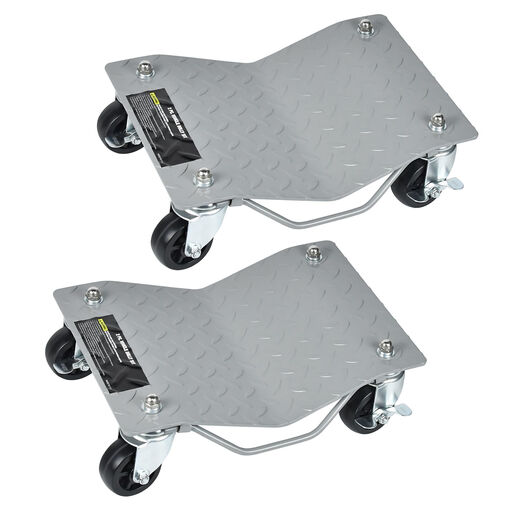
Why it suits this profile: This set is designed for moving vehicles, not as a substitute for a full-sized lifting jack. It’s a useful option if you mainly want to create more manoeuvring space in a garage or workshop.
The product name states a load capacity of 500 kg per dolly. Check beforehand that this is suitable for the load on the wheel or part of the vehicle being supported. Don’t use the dolly as a general substitute for a 5- or 10-tonne jack.
Set of two, designed as a mobile solution for cars, trucks, tractors and other vehicles.
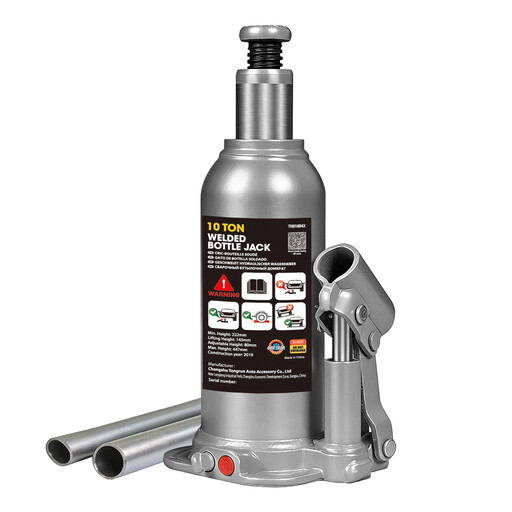
Why it suits this profile: An option for anyone who needs high hydraulic load capacity for heavy lorries, buses, construction vehicles or industrial equipment.
The specifications state a range of 222 to 448 mm and a rated capacity of 10 tonnes. This lets you compare the lifting range with the vehicle’s lifting points before use.
Forged steel base, chrome-plated piston rod, adjustable screw and safety relief valve, according to the product description.
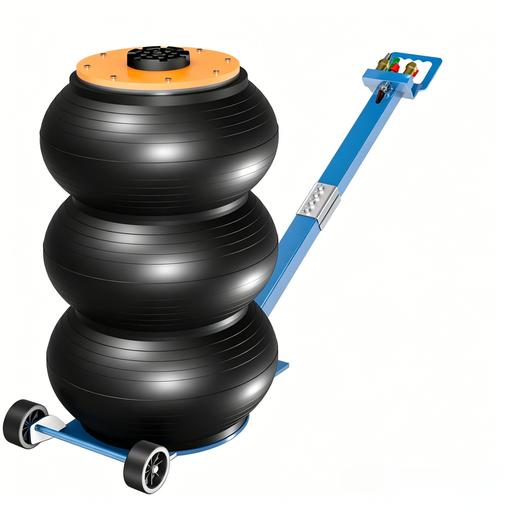
Why it suits this profile: This mobile jack is a good fit for workshops and service vehicles with a suitable compressed air supply, where a pneumatic solution is needed for cars, vans and heavier vehicles.
The product information gives an adjustable range of approximately 5.9 to 15.75 inches and says it is operated via a valve. Before buying, check your compressor, connection and available clearance.
Maximum stated load capacity of 5 tonnes, detachable adjustable handle and rubber contact surface, according to the product description.
We’ve put together a full, up-to-date list of products that meet these strict selection criteria and the applicable European safety regulations.
It depends on the weight at the chosen lifting point, the minimum ground clearance and the working height you need. For heavy vehicles, a 10-tonne hydraulic jack may be suitable, while a 5-tonne pneumatic air jack may be a better fit for certain cars, vans and workshops with compressed air. Always check the vehicle documentation and product specifications.
A jack is designed to lift a vehicle, not to support it for long periods. Once the vehicle is raised, place it on suitable axle stands with sufficient capacity. Work only on a firm, level surface and follow the instructions from both the vehicle and jack manufacturers.
Keep the jack clean and dry. Before use, check the hoses, valves, welds, wheels and saddle, and look for leaks or gradual lowering. Maintain the hydraulic system on hydraulic models according to the product instructions. A pneumatic air jack also needs a suitable, well-maintained air connection. Stop using the jack if you notice visible damage or unusual behaviour.
