
Vandaag of morgen in huis

Kwaliteit gegarandeerd

Welkomstaanbiedingen ontgrendelen: GRATIS bezorging | Tot 80% korting | Gratis 30 dagen JoyPlus-proefperiode
Download de app
Buying a probiotic supplement seems straightforward. However, capsules, sachets and chewable tablets can differ considerably in bacterial strains, dosage, shelf life and ease of use. What is more, a high number of bacteria on the packaging does not automatically mean that a product is right for your situation.
Pay particular attention to these three common pitfalls:
Do not just look for “probiotic capsules” or “gut flora supplement” on the front. Check the full ingredients list. Names such as Bifidobacterium, Lactobacillus and Streptococcus refer to different groups of bacteria. Some products also list a strain code, such as Lactiplantibacillus plantarum N13.
The quantity is often given in CFU: colony-forming units. Compare products based on the recommended daily dosage. A product containing 20 billion CFU per two capsules is not directly comparable with one that lists 20 billion CFU per capsule.
Also check whether the manufacturer states the quantity at the end of the shelf life or at the time of production. If this is not clearly stated, it is more difficult to compare products objectively.
With acid-resistant probiotics, the capsule or micro-encapsulation technology is an important technical detail. According to the product descriptions of various brands, this protection is intended to help bacteria pass through the stomach more effectively. Treat this as a product specification, not as an established health effect.
Storage requirements vary by formula:
A product in a large pack is only good value if you use it within the stated period.
Prebiotics and probiotics are often combined. Prebiotic fibres such as FOS, inulin and psyllium are different ingredients with different quantities and applications. If you are specifically looking for fibre for bowel function, you should not automatically choose a probiotic.
A probiotic with vitamin C may be suitable if you want to combine both ingredients in one product. However, check whether you already take a multivitamin. This helps prevent you from taking several products containing the same vitamins or minerals unnecessarily.
Also look out for:
Brands’ health claims are not automatically proven for every user. When a manufacturer refers to an effect, read it as a claim from the product information and check whether it states that a health claim still requires European approval.
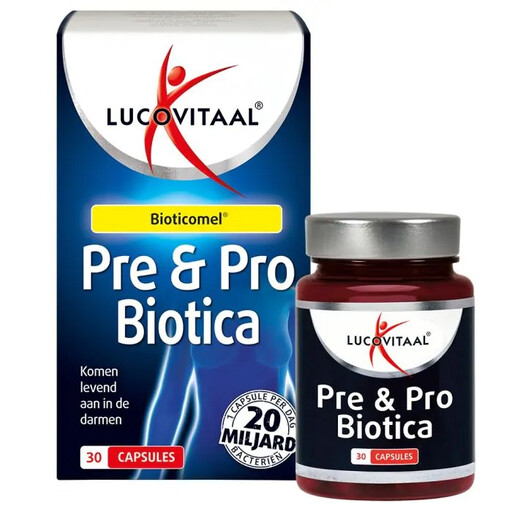
Why it suits this profile: One capsule per day, 30 capsules per pack and a clear formula with eight bacterial strains and 50 mg of FOS make this an accessible choice for daily use.
The product information states both the total of 20 billion CFU per capsule and the individual quantities for each strain. This makes it easier to compare than a formula that only shows a large total figure.
One capsule per day, eight listed strains and FOS as a prebiotic. Check the current vegan statement on the label, as the supplied product information is not fully consistent.

Why it suits this profile: If you are looking for a vegan formula, a wide range of strains and a larger pack, this option provides clear product specifications to compare.
The product description lists 20 bacterial strains, 20 billion CFU per daily dose of two capsules, organic inulin and an acid-resistant capsule.
120 vegan capsules, providing around two months of use at the stated dosage, with inulin and a statement that it is made in Germany.
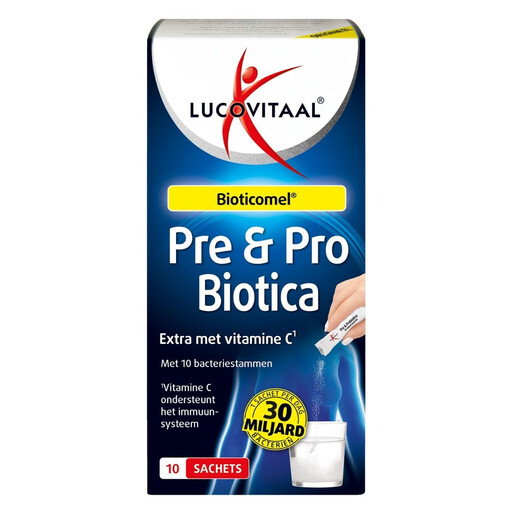
Why it suits this profile: Sachets are practical if you find capsules difficult to take or want to mix a supplement with water, fruit juice or yoghurt.
The packaging lists ten bacterial strains, 30 billion bacteria per sachet and 500 mg of FOS. This shows exactly what you are getting rather than just using a general term such as “complex”.
Ten sachets, 12 mg of vitamin C per sachet and, according to the product information, acid-resistant technology. The supply is smaller than with a tub of capsules.
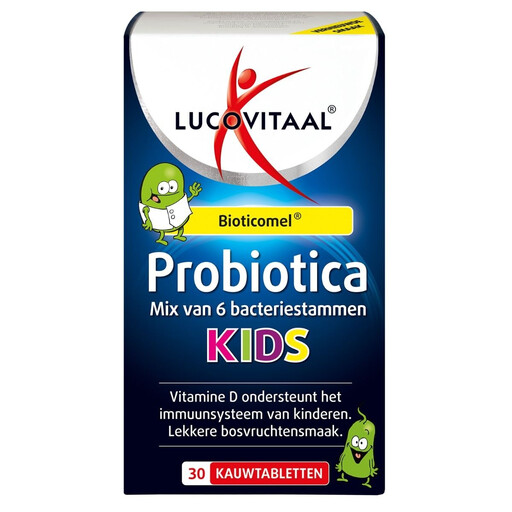
Why it suits this profile: A berry-flavoured chewable tablet may be more practical for children than a capsule. Use only according to the age recommendation and dosage on the current packaging.
The formula lists six bacterial strains and a daily dosage of one chewable tablet. The product information gives different age recommendations, so check the label before buying.
30 chewable tablets, vitamin C and vitamin D3 per tablet, plus six clearly named bacterial strains.
We have put together a complete, up-to-date list of products that fully meet these strict selection criteria and the applicable European safety regulations.
Not every need calls for the same formula. Some targeted options include:
This varies by product. Check the expiry date, storage instructions and recommended daily dosage. A pack of 30 capsules lasts approximately one month when taking one capsule per day. Stop if you experience discomfort and ask a doctor or pharmacist for advice if your symptoms persist.
Not always. Some products recommend refrigeration after opening, while others should be stored in a dry place at room temperature. Follow the instructions on your product’s packaging. Heat, moisture and direct sunlight can affect the quality of the ingredients.
Only if the product is intended for them and the age stated on the label is suitable. The Lucovitaal chewable tablets for children have a separate age recommendation, but the supplied information gives different ages. Therefore, always check the current packaging and consult a healthcare professional if in doubt.
